Though largely forgotten today, Australia-UK co-production Tenko, which ran three seasons and one reunion special between 1981-1985, was a major critical and ratings success in its time, rightly celebrated for its brilliant, harrowing, and yet nuanced depiction of life in a Japanese-run, all-female prisoner of war camp during WWII.
Now celebrating its fortieth anniversary – the series wrapped up on December 26, 1985, with a widely-celebrated reunion special – Tenko remains an extraordinary work of serial fiction, and long overdue for a modern reappreciation.
At a time when the very notion of prestige TV was new – and typically meant miniseries like Shōgun (1980) or Brideshead Revisited (1981) – Tenko stood out.
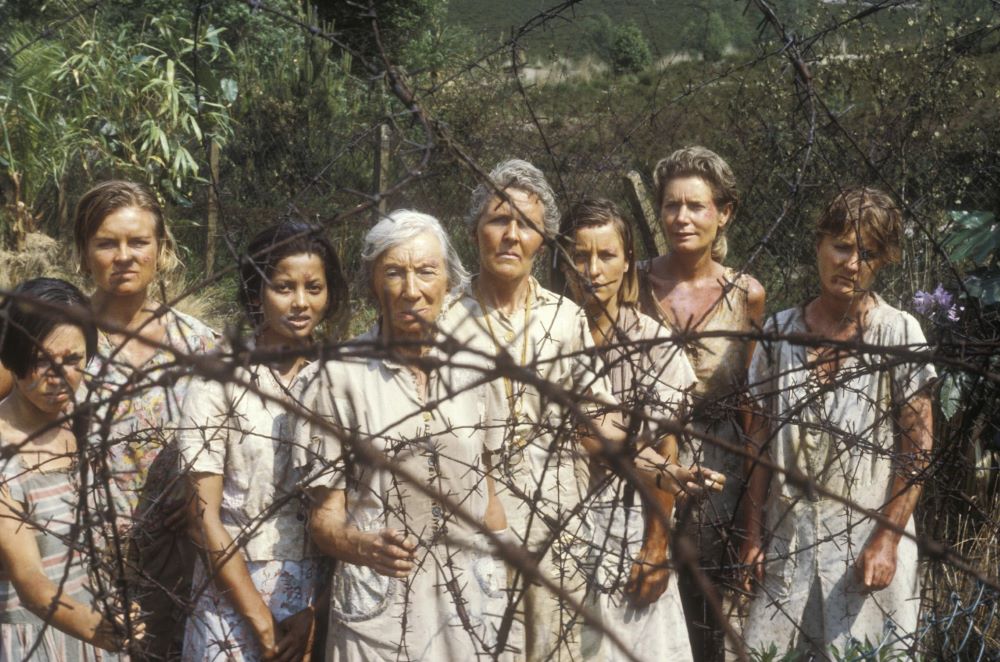
Centring on the lives of a dozen or so British, Australian, and Dutch POWs in a Japanese-run camp on an Indonesian island (implied to be Sumatra), Tenko, which premiered on October 22, 1981, is the best POW story you’ve never seen. Capturing the claustrophobia, heartbreak, and trauma experienced by female POWs, it rivals the greatest cinematic depictions of WWII – and not only because of its, sadly still unusual, focus on the lives of women and girls.
Wisely, Tenko begins in the days immediately preceding the Japanese invasion of Singapore, affording viewers a glimpse into the lives of its central characters. It’s just enough time to get a feel for these women, their respective milieux – race and class distinctions abound – before their lives are so dramatically upended.
Soon enough – roughly three episodes in – the real story begins, as the prisoners get accustomed (or not) to their new surroundings, the impossible reality of having been ripped from their families, their friends, their lives. Much of Tenko is taken up by the kinds of difficult, dynamic conversations, with no easy answers, captured so adeptly by Sarah Polley in her recent Women Talking. Which is not to suggest that Tenko isn’t dramatic or otherwise riveting: escape plots, illnesses, betrayals, hopes (false and real) ensure that each new episode is worth tuning in to, and impossible to turn away from.
The title, Tenko, comes from the Japanese term for “roll-call”, with recurring shouts of “Tenko!”, requiring the prisoners to dash to the prison yard at a moment’s notice, playing an increasingly important, and deeply fraught, role as the series plays out.
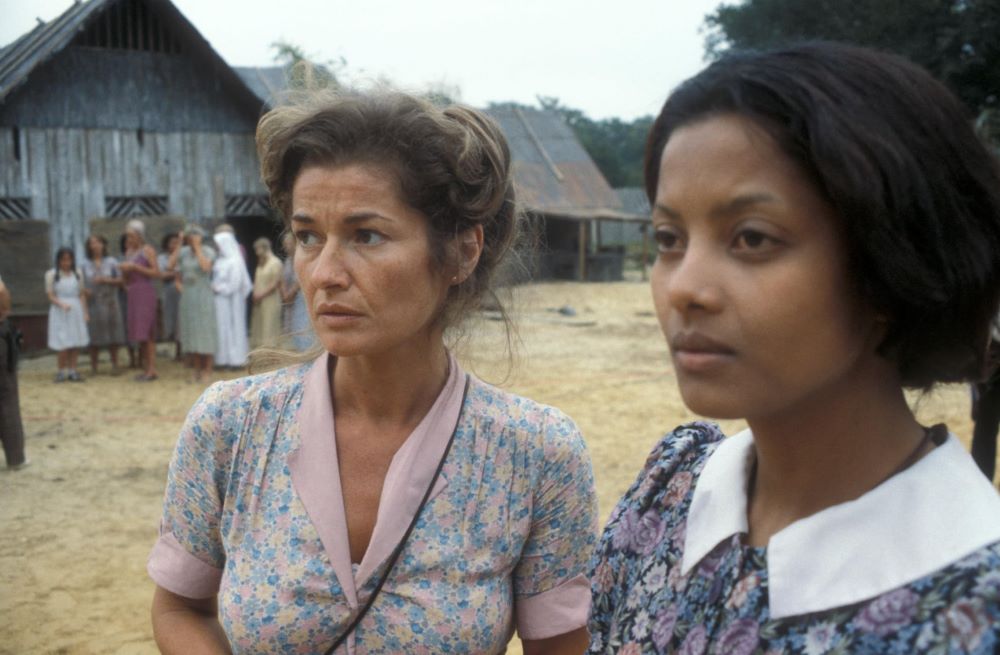
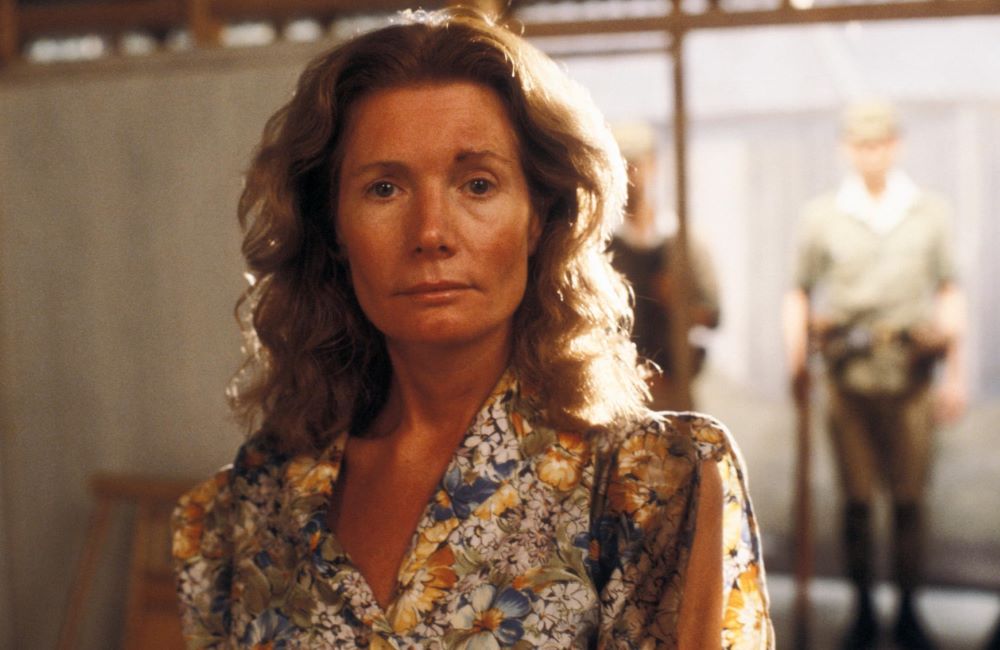
Most of Tenko’s cast is great, though there are clear standouts, including nominal series lead Marion Jefferson (Ann Bell), quietly heroic Dr. Beatrice Mason (Stephanie Cole), and the young Christina Campbell (Emily Bolton), whose half-Chinese/half-British identity is a key component of the story.
Several of the characters are drawn from the colonial “upper crust”: both Marion and Sylvia Ashburton (Renee Asherson) are married to high-ranking British army officials, while Rose Millar (Stephanie Beacham) is a wealthy socialite who believes her husband to be held in a nearby camp. Others, of varying backgrounds and experiences, include good-natured Australian nurse Kate Norris (Claire Oberman), the brash cockney Blanche Simmons (Louise Jameson), and self-interested, if not entirely unsympathetic, Dorothy Bennett (Veronica Roberts), who arrives in camp with a newborn baby.
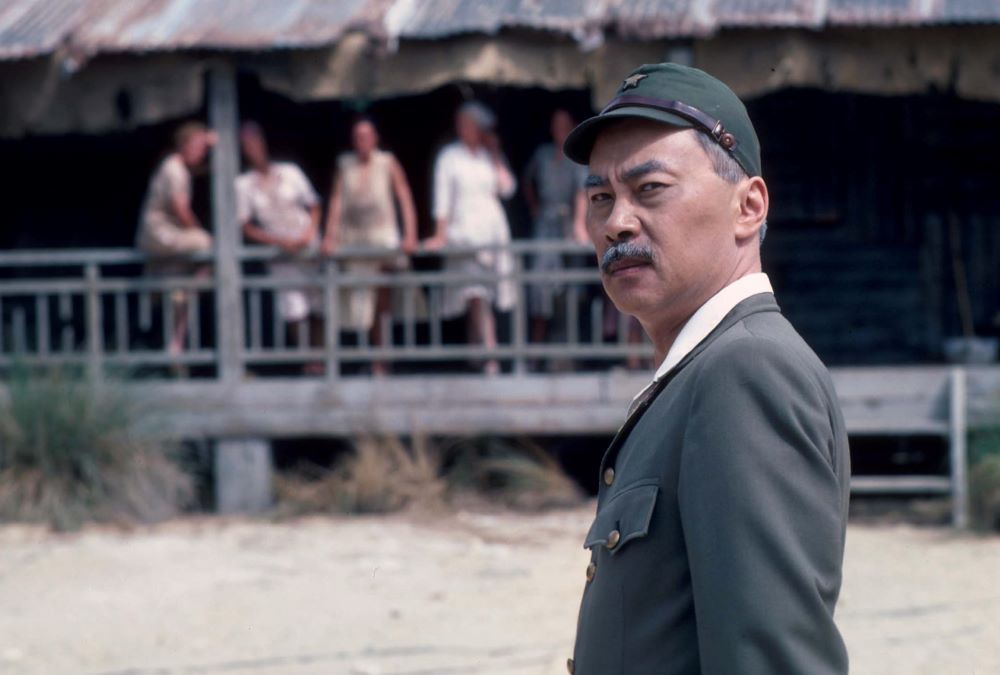
On the Japanese side, the camp is overseen by Captain Yamauchi (Burt Kwouk), a reluctant soldier who views his role overseeing a women’s camp as a stain on his honour. Yamauchi’s right-hand man, the sadistic Lieutenant Sato (Eiji Kusuhara), is the closest the series gets to a main villain. Most of the prison guards are anonymous background actors, though a young prison guard, Shinya (Takashi Kawahara), eventually establishes a sort of kinship with Dorothy, the member of the group who eventually takes to trading sexual favours for desperately needed supplies – earning Dorothy (and to a lesser extent, Shinya) the opprobrium of their respective communities.
Tenko is inspired by the true, terrible story of the all-female prison camps run by the Japanese during WWII. Series creator Lavinia Warner conceived of the series after meeting Margot Turner, a British military nurse held prisoner for three-and-a-half years by the Japanese. Warner and her writing team conducted extensive research and interviews, aiming to capture the intricacies of camp life in a non-sensationalist manner. This can occasionally make for tough viewing, but it also gives Tenko a strong sense of authenticity, of fidelity to the real women who chose to share their stories with Warner.
That approach shows in every frame of Tenko: the world looks real, the characters act believably, and there are shades of gray which would be essentially unthinkable in a glossy Hollywood production. Even the Japanese characters (well, some of them anyway) are humanized, afforded the space to establish themselves as people, not mere stereotypes or archetypes.
While it’s the wonderful cast that made fans out of its viewers, the reason Tenko still works for the modern viewer is its perceptive portrayal of the horrors of camp life. The camp in Tenko is crowded. It’s dirty. (You can practically smell the filth.) Bedbugs and lice are so prevalent that probably the most unrealistic aspect of Tenko is the long hair worn by some actresses.
Still, Tenko even handles the aesthetic question well: unlike so many other Hollywoodized productions, there’s a marked absence of fabulous hairstyles, obvious makeup, or perfect teeth. These women look broken and worn down; they look dirty and sick. I love Bridge on the River Kwai; it’s one of my top films of all time, but Alec Guinness looks more glamorous there than any of the women in Tenko.
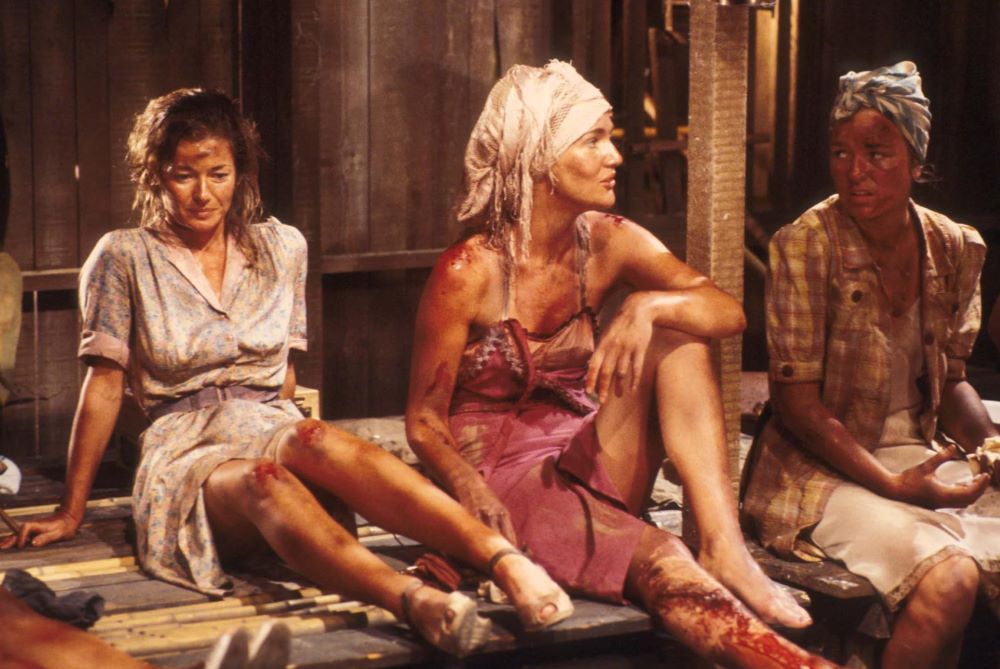
Tenko is admittedly dated in certain respects, not least of which is its circa-1980s video quality, which occasionally makes the whole affair look like a soap opera. (It’s a problem that also plagues the similarly brilliant I, Claudius, and which, like I, Claudius, can take some getting used to.) Tenko‘s soundtrack can also be melodramatic, with a bad, even silly, tendency to emphasize dramatic moments through over-orchestration.
Notwithstanding the wonderful performances, probably Tenko‘s biggest weakness from a modern perspective is casting. Burt Wouk, who plays prison commandant Major Yamauchi, was born in the UK to Chinese parents and spoke no Japanese (on Tenko, he mostly speaks English with a faux-Japanese accent, though he did learn to recite a few phrases phonetically). Emily Bolton, who is so good as the multiracial Christina Campbell (Christina’s father is British, her mother Chinese), is a Dutch actress of Aruban descent. Neither of these casting choices is a distraction per se, but they almost certainly wouldn’t fly in 2025.
Along the same lines, the series’ laser-focus on the experiences of European and Australian detainees comes at the expense of more diverse perspectives. Aside from Christina and, in season 2, one villainous character (the prison camp interpreter Miss Hasan (Josephine Welcome)), there are effectively no speaking roles for women of colour. It’s not hard to imagine a reboot/remake, along the lines of the recent Shōgun (2024), in which the perspectives and experiences of Tenko’s Asian characters are given more prominence.
It helps, then, that Tenko‘s Christina is one of the best-developed characters across the entire series. Showrunner Lavinia Warner and co-writers Jill Hyem and Anne Valery clearly understood the importance of telling Christina’s story truthfully, without resorting to cheap clichés or moralizing. This means confronting the ugly racism which a woman like Christina would have endured from prisoners and jailers alike, but it also means granting her the agency to be more than a token character or walking symbol. Buoyed by a fantastic performance by Emily Bolton (who retired from acting not longer after Tenko – you probably know her best as one of the Bond Girls in Moonraker), Christina is the secret heart of Tenko, the universal outsider who does not fit easily into any of the worlds in which she finds herself.
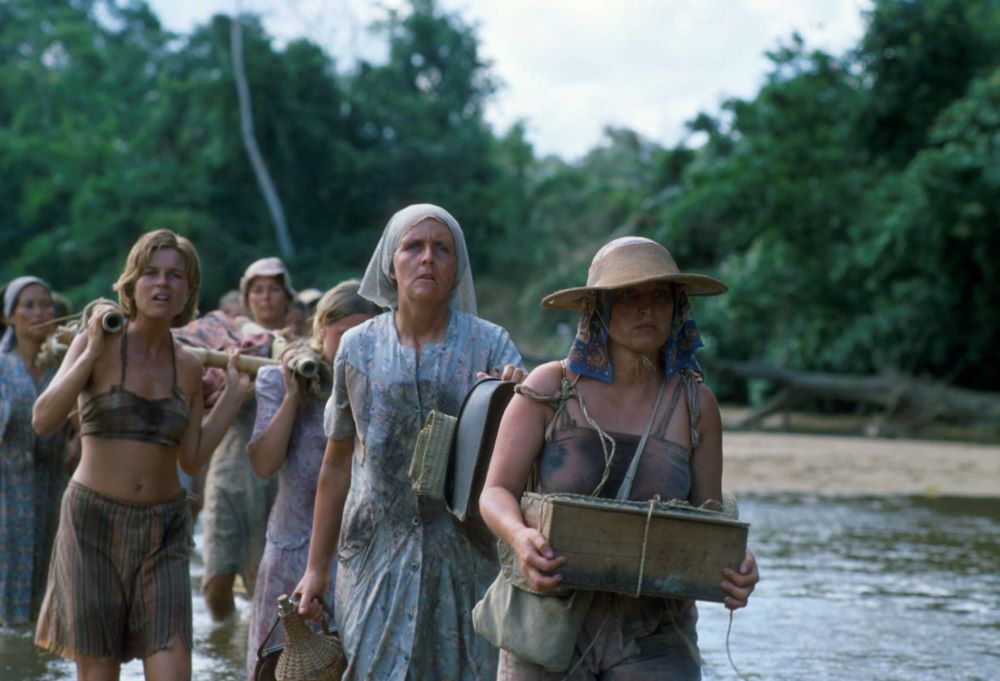
Like Bridge on the River Kwai before it, Tenko also must navigate the very fine line between honestly depicting Japanese crimes during WWII (prisoner mistreatment, torture, withholding supplies and medicine, much more), and avoiding lazy stereotypes.
Tenko largely succeeds on that front as well. The Japanese are more than mere caricatures, and prison commandant Major Yamauchi (Wouk), in particular, is portrayed as a complex, multilayered character. The series is at pains to emphasize Yamauchi’s adherence to a strict moral code, which, though we may not understand it, at least helps to explain his actions. Yamauchi even, over time, grudgingly earns the respect of some of the women, who recognize that he, too is a prisoner of circumstances. Albeit in far better living conditions.
In other respects, Tenko is resolutely modern. Characters curse, but not for cheap effect. Instances of violence or nudity are realistic, and never gratuitous. (One assumes the original North American broadcast contained some unfortunate censorship.) Beloved characters die, in a pattern that wouldn’t become common until Game of Thrones made it a speciality.
Tenko is also not shy about making its heroines suffer, changing them in ways that are painful for the audience to watch. Seeing these characters evolve – how they cope with trauma, and also how they fail to cope – is genuinely moving, and engaging in ways that would likely surprise modern viewers.
Most importantly, Tenko is honest about depicting the harsh realities of camp life. Tenko is ugly and grimy. It’s bleak and depressing and not particularly optimistic, even though we, the viewers, benefit from the knowledge of how history played out. (The show begins in 1942 and, in an intriguing twist, launches its final season with a time jump to August 1945, mere days before the Hiroshima and Nagasaki bombings.)
Following three critically-acclaimed seasons, the series wrapped up with the Tenko Reunion, a two-hour special which aired Boxing Day 1985. Without delving into spoiler territory, the Reunion represents a fascinating cap to the series, as characters grapple with the fallout of what happened during the war and in the camp, and further develop the relationships between each other, and, intriguingly, with the men in their lives, from whom they were separated for so long. Inevitably, the Tenko Reunion also affords its characters, and the audience alongside them, the chance to mourn the many who were lost along the way.
Tenko Reunion was nearly forty years ago, bringing a satisfying close to an intelligent, uncompromising, and altogether original work of small-screen fiction.
You probably won’t recognize any of the actors, and you’ll probably be relieved at the lack of CGI. Most of all, given the opportunity, you’ll be impressed by the sophistication of the storytelling, and devastated by the many twists and turns which take a toll on its wonderful cast of characters.
Tenko is a forgotten masterpiece, and absolutely deserving of your attention.
***
Tenko is available to stream for free on Dailymotion.