A Market Before a City (Early 1800s–1830s)
Before Toronto was Toronto, and long before it became the city we recognize today, the site now known as St. Lawrence Market was already being shaped into one of its most important civic spaces.
In 1803, Lieutenant Governor Peter Hunter designated a portion of land in the growing settlement of York as a public market block. At the time, York was a small colonial outpost on the northern shore of Lake Ontario, still developing the basic infrastructure needed to support a permanent population. The creation of a formal market space reflected both necessity and foresight. Settlements required reliable access to food and goods, but they also needed a central place where trade, communication, and public life could naturally gather.
Long before formal colonial planning, the broader region was part of established Indigenous trade networks that connected communities across what is now southern Ontario. These exchange systems continued to influence commerce in the area even after the establishment of York, shaping how goods and relationships moved through the region.
As the settlement expanded, the Market Block quickly became one of its most active public spaces. Farmers arrived from surrounding townships with produce and livestock, while local residents gathered not only to trade but to exchange information and maintain social connections. By the 1820s, the market had become essential to the daily functioning of the town, even as it remained informal in structure.
As York transitioned into a more structured colonial town, the need for a permanent market building became increasingly clear.
The First Market Building and Civic Life Above Commerce (1831–1849)
A permanent market building was constructed in 1831. This brick structure extended from King Street toward Front Street and represented one of the earliest attempts to formalize public commerce in the growing city.
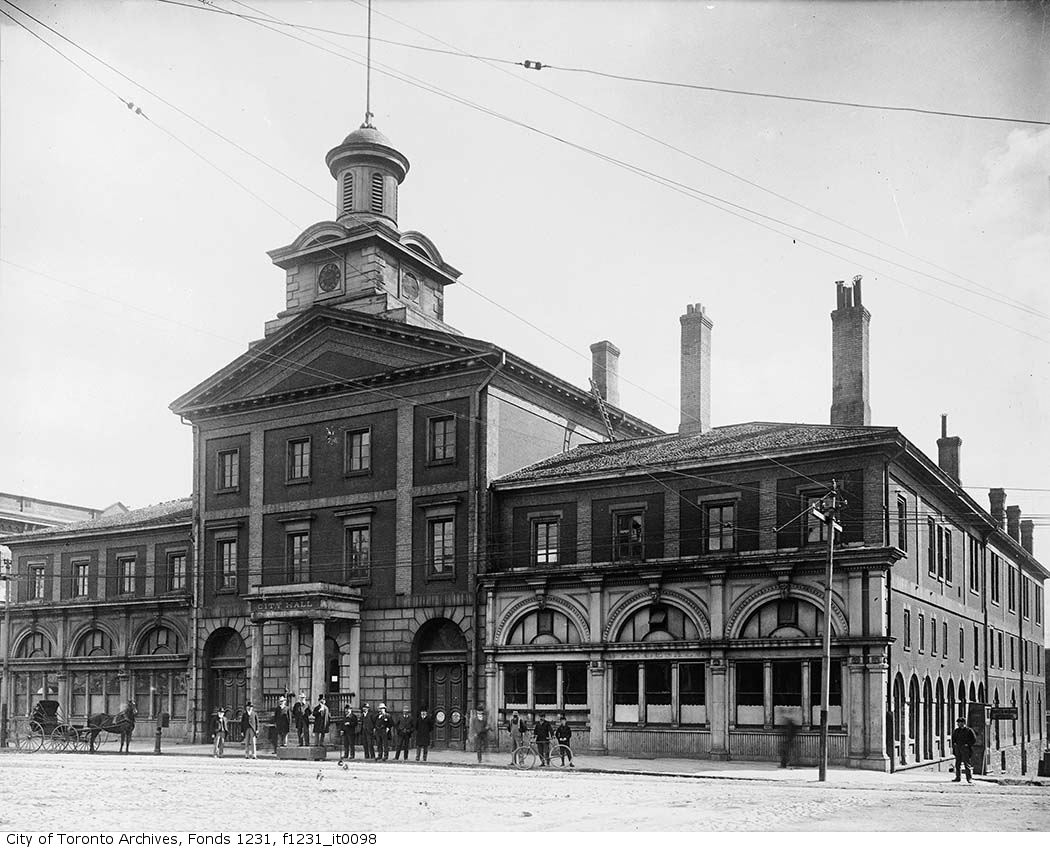
The building also played a limited civic role during this period. Upper rooms were used at times for municipal meetings, reflecting the practical realities of a developing town where dedicated civic buildings were still emerging. Rather than a fully integrated city hall, it functioned more as a shared civic space where governance and commerce occasionally overlapped.
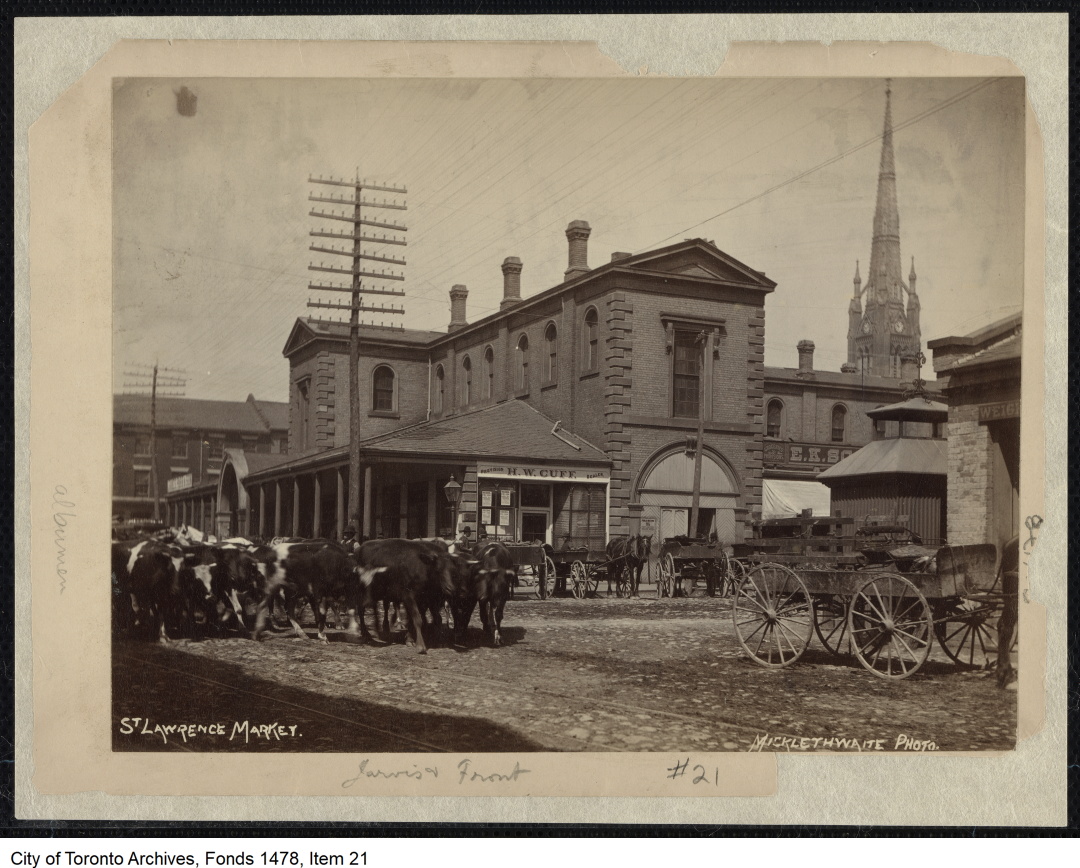
This arrangement reflected the early structure of Toronto’s public life, where institutions were still forming and space was used flexibly to meet multiple needs.
That early building did not survive the mid-century fire. In 1849, the Great Fire of Toronto swept through parts of the downtown core and destroyed much of the original market structure along with surrounding infrastructure. The fire marked a turning point in the city’s development and triggered a wave of rebuilding that reshaped the urban landscape.
Rebuilding and Expansion (1850s–Early 1900s)
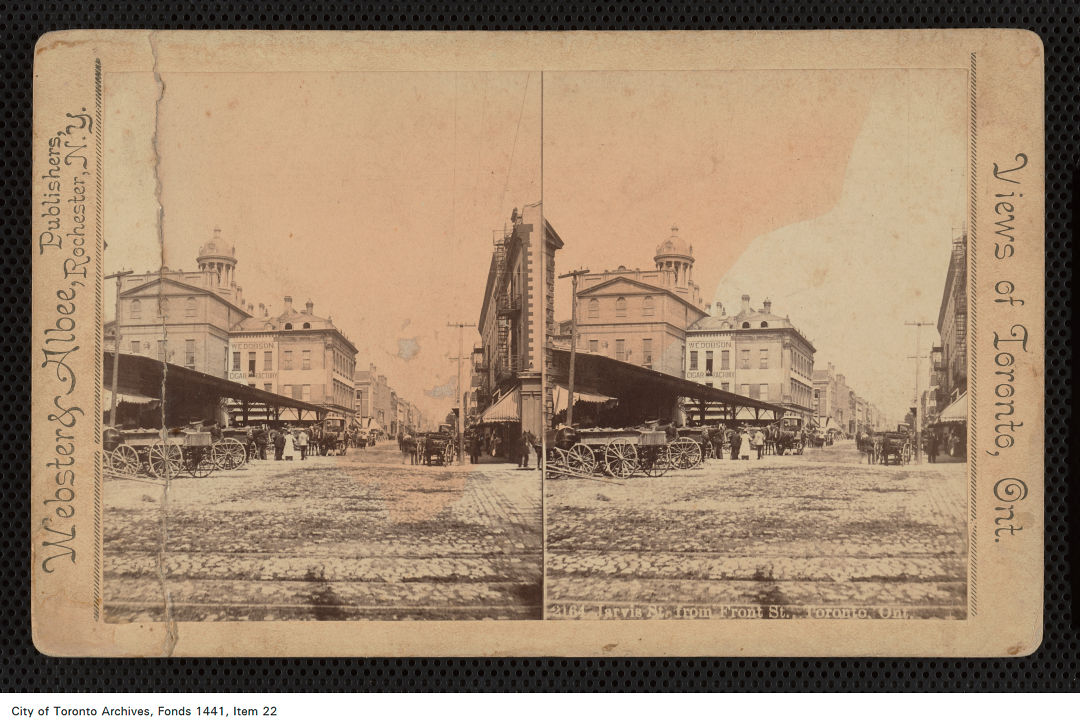
In the decades following the fire, the market district was rebuilt and expanded multiple times as Toronto experienced rapid population growth and industrial development. The surrounding area became a dense commercial hub, supported by rail lines, shipping routes on Lake Ontario, and an expanding regional economy.
By the late 19th century, the St. Lawrence Market had become a central node in Toronto’s food distribution system. It was no longer only a place for local farmers but a regional marketplace connected to broader supply chains across southern Ontario.
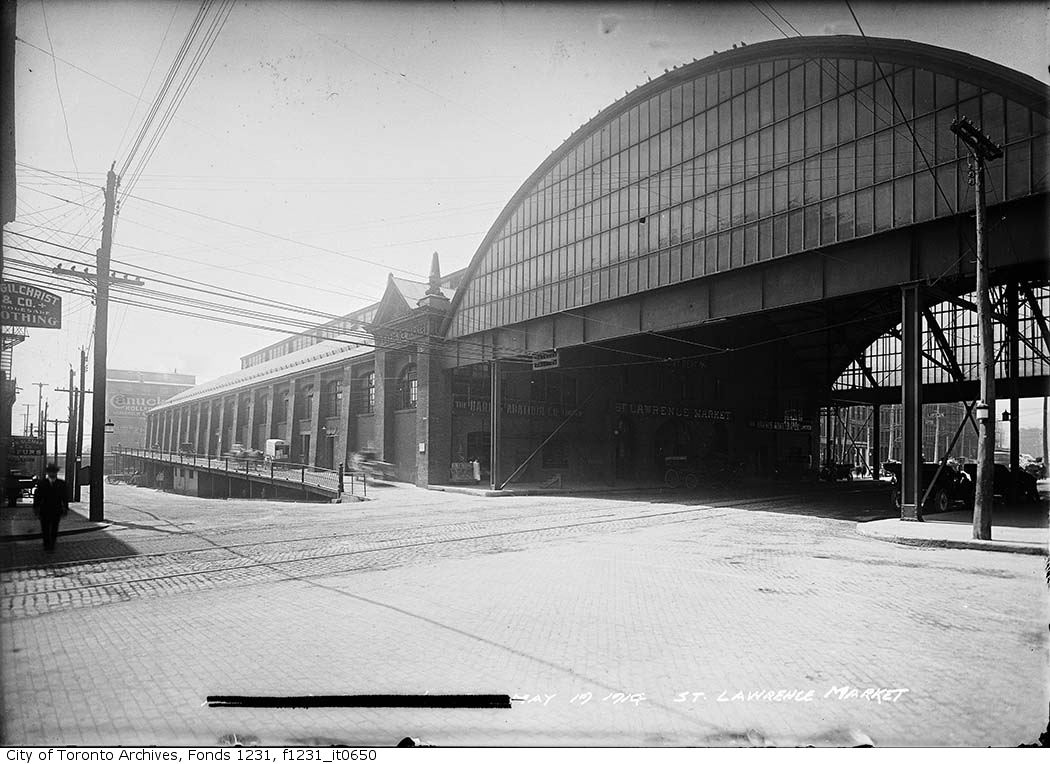
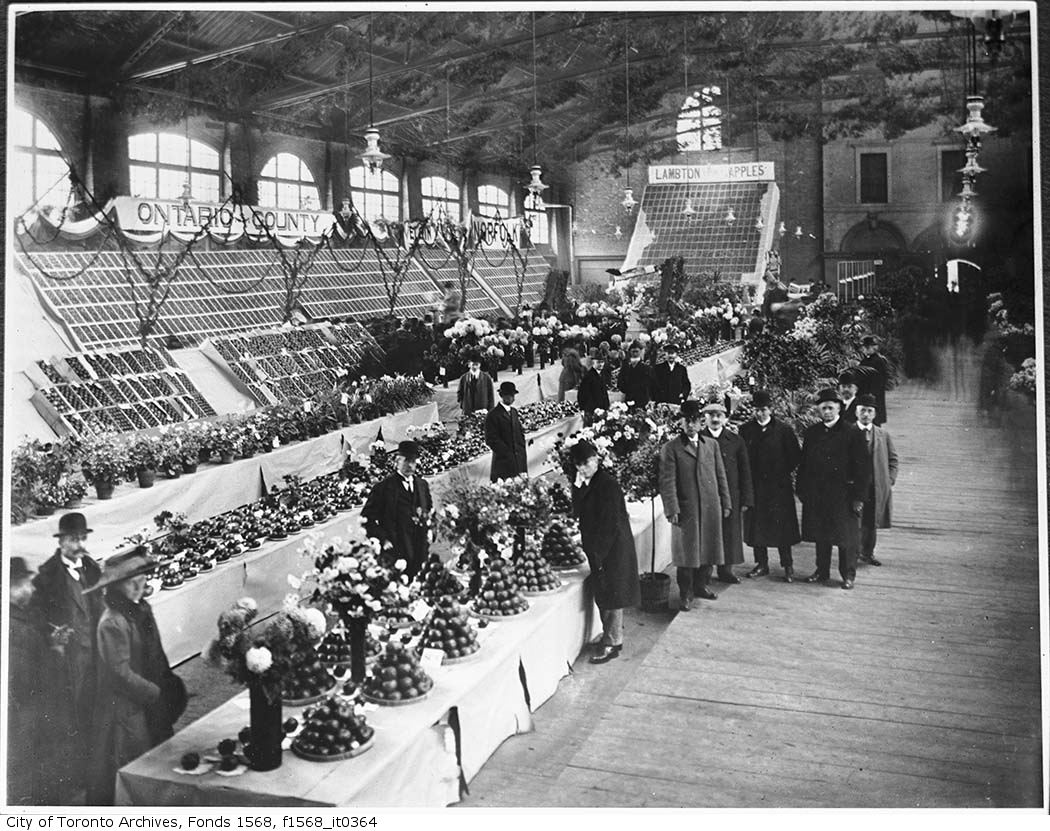
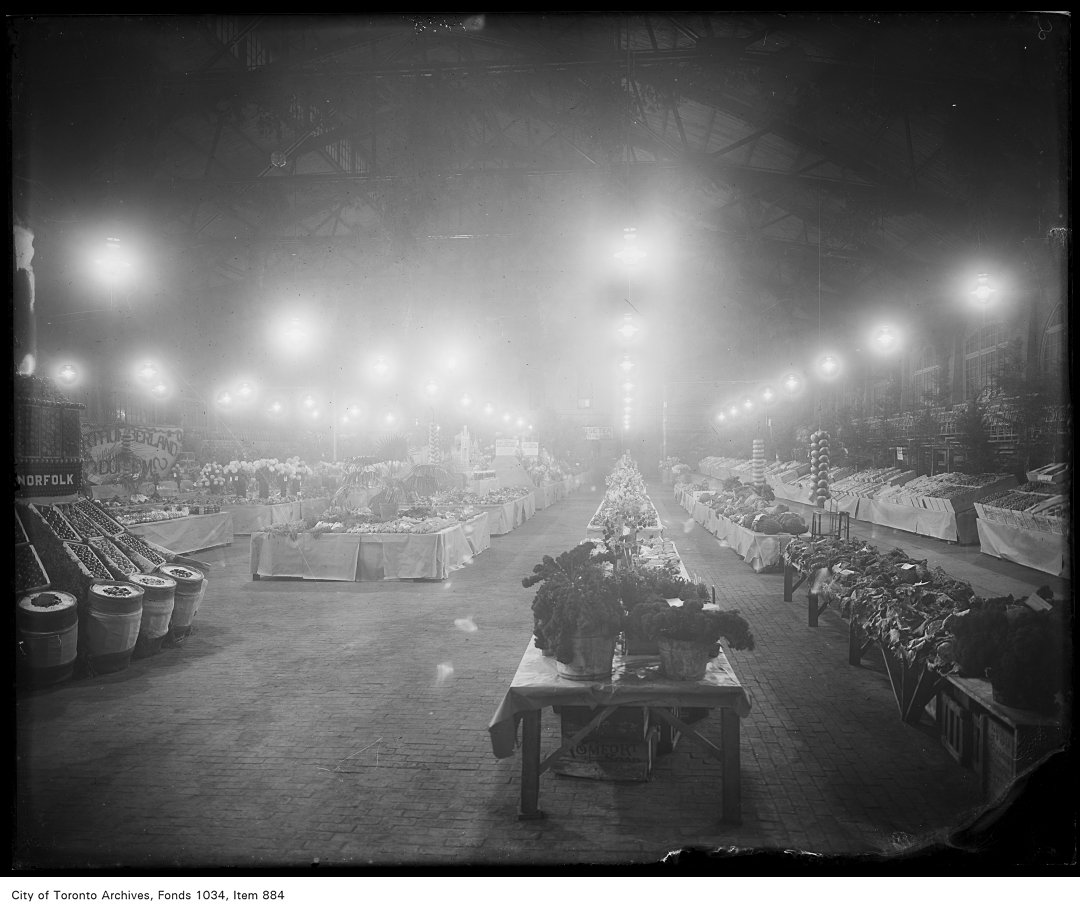
The most significant architectural shift came in the early 20th century, when the South Market building was redesigned into a large covered hall supported by steel trusses. This transformation created a more open interior space designed to improve light, airflow, and circulation. It reflected a broader shift in urban market design toward efficiency and public accessibility.
Rather than a purely functional trading space, the market increasingly became a civic destination, embedded in the daily rhythms of city life.
The South Market as a Civic Constant (1900s–1970s)
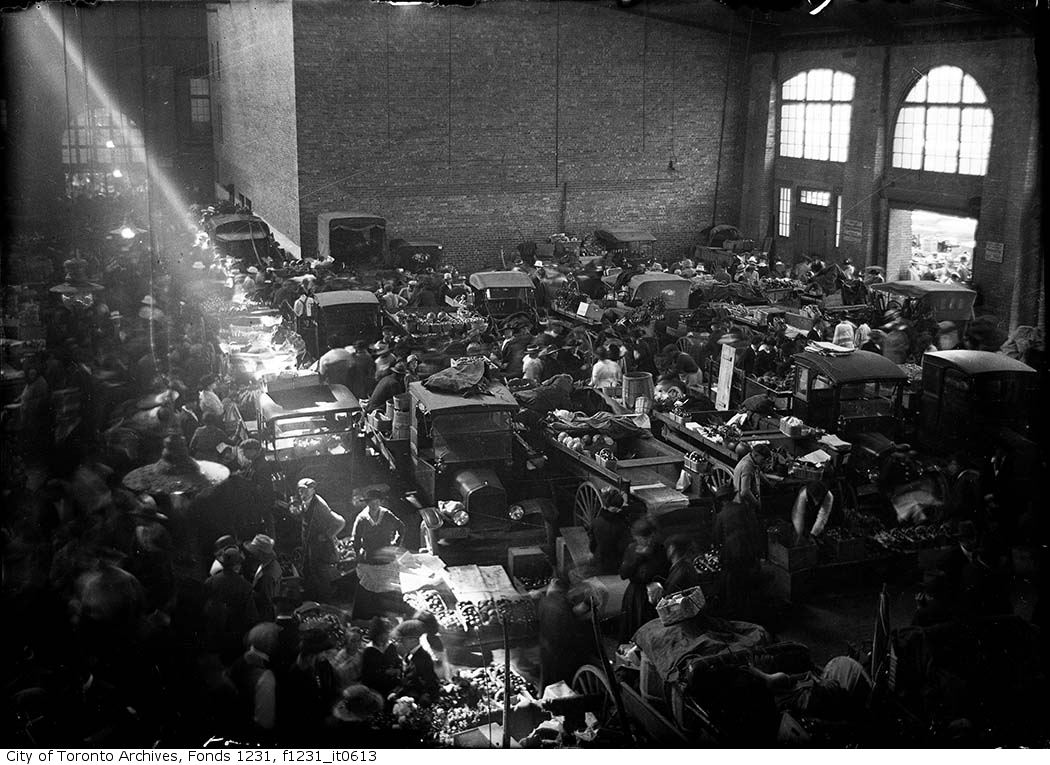
Throughout the 20th century, the South Market remained one of Toronto’s most consistent public institutions. While many North American cities replaced traditional markets with supermarkets and dispersed retail systems, St. Lawrence Market retained its role as a central food hub.
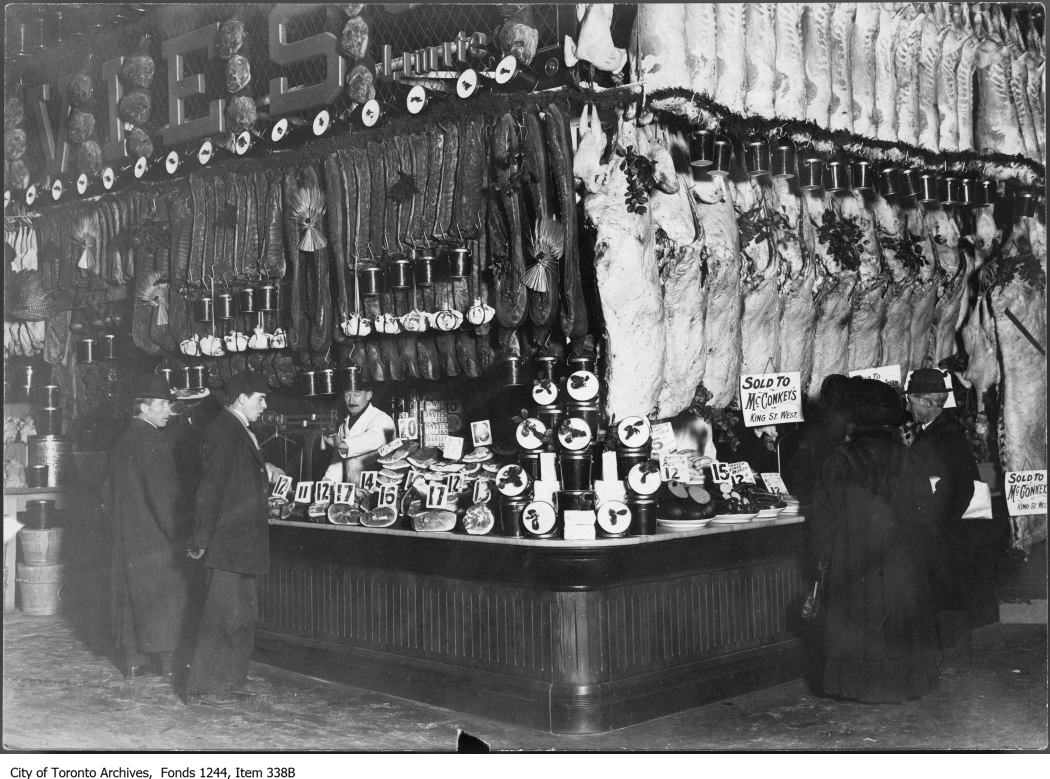
Vendors operated across generations, and many families maintained stalls for decades. Customers returned weekly, building routines that became part of the city’s social fabric.
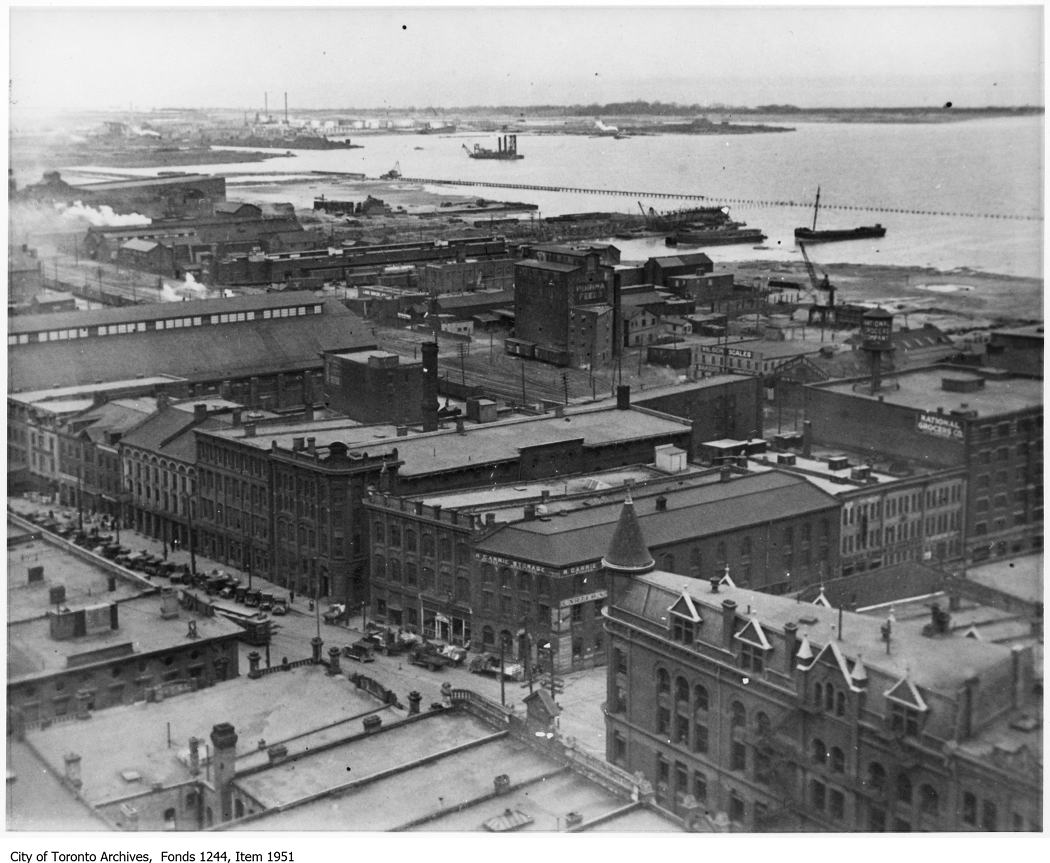
By the mid-20th century, however, the building required significant upkeep, and discussions emerged about whether it should be replaced. These debates reflected a broader tension in postwar Toronto between modernization and heritage preservation.
In the 1970s, the decision was made to restore rather than demolish the South Market. Between 1974 and 1978, the building underwent a major rehabilitation that preserved its historic structure while modernizing its infrastructure. During this period, the former civic chambers were repurposed into what is now the Market Gallery, preserving a visible connection to the building’s earlier municipal use.
This restoration marked an important shift in Toronto’s approach to heritage, helping establish the St. Lawrence Market as one of the city’s most significant preserved civic buildings still in active use.
The North Market and Its Constant Reinvention
Across Front Street, the North Market has followed a very different trajectory.
Unlike the South Market, which evolved within a relatively continuous structure, the North Market site has been rebuilt multiple times over more than two centuries. Different buildings have occupied the site in the 19th and 20th centuries, reflecting shifting commercial needs and changing urban design priorities.
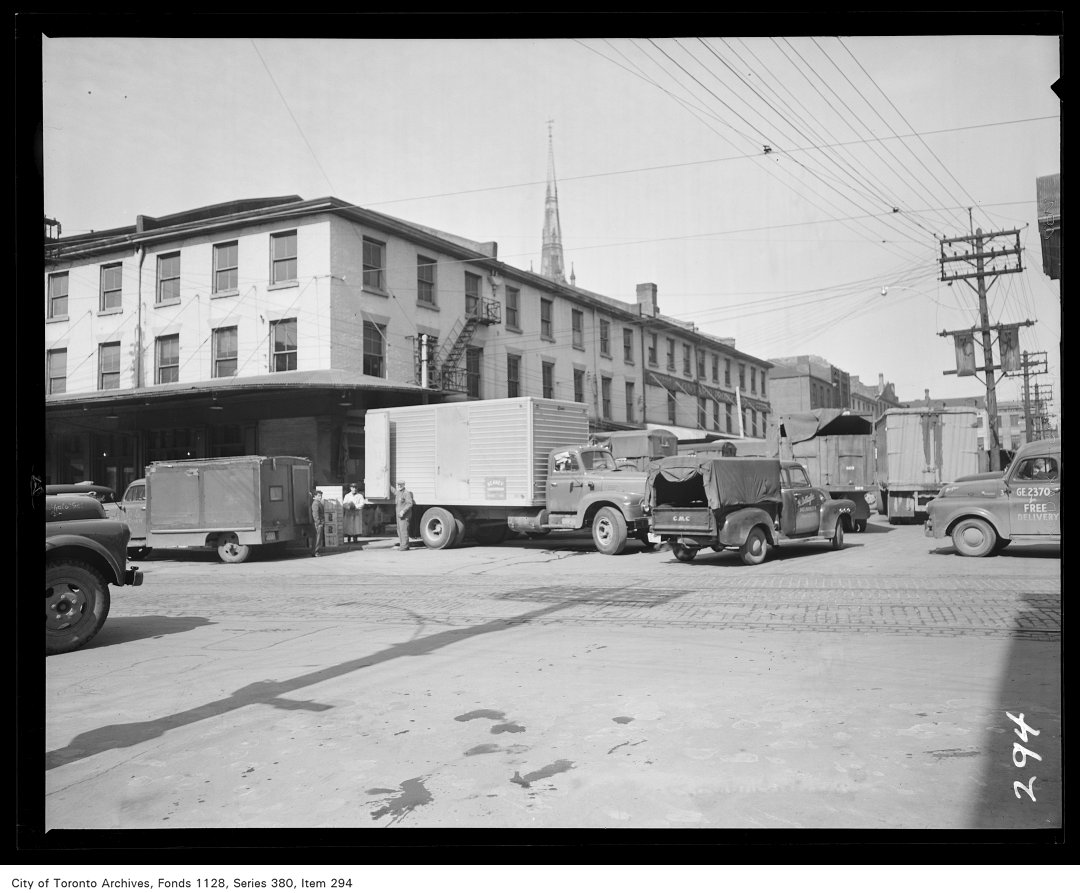
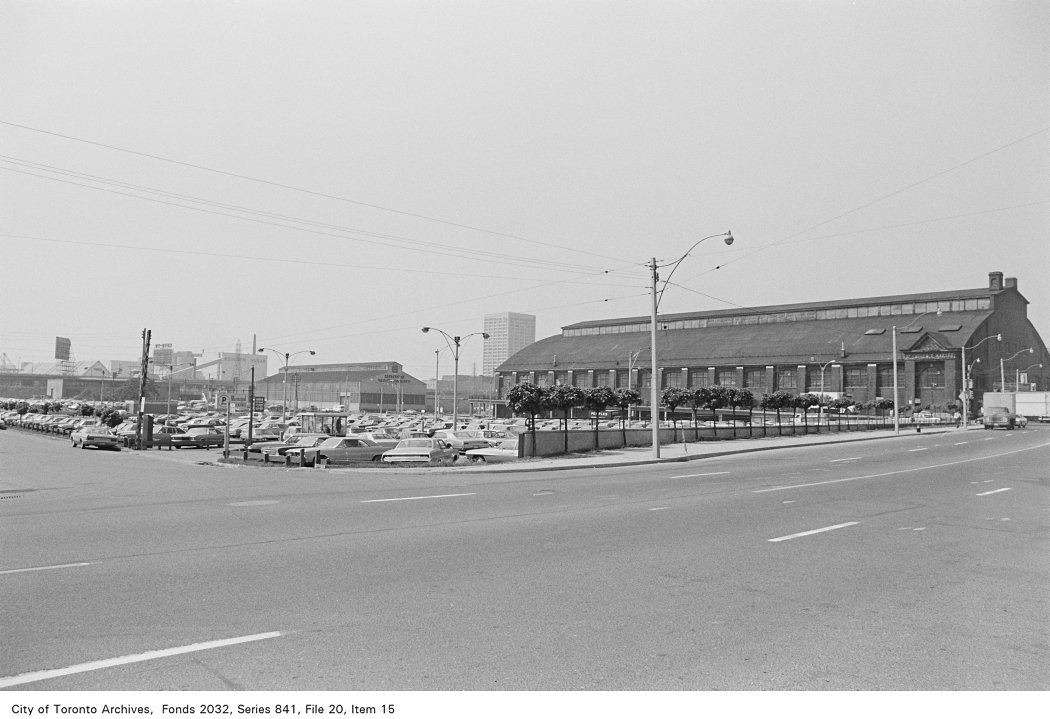
A canopy once connected the North and South Markets across Front Street, reinforcing their functional relationship as a unified commercial district. That connection was removed in the 1950s as automobile traffic increased and the street was reconfigured.
In 1968, a new single-storey North Market building was constructed. While functional, it lacked the architectural presence and flexibility required for a rapidly evolving city. By the early 2000s, it was widely recognized as outdated, and plans were developed for a complete redevelopment of the site.
Archaeology Beneath the Surface (2015–2017)
When the 1968 North Market building was demolished in 2015, the site became subject to mandatory archaeological assessment as part of the redevelopment process.
Excavations uncovered structural remnants from earlier market buildings, along with a range of artifacts including tools, ceramics, and commercial objects from the 19th century. These findings confirmed the long continuity of market activity on the site and provided a clearer picture of its historical development.
The archaeological work was integrated into the construction timeline and documented as part of the redevelopment process rather than functioning as an open public excavation site. Even so, it reinforced the depth of historical layering beneath the modern city.
A Decade of Transition (2015–2025)
Following demolition, market vendors were relocated to a temporary structure at 125 The Esplanade. What was expected to be a short-term arrangement ultimately lasted nearly a decade.
During this period, the market continued to operate, but the absence of a permanent North Market building created a noticeable shift in the district’s spatial identity. The South Market remained active throughout, maintaining continuity for daily operations, while the northern component adapted to temporary conditions.
The redevelopment process experienced delays due to design revisions, procurement changes, and the complexity of building on a historically sensitive site.
The New North Market (2019–2025)
Construction resumed in 2019 with a revised vision for the North Market as a multi-purpose civic building combining public market space, government functions, and improved urban connectivity.
The ground floor was designed as a flexible market hall intended for farmers’ markets and community programming. Above it, provincial court facilities were incorporated into the structure, reflecting a modern approach to civic integration within dense urban space.
The building also includes improved pedestrian circulation, underground parking, and stronger physical connections between Front Street, Market Lane, and the surrounding district. Its design emphasizes transparency and openness through extensive use of glass and natural light, marking a clear shift from the heavier institutional architecture of its predecessor.
The 2025 Opening and a Return to Function
In 2025, the new North Market officially opened, restoring a permanent home for the Farmers’ Market after years of temporary relocation.
The reopening marked a significant moment in the long redevelopment process, re-establishing the northern component of the St. Lawrence Market complex while maintaining continuity with its historic function.
The South Market continued uninterrupted throughout this period, reinforcing its role as the long-standing anchor of the district.
The Market Today
Today, the St. Lawrence Market complex consists of the South Market, the newly rebuilt North Market, and the adjacent St. Lawrence Hall. Together, they form one of Toronto’s most historically layered and continuously active civic districts.
The South Market remains a daily destination for food, culture, and community life. The North Market now supports weekend markets and civic programming, while the surrounding area continues to evolve as a key public space within the city.
What makes St. Lawrence Market remarkable is not simply its age, but its continuity of purpose. For more than 200 years, it has remained a place where people gather to trade, connect, and participate in the life of the city.
It has changed shape many times, but it has never stopped being a market at the centre of Toronto’s civic identity.
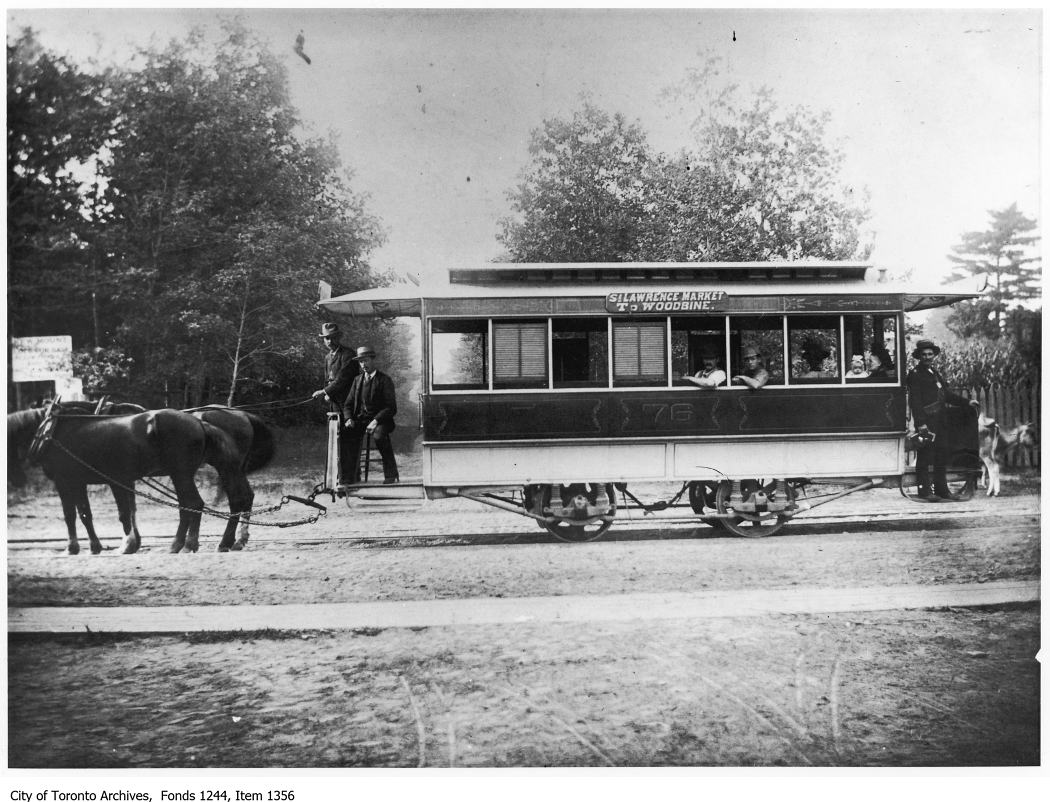
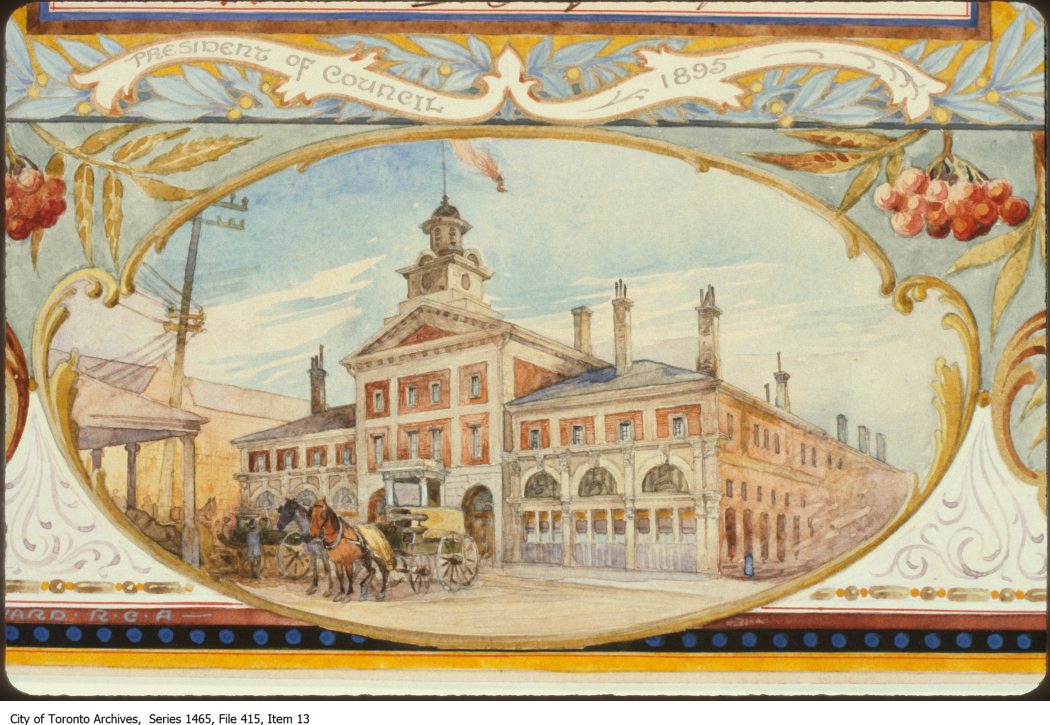
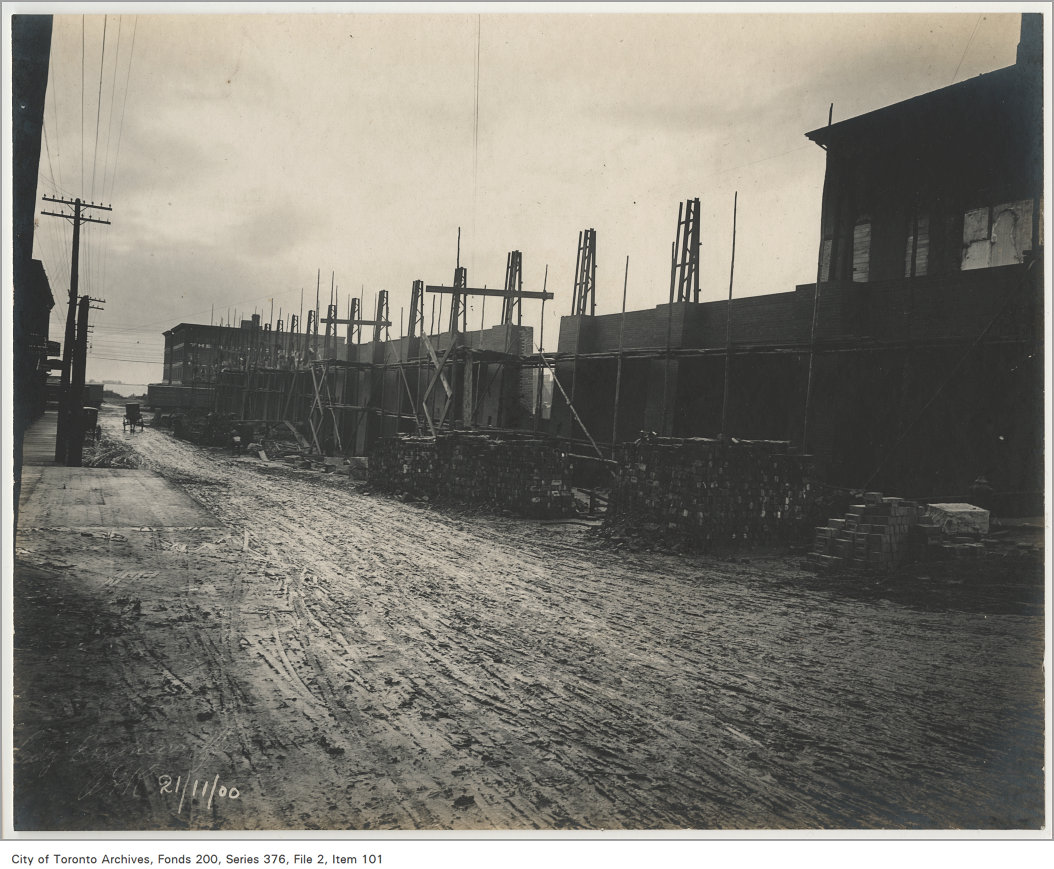
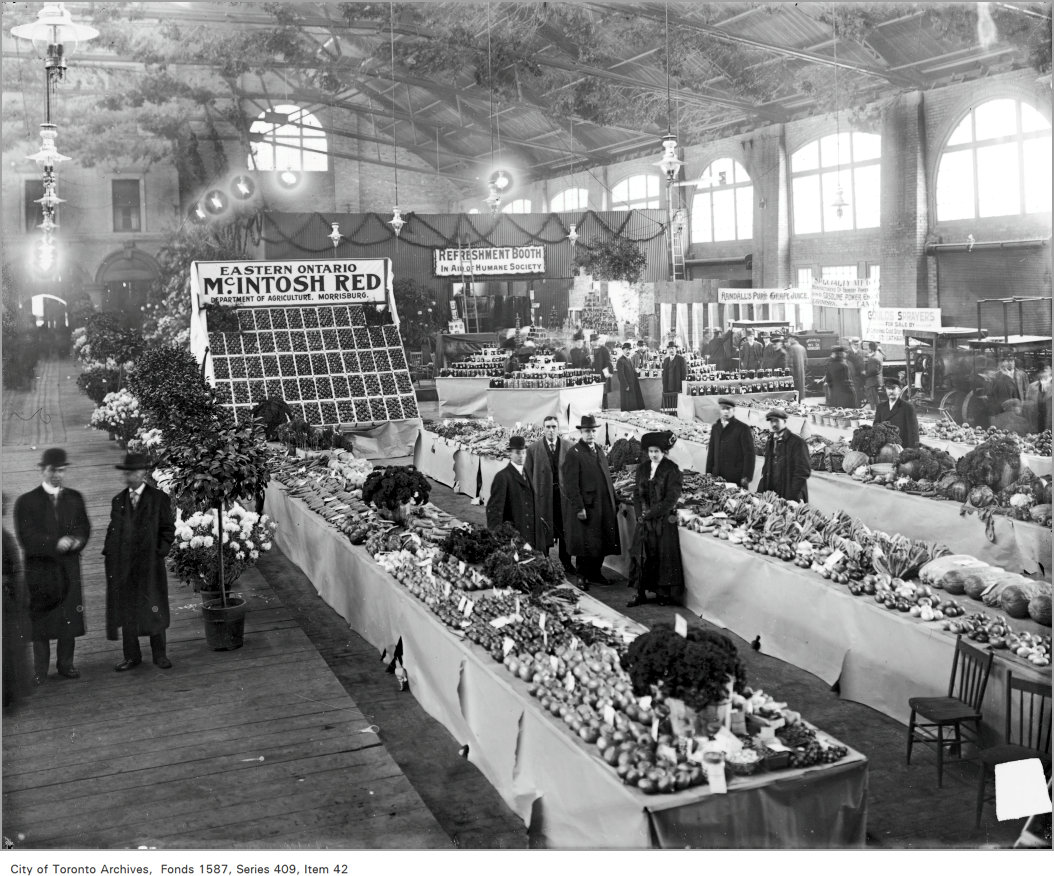
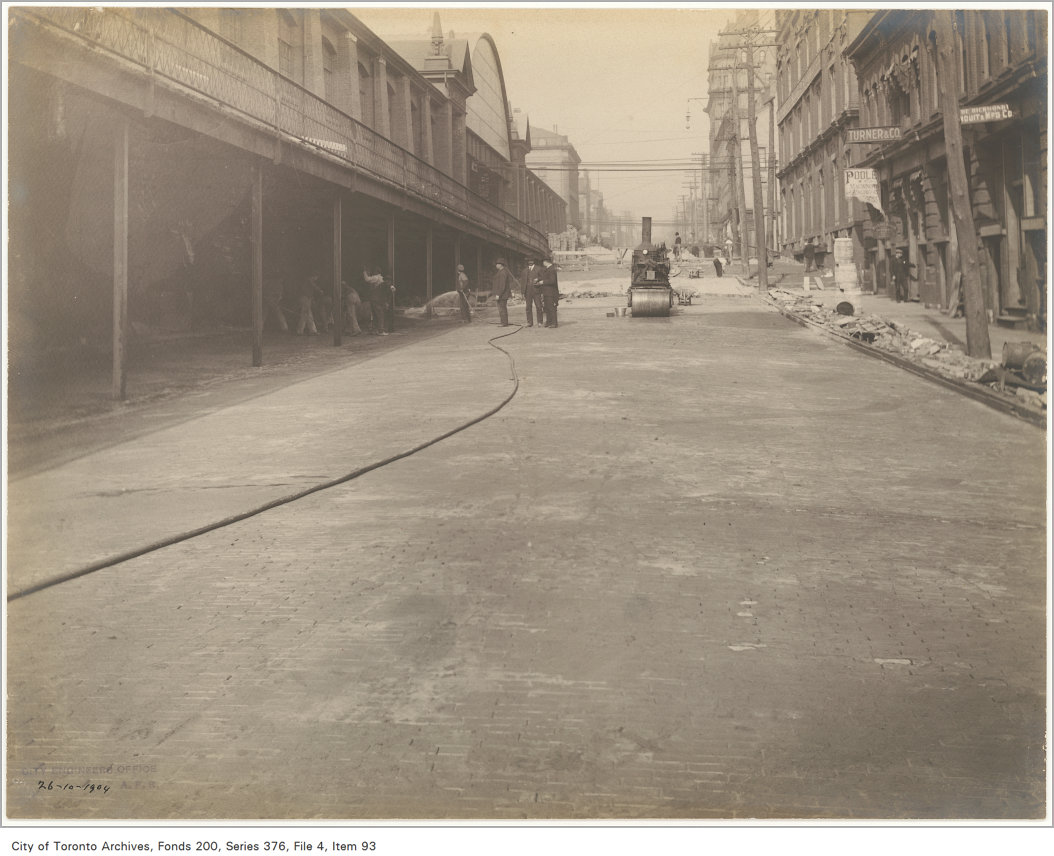
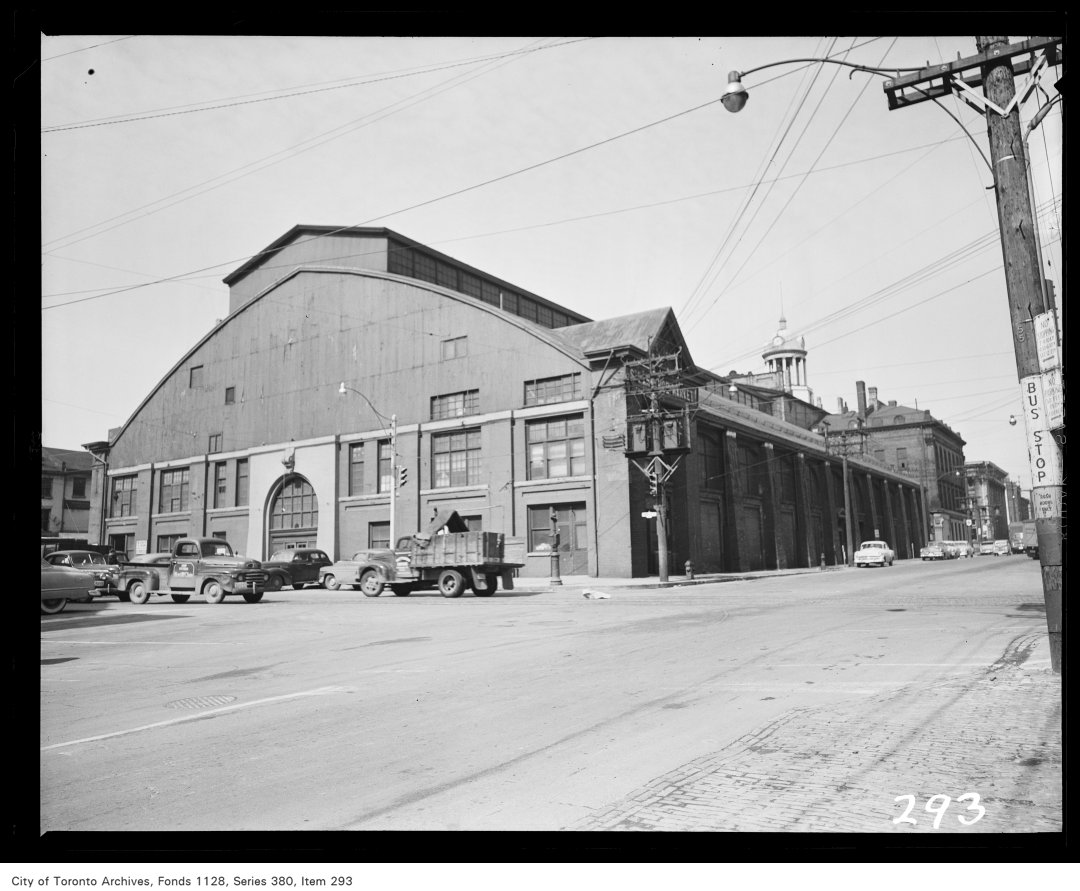
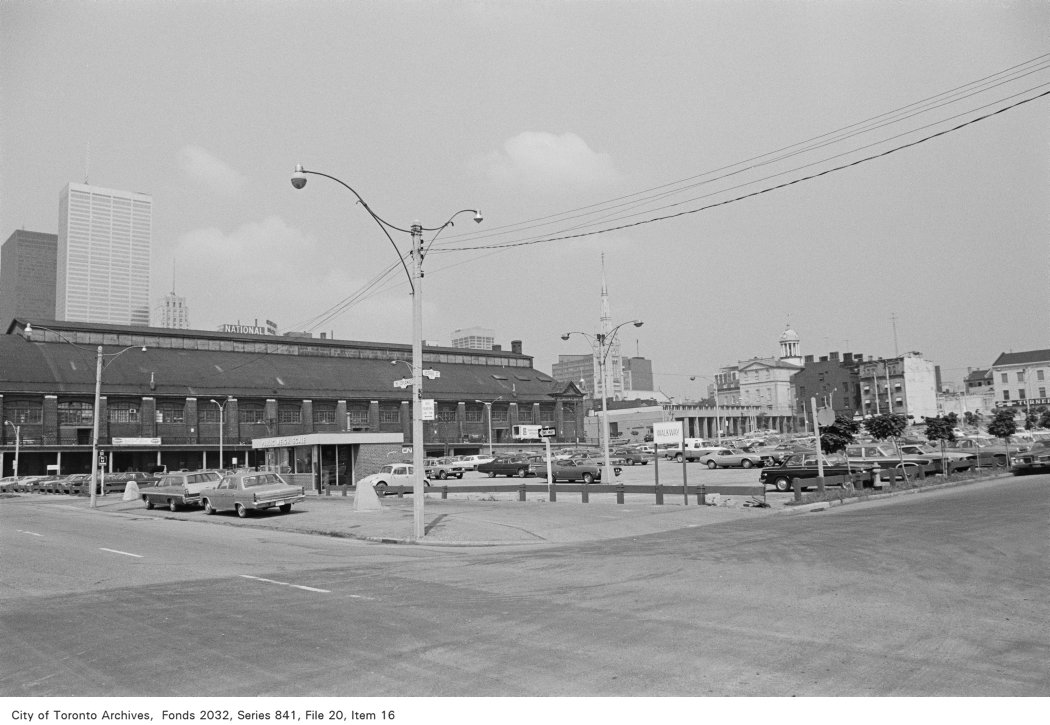
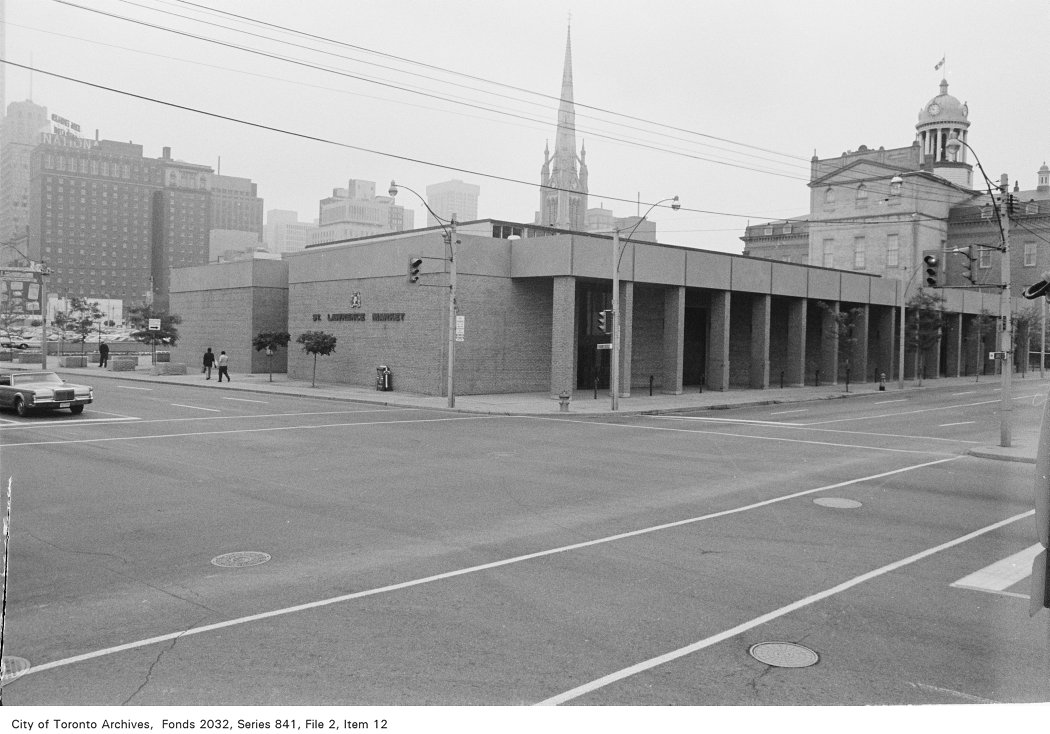
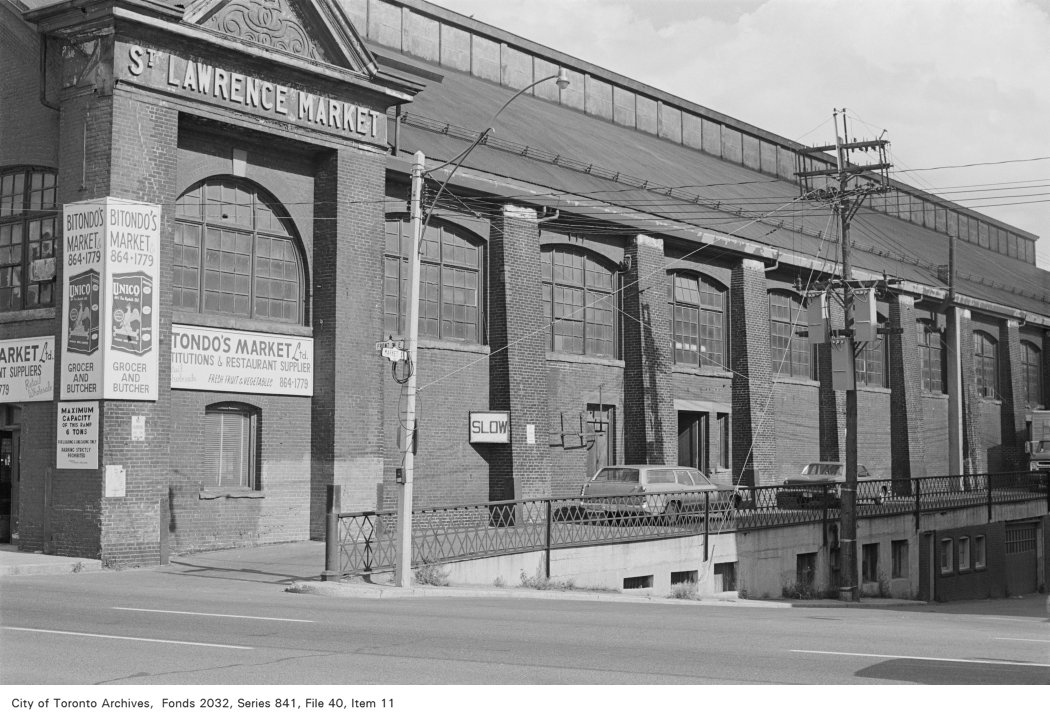
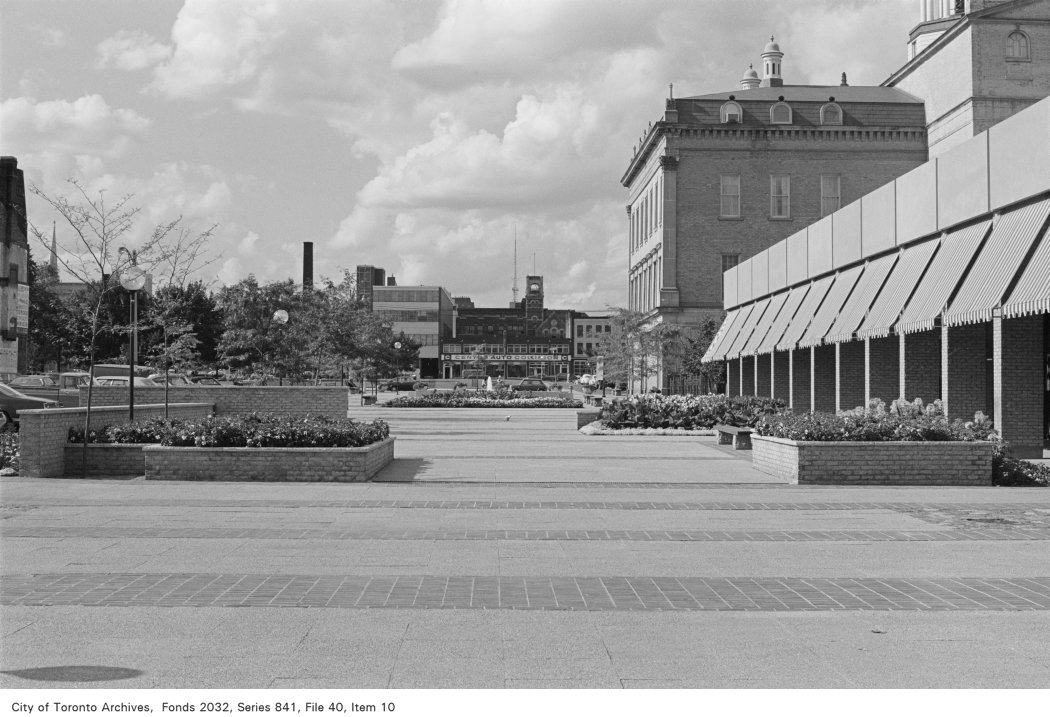
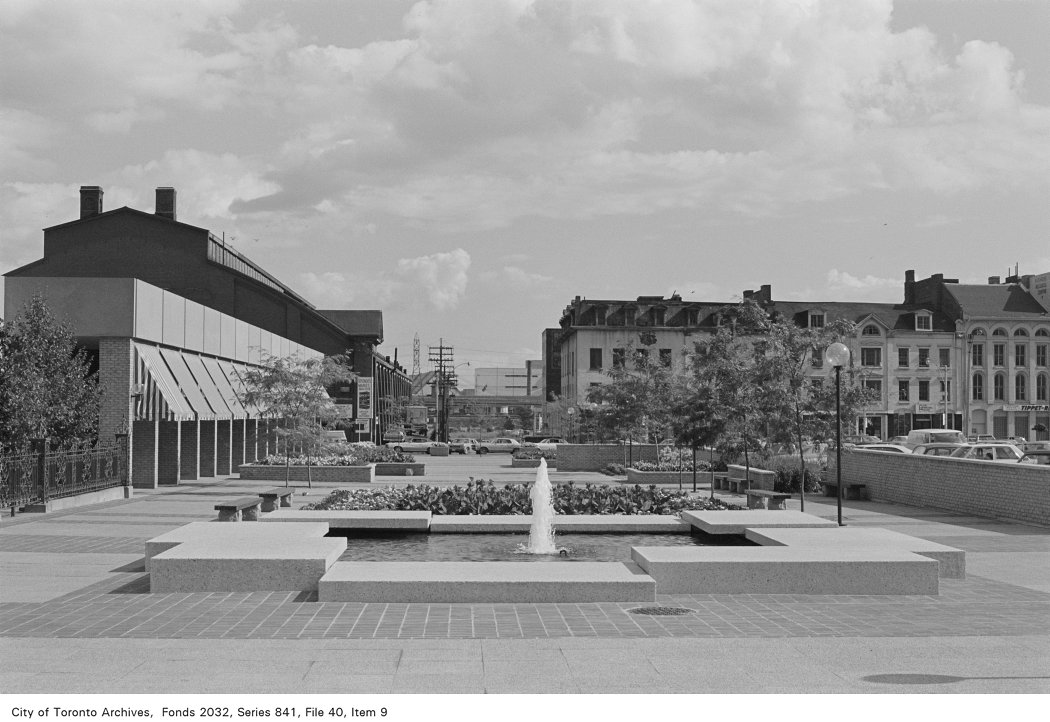
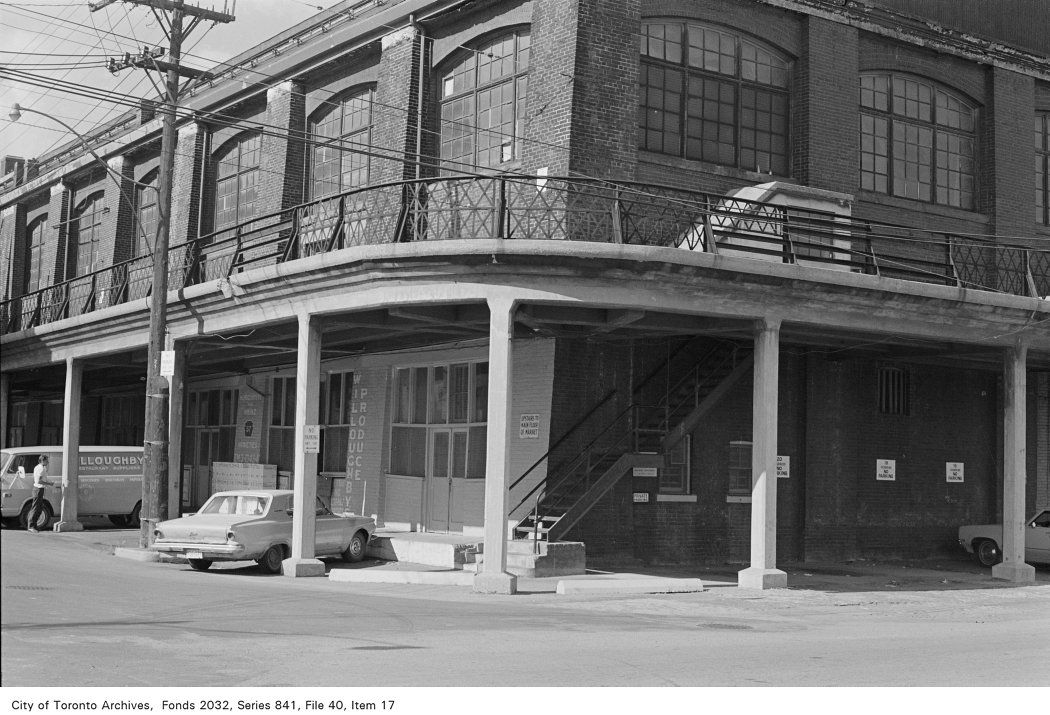
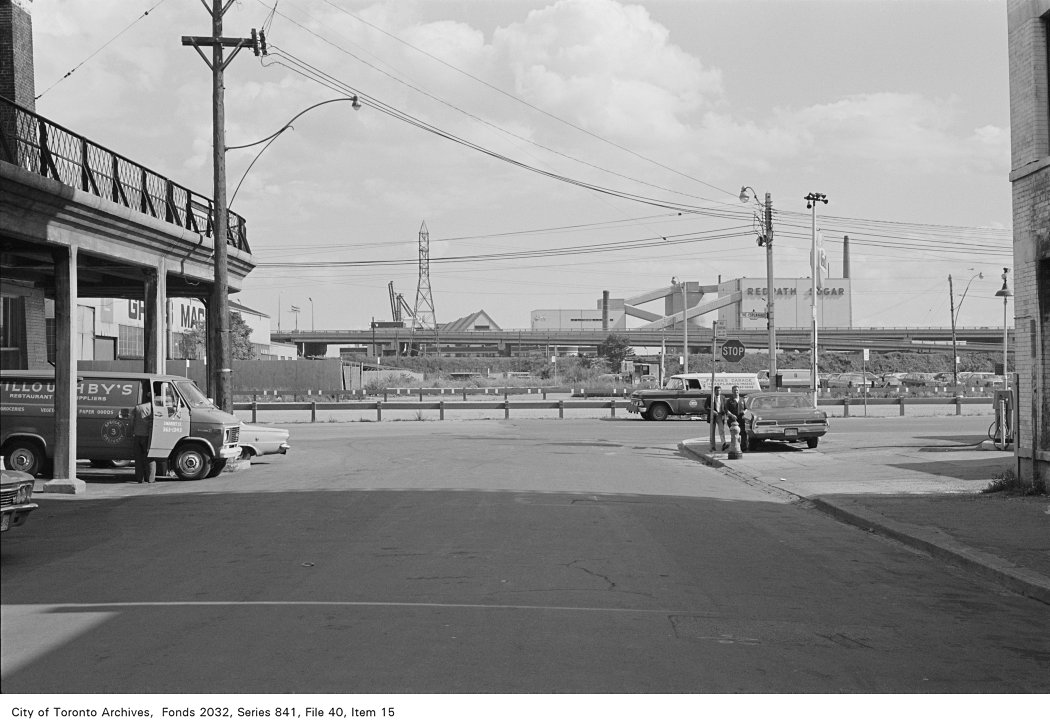
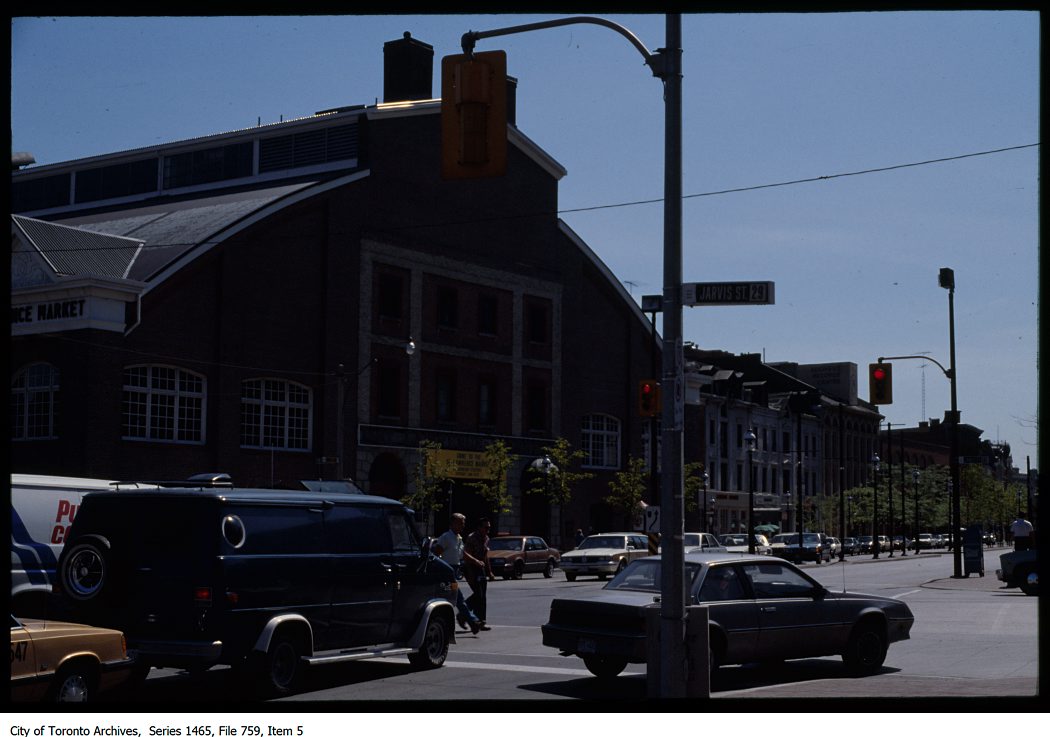
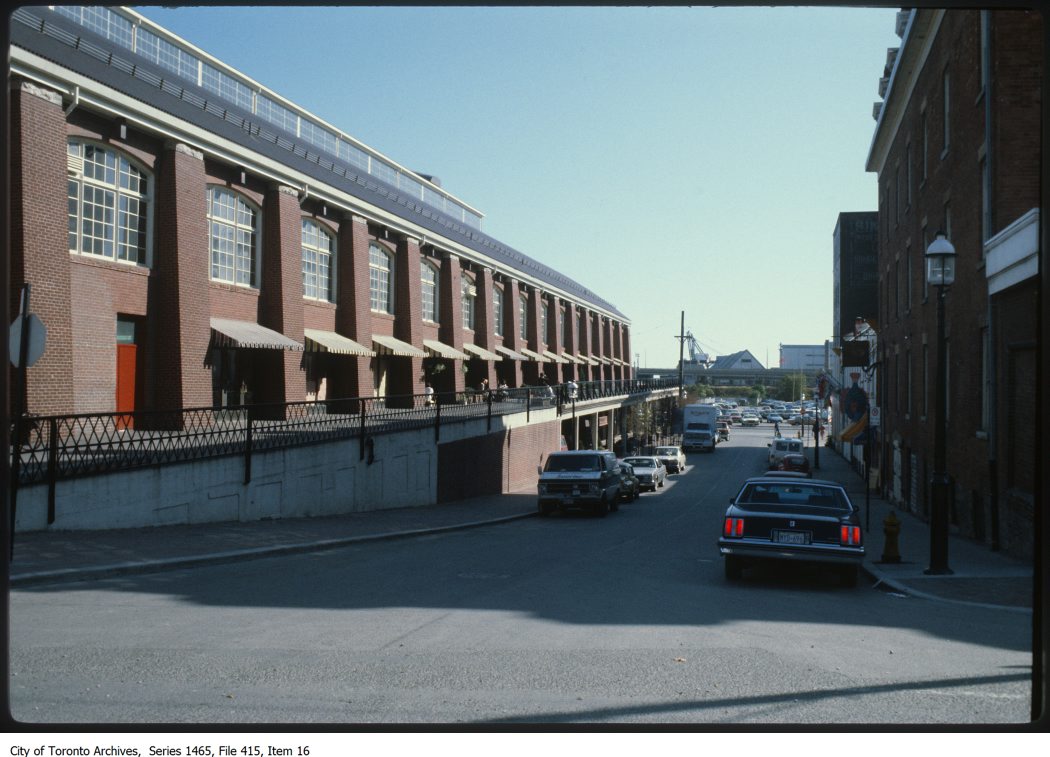
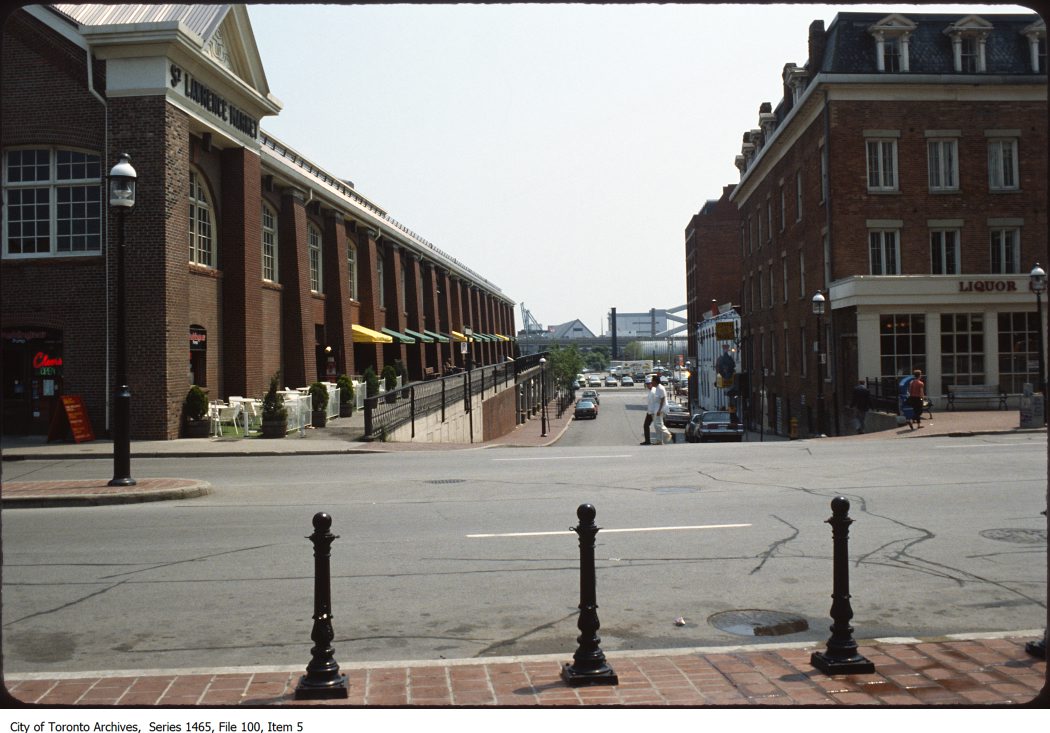
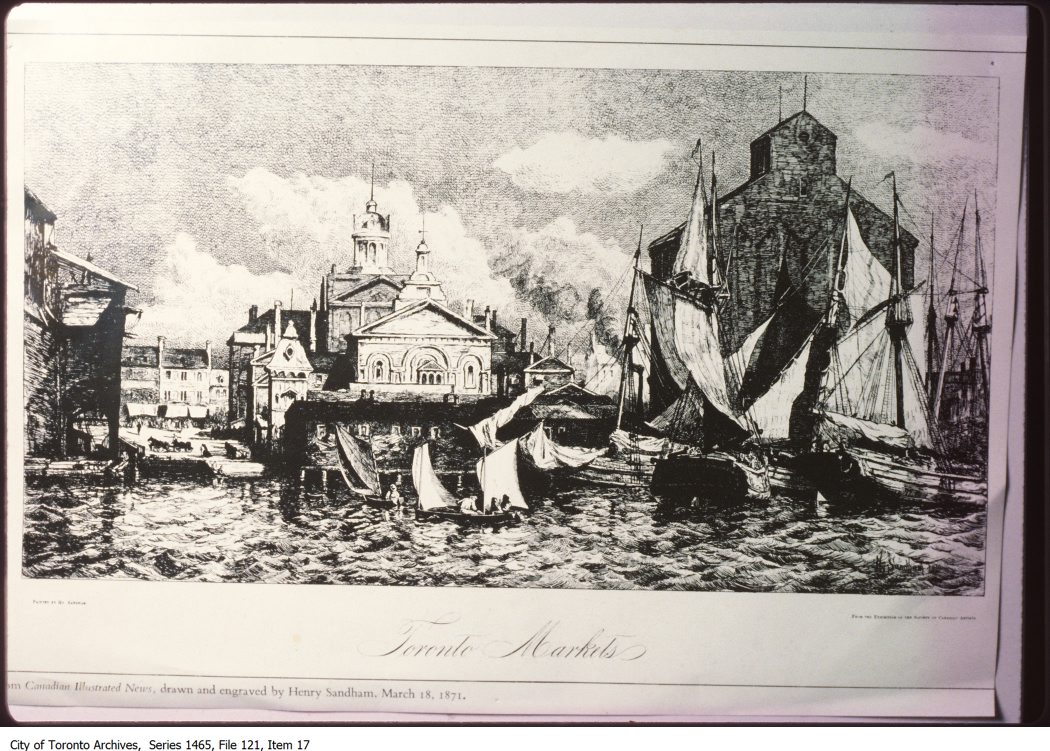
Check out some of the photographs we found on the Toronto archives to see the changes to the St Lawrence Market and neighbourhood over the years. For more images, be sure to check out the archives here.