The Game: Super Mario World (1990)
Original Platform: Super Nintendo Entertainment System
Where We Played It: Nintendo Switch, SNES library, Switch Online.
Verdict: 90s kids were a heck of a lot more patient than me.
Super Mario World is legendary.
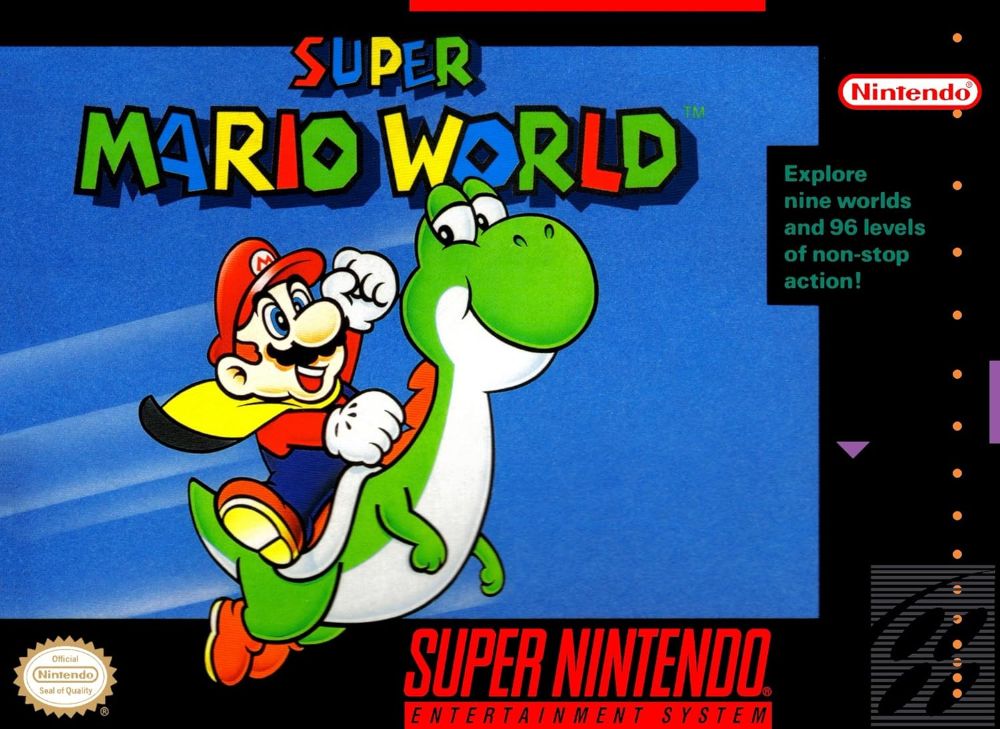
Perhaps the most legendary Mario title. Odds are, if you ask someone to draw Mario, the version they come up with looks an awful lot like the 16-bit hero of this game: bright blue and red, slightly paunchy, that famous pixel moustache.
Super Mario World is the best-selling Super Nintendo game of all time. It sold 20,610,000 units, a number which cannot be explained solely by the fact SMW came packed in with the console at release in 1991. For a time, it seemed like everyone owned SMW, and if you didn’t, you’d begged, borrowed, stolen a copy in order to fit in. So yes, sure, I’d dabbled in SMW in the past, at birthday parties and sleepovers and at arcade bars like Toronto’s ZED*80. What I had not done, until now, was actually sit down and play the dang thing from beginning to end.
No taking turns with a cousin, no abandoning my progress mid-World-3 because Dad came to pick me up. Booting it up recently, I felt like I was travelling through time: finally sitting down to my own copy of SMW, finally in with the cool kids. Even if they’d all long since grown up, had kids, and dusted off those very same cartridges to introduce a whole new generation to this legendary experience.
My name is Steven Lantier, and I am here to tell you Super Mario World is not as good as you remember.
This realization shocked me, and it took a while to reconcile myself to it. (This was one of the harder entries to write in the burgeoning Late to the Game series.)
But before we get to my concerns (and your opprobrium), I think it’s fair to start with the good stuff.
First and foremost, Super Mario World is a walking, running, jumping blueprint. The urtext for the side-scrolling platformer, SMW is inherently fun to play, if only to spot all the ideas which set the standard for decades to come.
Without Super Mario World, we simply wouldn’t have Donkey Kong Country, Crash Bandicoot, and Super Meat Boy. No Celeste, Rayman, or Braid either, not to mention the thousands of other games that owe a debt of gratitude, one way or another, to this 1990 classic directed by Takashi Tezuka and produced by Mario creator Shigeru Miyamoto. Obviously, there’s a lot that works here.
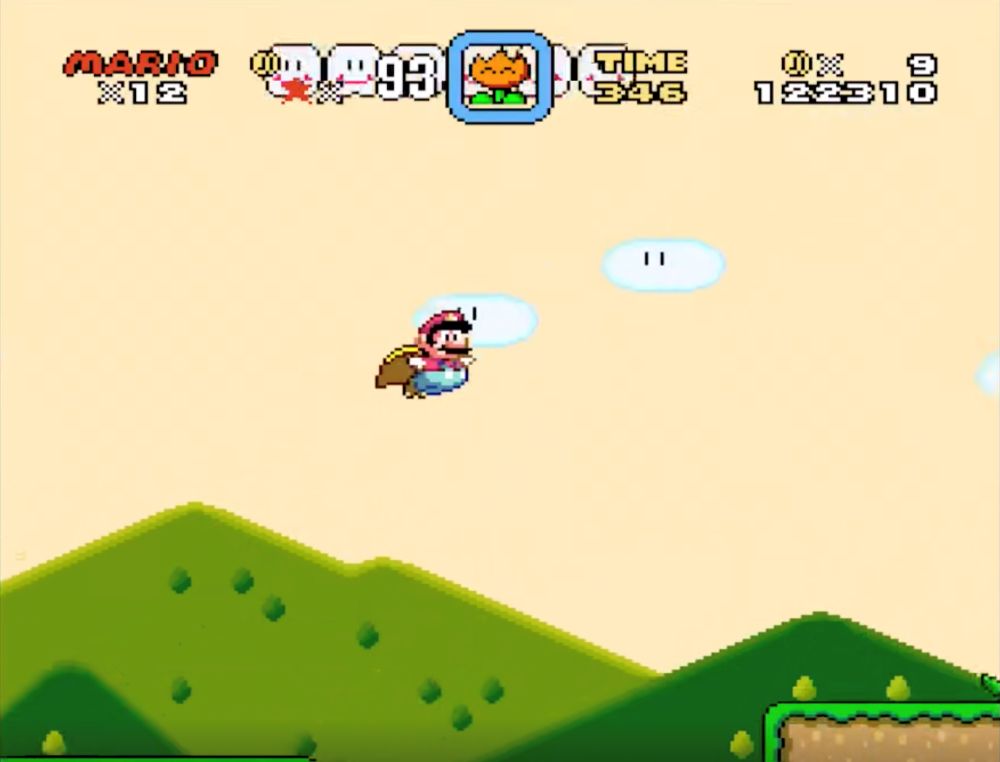
The level design is fun and interesting, with a bevy of powerups – a feather which grants a flying cape, a flower that lets you shoot fireballs – which keep level progression interesting. Enemy types are well-designed, albeit rather repetitive (there’s something like twelve different Koopa Troopas). The miniboss fights at the end of each world against the various Koopalings – Lemmy, Wendy, and other characters I’d only ever encountered in Mario Kart – are enjoyable and fair.
SMW also sees the introduction of the Yoshis – this game clarifying Yoshis are a species, not just one individual – with many of the game’s best moments happening when you’re astride a green, blue, or yellow giant dinosaur, hoovering up enemies. This is, in all honesty, peak Yoshi, the perfect combination of novel gameplay mechanics married to rewarding level design. No other game – not Yoshi’s Island with its annoying Baby Mario, not Super Mario Galaxy 2 with its decent-but-less-imaginative Yoshi levels – comes close.
Super Mario World is also beautiful, albeit not as beautiful as my beloved Donkey Kong Country, which arrived late in the SNES lifespan and which clearly shows it. As you’re undoubtedly already aware, SMW’s soundtrack is also memorably and dangerously earwormy.
But – and here we go now – SMW is also tricky, and annoying, in ways that become increasingly unpleasant as you make your way across its nine worlds (ninety-six levels total, if you track down all the secret ones, which I most assuredly did not).
The controls are floaty – Mario moves like he’s on ice – and the levels are ripe with devious challenges purpose-built to trip you up. Surprisingly, and disappointingly, SMW is very much a game of trial and error, with traps that surprise and enemies that confound the first, fifth, or tenth time you encounter them. I demand an apology from anyone who ever mocked my adoration of Ghouls ‘n Ghosts. Super Mario World – and Super Mario himself – is just far too finicky, far too likely to go careening off a ledge despite my best efforts.
These problems are also more or less absent from future Mario entries, further reinforcing the notion that what people think they love about SMW is really what the series became, later on.
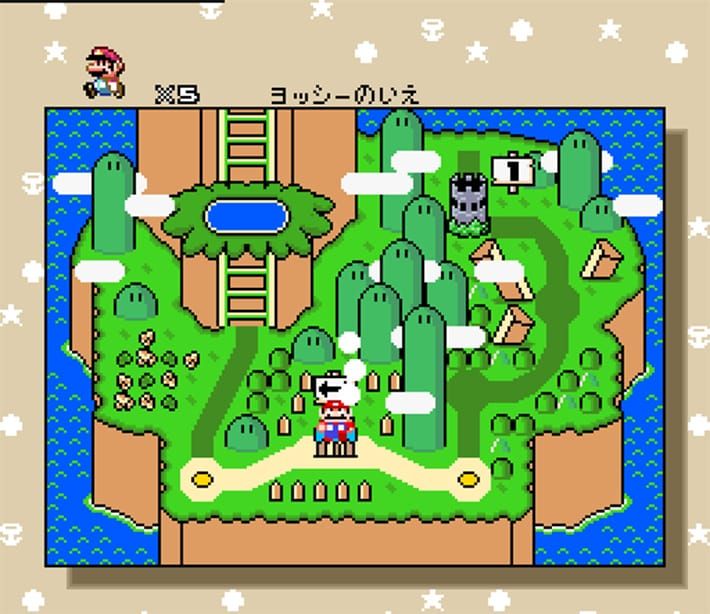
Often when I start a new platformer, I’ll try something I call the “Emmitt Smith test”.
It works like this.
In a perfectly designed platformer, it should theoretically be possible to complete a full run-through of a stage, vaulting platforms and dodging enemies, without stopping or slowing even once. If a level hasn’t been optimized – if there are platforms you’re forced to wait for, or syncopated enemy attacks which interrupt game flow – the game fails the test. Sonic the Hedgehog is a case study for Emmitt Smith’ing: even on your first attempt, it’s possible to thrillingly blast your way through a level in one shot, provided you’re paying close enough attention and trusting your reflexes.
SMW, on the other hand, regularly grinds to a halt as you’re forced to stand around and wait: for a platform to move to just the right spot, for an enemy to complete its attack loop, for one or another thing to trigger so Mario can move forward. Valley of Bowser 2 is a prime example of this: half the level is spent idly waiting for screen-filling sand to raise or lower until the operative path becomes available. It’s slow, it’s not particularly challenging, and the only real risk of dying is from boredom.
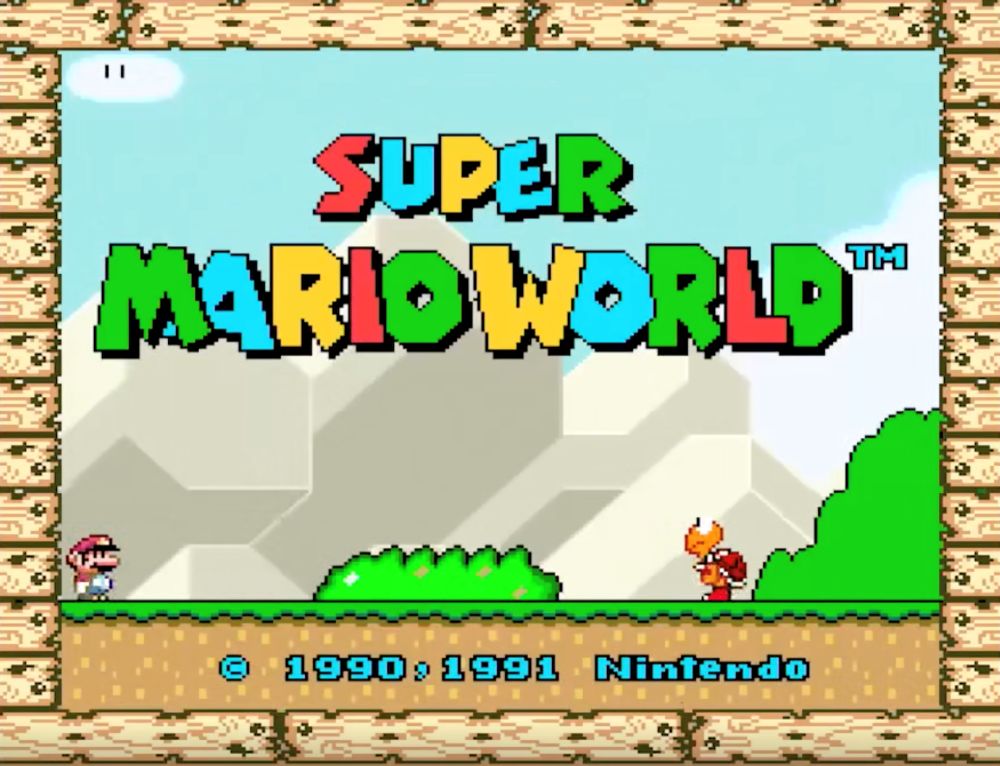
Probably SMW’s worst sin, however, is its habit of making you jump through an extremely convoluted series of hoops in order to escape one of its endlessly repeating level loops.
Picture this: you’ve completed every level in a given world (Forest of Illusion, Chocolate Island, etc.), only to find there’s no escape route: all roads lead back to levels you’ve already completed. With no other option, you wander aimlessly, hoping, through sheer stroke of luck, to figure out which power-up, in which level, you must find and then carry onward to a different level, where a hidden warp pipe may or may not be waiting for you. Bearing in mind that, if you take any damage, you instantly lose the power-up and have to start the process all over again.
None of this is signposted or even hinted at: you’re expected to find it through guesswork or, as I did, GameFAQs. (I guess in SMW’s heyday, I would’ve asked somebody at school.) This is, frankly, bad game design, and would be unacceptable in 2026: even notoriously vicious games like Elden Ring are suffused with hints and gentle prods to get you going in the right direction.
Other aspects of SMW just beg for the kinds of quality-of-life improvements which became common in later Mario installments:
The lack of overworld checkpoints (it became awfully tempting to use the Switch Online’s “save state” function to protect my progress between levels). The lack of checkpoints within levels, an annoyance which is especially pronounced in the miniboss castles, which must be repeated several times until you emerge triumphant. Then there’s Mario’s default weakened state, where one blow guarantees instant death until you grab a red mushroom and embiggen your hero. Then, too, there’s the anxiety-inducing timer, which grants a maximum of around 204 seconds (three-and-a-half minutes) to complete a level, and which adds needless stress to an already challenging game. (Confusingly, the on-screen timer is a lie: though it appears to display “300” seconds, it actually runs faster than a standard second.)
At times, SMW reminded me of, of all things, Trap Adventure, the notoriously difficult “joke game” in which everything – the level elements, the timer, even the pop-up notifications – is out to kill you in cruelly unpredictable ways. (Incidentally, I have actually beaten Trap Adventure 2, which is perhaps my sole claim to hardcore gaming fame.)
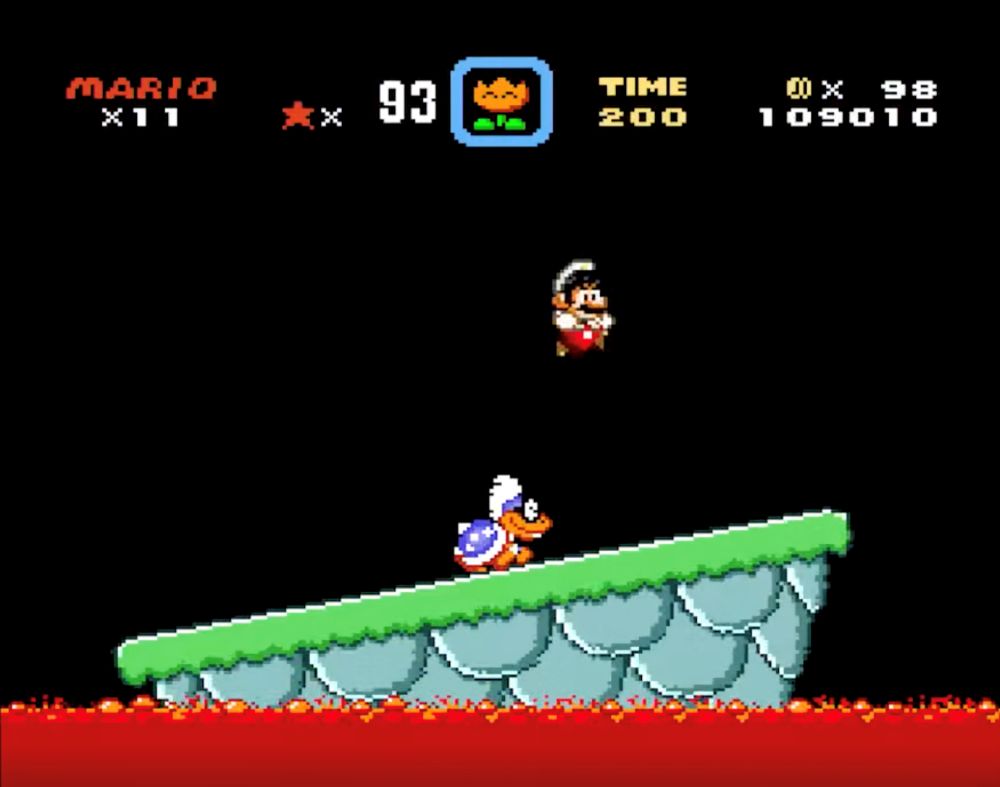
One thing I swore to myself while playing SMW was that, despite the many temptations to do so, I would not exploit the Switch’s “save state” system to drop manual checkpoints for myself. If I were going to defeat SMW, I was going to defeat it by the game’s own rules, saving only when the game prompted me to do so (which isn’t nearly often enough).
In the end, SMW took me about six hours to complete its core campaign, an honest run from World 1-1 to the final battle at Bowser’s Castle.
I dabbled in, but did not bother much with, the “Star Road” secret world, which contains five optional – and uniformly challenging – levels, nor did I bother with the yet more difficult “Special Zone”, which contains such delightfully-named levels as “Tubular”, “Way Cool”, and “Funky”. (Yes, really.)
The Star Road and Special Zone challenges have long been a source of fascination for the global speedrunning community, representing as they do the more experimental (if borderline unplayable) strains of 16-bit design which, even in 2026, feel out of place in the bright, beautiful world of Super Mario World.
Did I enjoy my time with SMW? Well, yes. Insofar as I had fun platforming around the main levels, largely avoiding the optional (tough-as-nails) secret areas, and making recourse to GameFAQs whenever – and it was more often than I expected – I ran into a progression wall, whether trapped in a haunted house or wandering in circles around the overworld.
But I also found SMW frustrating, in ways that simply aren’t present in later or even earlier Mario entries. (I didn’t mention this at the top, but I’ve defeated the original NES Super Mario Bros. on several occasions, and that game is hardly a cakewalk either.)
SMW is, in other words, a flawed entry in the Nintendo canon, an opinion which I know will likely get me into hot water, to which I’d ask, have you even played Super Mario World recently?
I’d also ask, is it even possible to play SMW with fresh eyes, if it already resides so firmly in your rose-tinted memory? (Maybe one day I’ll start a series called #FF1D8D-Coloured Glasses, where I revisit beloved games from my own childhood… but that’s a project for another day.)
It’s a funny thing, really. After so many successful Late to the Games, I really didn’t think Super Mario World would be the game to force me to admit, yes, the classics aren’t always as welcoming or accessible as we’d like to think.
I still believe it’s worth trying Super Mario World if you’ve never played it – and it’s easy enough to find, in 2026 – but I wouldn’t recommend it with the same vigour as, say, Link to the Past or Final Fantasy VI, to pick two previous games I’ve covered here.
Super Mario 64, on the other hand? Required homework.
***
Final Score: 8 out of 10 Power Stars.
For more “Late to the Game” adventures, check out our archive.