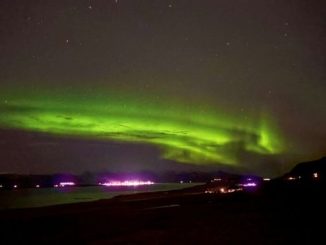
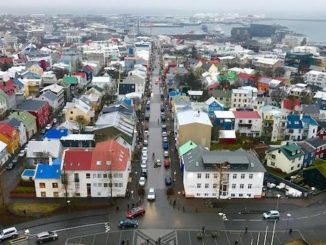
Volcanoes in Iceland are part of the reason why the country looks—and feels—like nowhere else on Earth. It’s where the North American and Eurasian tectonic plates are slowly drifting apart. There are over 130 volcanic mountains in Iceland, with around 30 considered active. Even in most recent months and weeks! Over thousands of years, repeated eruptions have shaped the island’s dramatic landscapes—black lava fields, moss-covered plains, steaming vents, crater lakes, and vast highlands that feel almost otherworldly.
For many years, Icelanders have learned to make practical use of Volcanic activity. The country uses geothermal energy generated by volcanic heat to warm homes, power cities, and fill the hot springs and lagoons that are so loved by tourists. That same heat fuels Iceland’s famous bathing culture, from rustic pools to luxury spas.
Most Famous Volcanoes in Iceland:
- Hekla – One of Iceland’s most active volcanoes, once believed to be a gateway to hell in medieval times.
- Katla – A powerful volcano hidden beneath the Mýrdalsjökull glacier.
- Eyjafjallajökull – The volcano whose 2010 eruption famously disrupted air travel across Europe.
- Fagradalsfjall – Known for recent eruptions that allowed visitors to safely hike and witness flowing lava up close.
Travellers are Drawn to Experience Iceland’s Dramatic Landscape:
Even without seeing an eruption, many travellers have been drawn to activities involving volcanoes everywhere in Iceland:
- Walking across ancient lava fields
- Bathing in geothermally heated waters
- Hiking craters and volcanic ridges
- Seeing steam rise from the ground in geothermal areas
Iceland’s volcanoes aren’t just natural attractions—they are the backbone of the country’s identity. The land is constantly shifting, reshaping itself, and reminding visitors that here, nature is very much alive. And if you’re keen on learning more, The Lava Show is one attraction you should put on your list.
Exploring The Lava Show:
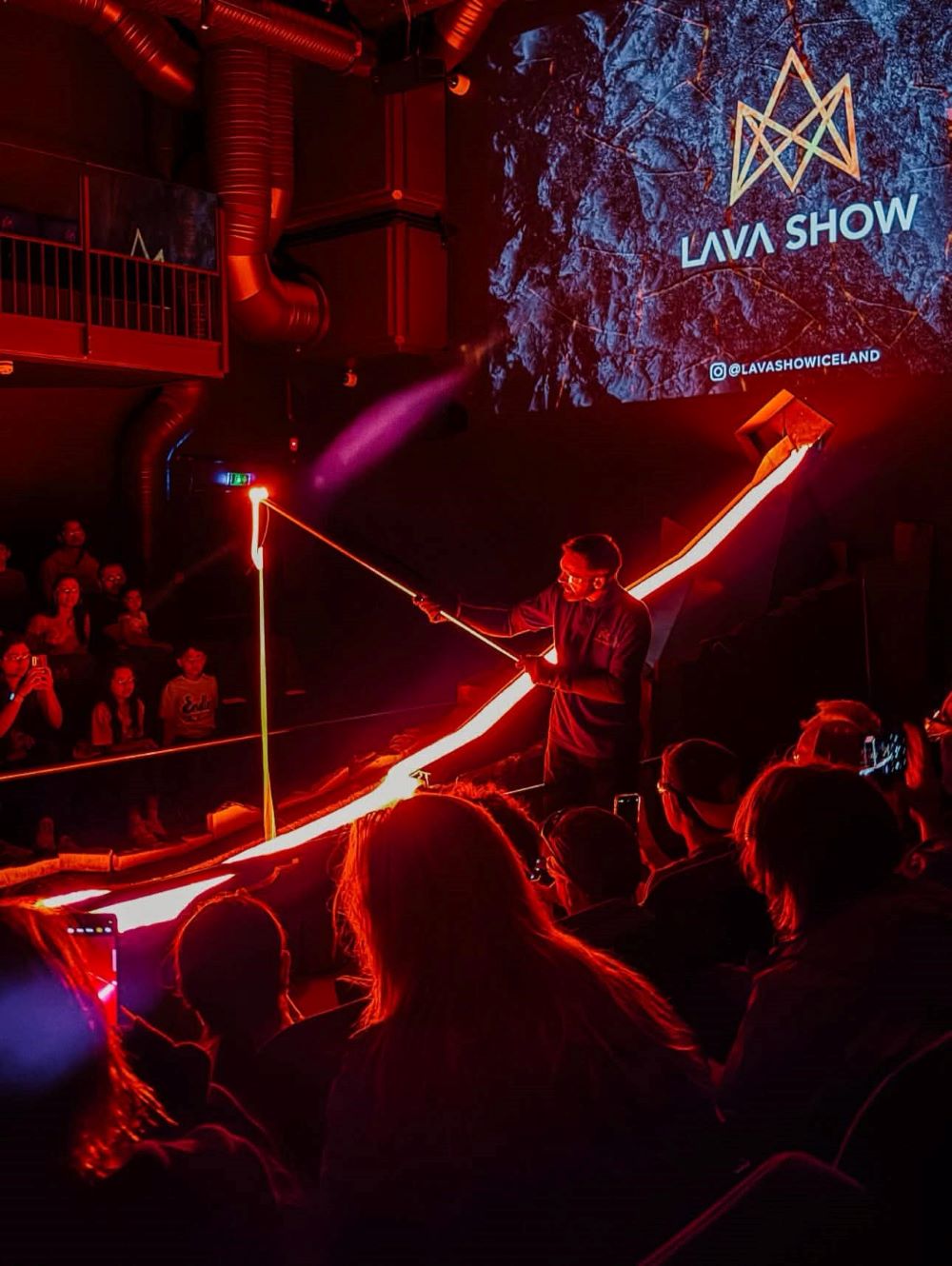
For both locals and tourists, a visit to the unforgettable Lava Show—with its newest location in Reykjavik and the original in Vík—is one of the closest and safest ways to experience and learn about this powerful natural phenomenon. Here, visitors gain insight into Iceland’s volcanic history, its geothermal energy resources, and the potential future impact of volcanic activity on the country.
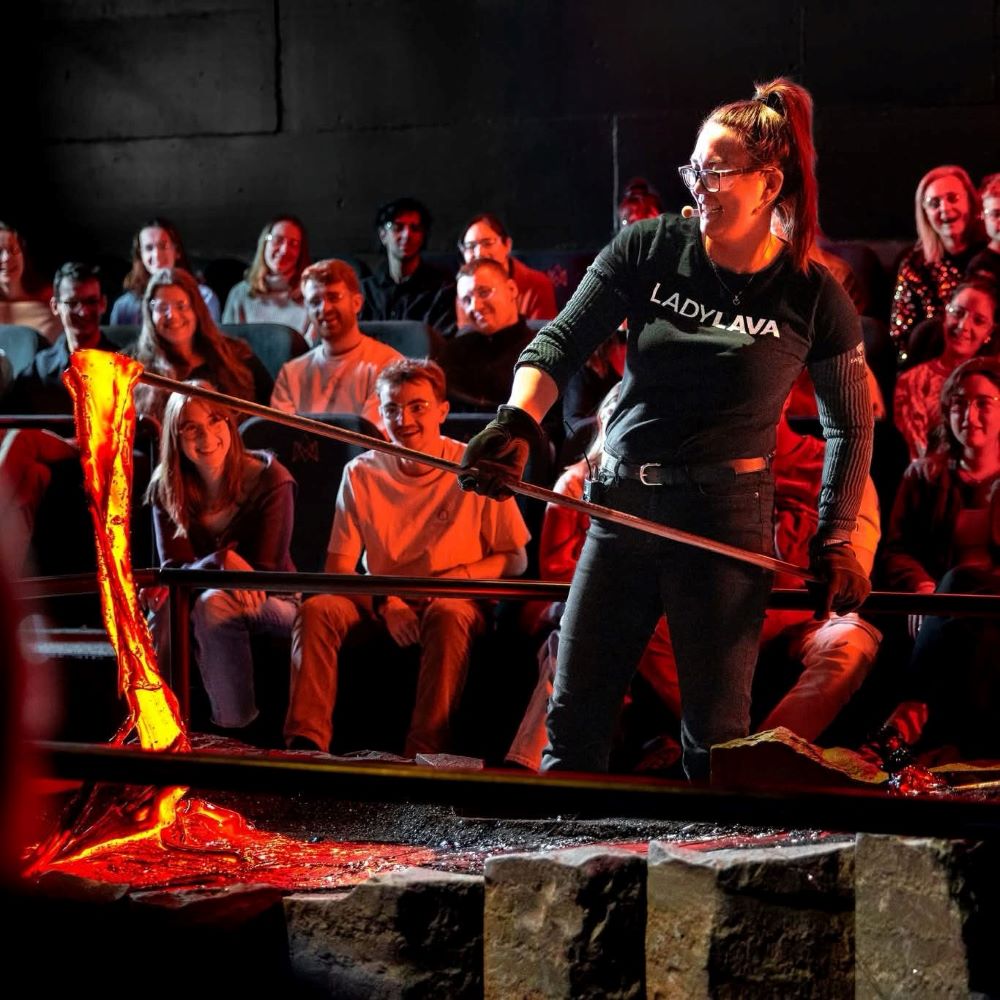
The highlight of the experience is witnessing real molten lava safely flowing during the powerful yet carefully controlled exhibition. The lava used in the show reaches temperatures of about 1,100ºC (2,000ºF), offering a rare opportunity to see this fiery force of nature up close.
Throughout the experience, visitors learn firsthand from volcano enthusiasts, geologists, and expert guides about Iceland’s geological history, how volcanic energy is harnessed, and the many eruptions that have shaped the landscape—along with the destruction they have sometimes left behind. The guides also discuss the future, explaining how Icelanders prepare for potential eruptions at any time and how the country continues to adapt and move forward alongside the powerful forces of nature.
There are two seating options depending on the experience you’d like. Generally, and particularly with kids, the “Classic Experience” will suffice. With this entry level, visitors will have main floor viewing. The “Premium Experience” offers access to a second-level viewing area, a VIP lounge including a welcome drink, and backstage access to the furnace room where the lava is melted daily. Run time is 60 minutes. Best to reserve your spot in advance, as there are limited spots per experience.
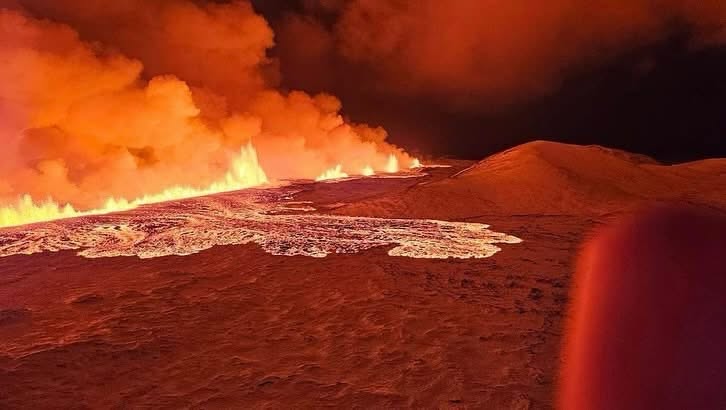
Some interesting learnings from a visit to the Lava Show…
- There are two types of lava flows that occur on land: pāhoehoe and a‘a. Yes, both are Hawaiian terms, but they are commonly used in geology worldwide. The difference lies in their texture. Pāhoehoe lava is smooth and rolling, almost like waves on the sea. A‘a, which erupts at a higher rate, cools into a much rougher, sharper surface.
- Iceland sits directly on top of a powerful mantle plume (often referred to as a “hot spot”) that continuously pushes magma toward the surface. Another reason for the country’s intense volcanic activity is the Mid-Atlantic Ridge, which cuts right through the island. This ridge is where two tectonic plates slowly but steadily move away from each other. Our guide explained that the plates separate by about two centimetres each year. These movements create cracks in the Earth’s crust, making it easier for magma to reach the surface.
- Basalt is the most common type of lava in the world and makes up about 80% of Iceland’s landscape.
- The lava used in the exhibition comes from the 1918 eruption of the Katla volcano on Iceland’s South Coast.
- Iceland is one of the most volcanically active places on Earth, with significant eruptions occurring roughly every three to five years.
- Since the country was settled more than 1,000 years ago, 19 volcanoes in Iceland have erupted.
- At any given time, about 50 volcanoes are erupting somewhere in the world. Most eruptions in Iceland have historically been fairly small and relatively uneventful. However, the 2021 eruption on the Reykjanes Peninsula marked the beginning of what scientists believe could be a new era of volcanic activity in the region.
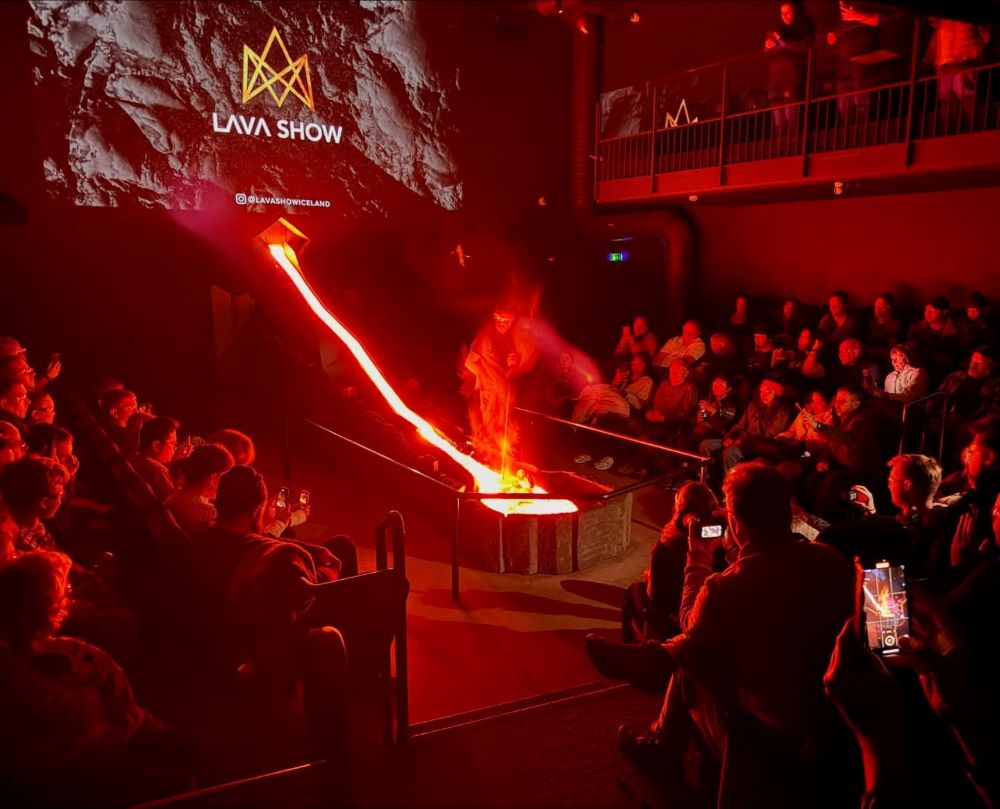
If you’re planning a trip to Iceland, it’s worth keeping an eye on volcanic activity—and definitely visiting the Lava Show. The award-winning attraction offers fascinating insight into nature’s fiery power. It might even inspire you to venture into the vast countryside to see the volcanoes and glaciers for yourself. Experiencing Iceland’s dramatic landscape up close is truly spectacular.
In the meantime, visit their site here and also follow The Lava Show on Instagram, where the exhibition’s co-founder, Ragnhildur, gives up to date status on volcanic action in Iceland.
***
Photos by The Lava Show