The Game: Star Fox 2 (1995/2017)
Original Platform: Super Nintendo Entertainment System
Version We Played: SNES Library, Nintendo Switch Online
Verdict: An historical curiosity worth investing the (very brief!) time in.
Typically in this feature, it’s me, your resident Toronto Guardian critic, who’s late to the game, belatedly delving into beloved titles from consoles and decades past, long after those games have entered the realm of legend.
This month, however, we’re mixing things up, featuring a hotly-anticipated game originally slated for release in the 1990s, but which didn’t see the light of day until a few short years ago.
For reasons we’ll get into below, this had little to do with the quality of Star Fox 2 – its impeccable pedigree includes Shigeru Miyamoto as producer, with direction by Super Mario World mastermind Katsuya Eguchi – and everything to do with a cold, clinical business decision which saw the game buried at the last minute.
Long considered vapourware (though there were copies floating about the Internet, if you knew where to look) it was not until 2017 that Star Fox 2 received an official release on the SNES Classic console, before making the leap to the Switch Online’s SNES Library in 2019. And it was there that, decades after I should have been able to, I finally got my hands on this almost-sequel and time-displaced relic of a bygone era.
While it can’t quite compare with the Star Foxes before (the 1993 original) or immediately after (1997’s Star Fox 64), Star Fox 2 is still an entertaining, if flawed, entry in the Nintendo canon. Possessed of some genuinely interesting ideas, yet held back by the hardware it was designed for, Star Fox 2 is a game out of time – and the subject of our latest Late to the Game.
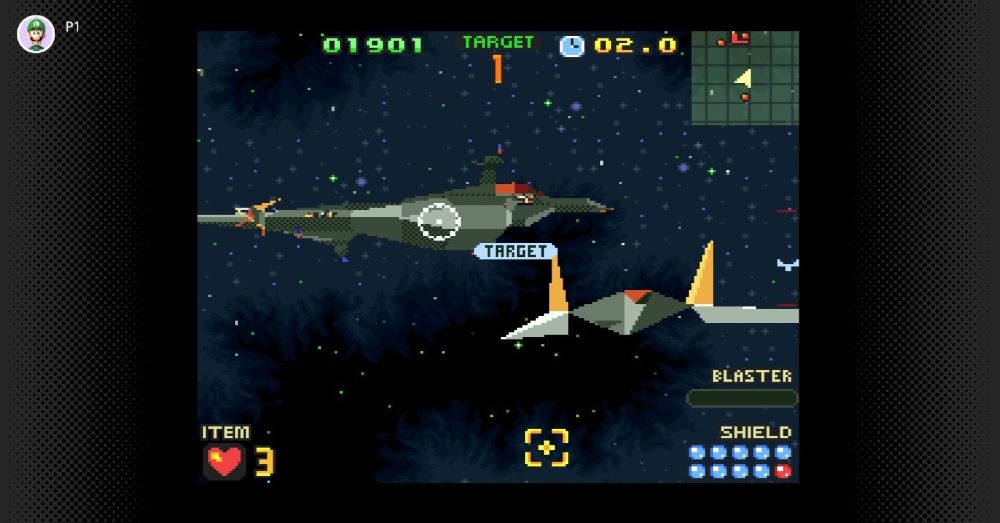
The original Star Fox was a breathtaking success for Nintendo, working in collaboration with British developer Argonaut Games. Built from the ground up on the Argonaut-designed “Super FX” chip, Star Fox, released in 1993, combined the three-dimensional thrill of Star Wars-style space combat with a branching mission structure which let players choose their own path. An immediate success, Star Fox looked little if anything like other games of the day, blowing minds with its faux-3D polygonal graphics which sent waves of enemy fighters zooming headlong towards the player.
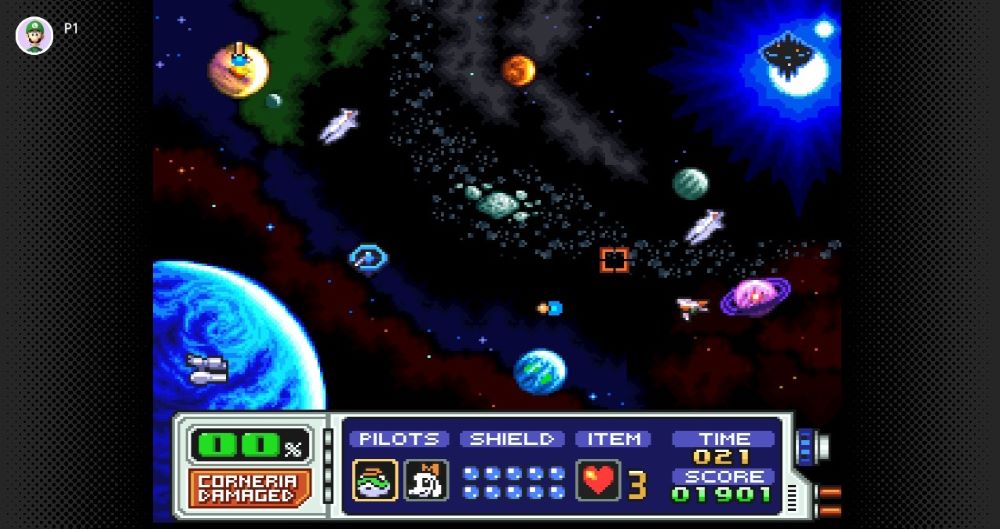
Work on a sequel, tentatively titled Star Fox 2, began nearly right away, with a playable demo even making its way to the floor at the 1995 Winter Consumer Electronics Show. From what players saw, there was reason to be excited: building off the original’s stellar flight mechanics, Nintendo/Argonaut envisioned a space combat simulator which required players to make real-time decisions on a galactic map: go here to intercept this enemy starfighter, go there to attack a base before it launches a planet-shattering rocket. Any delay in choosing where to go, or even just taking too long within a mission, risked the destruction of planet Corneria, whose dwindling health would be tracked by an ever-present meter displayed on-screen.
Expectations were sky high — and then, reality set in.
Or should I say, Project Reality.
While the dust has long since settled on the console wars (Sony won, by the way), there was a time when a veritable tech arms race played out in public view – and much to the public’s benefit, with the likes of Nintendo and Sega and Atari all racing to produce the fanciest new hardware with the most impressive new games. (At one point, there was even a planned Nintendo/Sony collaboration, which would have been called the Nintendo PlayStation… but that’s another story.)
Such was the race to pump out new content that, barely two years into the Super Nintendo’s life, Nintendo got to work on a new console, codenamed “Project Reality”. Though there were doubts whether the cartridge-based Project Reality could compete with the new wave of CD-based systems, Nintendo soon became convinced they had a winner. So much so that, even as the SNES continued to sell like hotcakes and late-cycle SNES titles like Donkey Kong Country 3 were winning over critics and gamers alike, much of Nintendo’s first-party development rapidly redeployed to focus on the newly-rechristened “Ultra 64”.
That choice, to focus on N64 games at the expense of the still-popular SNES, could not have been an easy one. And it took a particular toll on the fabled Nintendo EAD studio, responsible for Star Fox. In 1995, with Star Fox 2 about 95% complete and the N64 slated for release the following year, a fateful decision was made: Star Fox 2 was dead, and Star Fox 64 would be the next game in the series.
In retrospect, it’s wild to think there was ever a time when a more or less complete game – let alone one in a popular series, overseen by its legendary co-creators – could be shelved at the last minute. But the gaming landscape of 1995 was a lot different, with cheaper (albeit not exactly cheap) development costs, and smaller teams more readily able to turn on a dime. Nintendo, and Miyamoto in particular, felt it important that the next Star Fox entry serve as a showpiece for their new system, even if it meant burying the Star Fox 2-that-would-have-been.
Playing Star Fox 2 today, some thirty years after it was shelved, it’s disappointing to experience what we lost, and yet, I must confess, fairly easy to see why Miyamoto pulled the plug.
To begin with, Star Fox 2 has a fantastic setup, one of the best I’ve seen in any game. The first thing you see when booting up Star Fox 2, even before the opening credits, is a cutscene of your fleet getting absolutely decimated by a surprise attack. You know that iconic shot of the Rebel Fleet converging at the Battle of Yavin? Picture that, but with a laser immediately slicing the lead ship in half, sending the X-Wings scattering.
It’s a bold way to start a game, Star Fox 2 dramatically announcing that the threat we thought we’d triumphed over has returned with a vengeance. It’s also quick to the chase: within 45 seconds, we’re at the main menu, and in less than a minute, we’re managing our mini-fleet of Arwings on the game’s planetary map, which serves as the rudimentary Real-Time Strategy interface we’ll be relying on for the rest of the game.
We’re also, because this is Star Fox, treated to a short scene of returning antagonist Andross cackling away as he expounds on his evil monkey plans to conquer the Lylat System and defeat Star Fox once and for all.
The opening moments of Star Fox 2 are, by design, overwhelming. A few perfunctory words of guidance are all you receive from your General (a talking dog, naturally), before being forced into an impossible decision: with so many threats on screen, where to go first? You could try to liberate one of the already-conquered planets, or maybe intercept a missile en route to home planet Corneria. Or maybe it’s wisest to take the fight straight to the source, attacking one of the larger battle carriers and cutting off Andross’s reinforcements.
Intriguingly, there’s no wrong answer to this question, although high score chasers / speedrunners will surely have their own plan(s) of attack. (The world record speedrun for Star Fox 2 hovers around eleven minutes, for what it’s worth.)
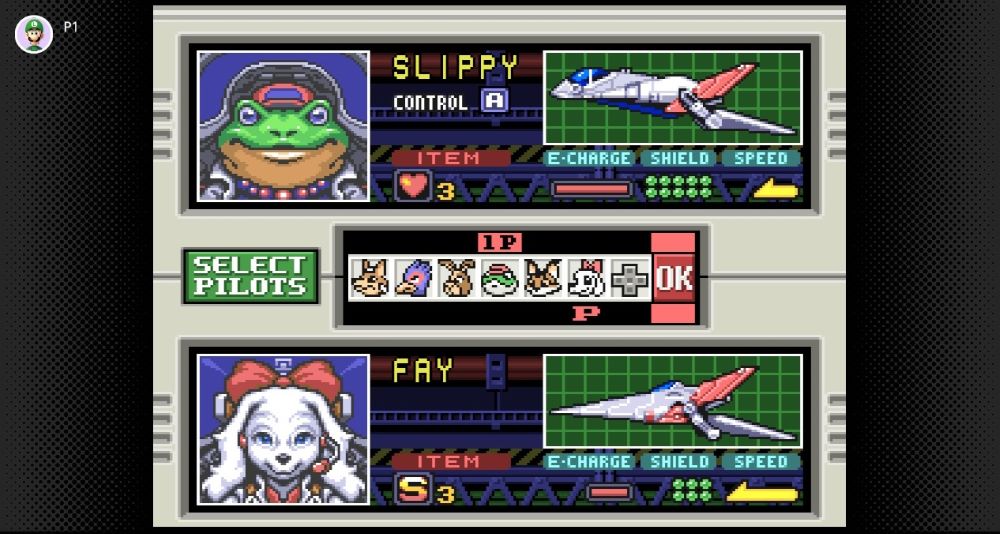
What matters is that you act decisively, sending your fighters into whichever battle you choose to prioritize. You’re actually deploying a pair of fighters – you choose two characters out of six at the outset of the game – but don’t get too excited: that second fighter is basically just an extra life, taking over when your lead ship inevitably explodes. Disappointingly, you don’t actually have a wingman who tags along in battle, as in Star Fox 64.
Your choice of first battle will, however, inform your first impressions of this game, since the quality of Star Fox 2 varies wildly depending on the type of battle you’re in.
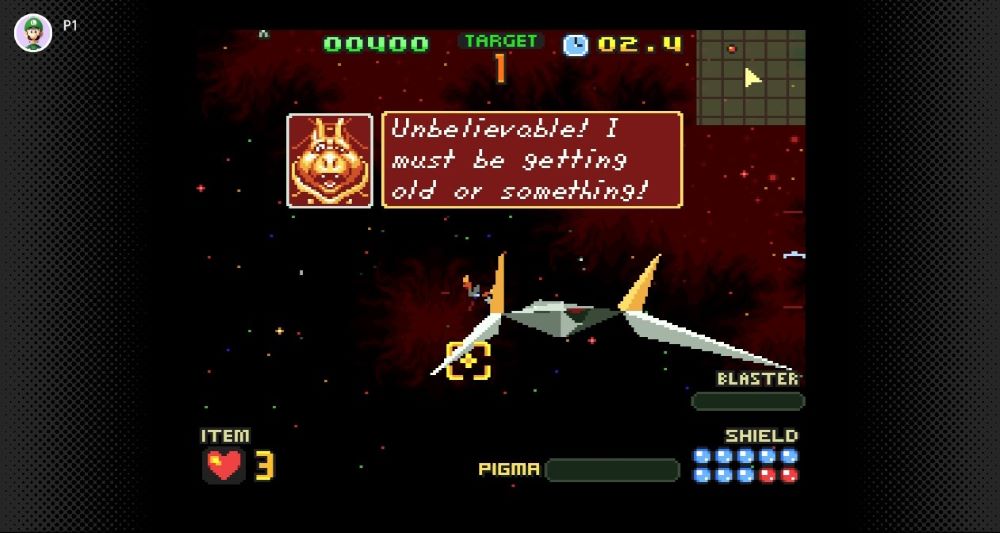
At the lowest rung, and easily the worst part of the game, are the quasi-random pitched battles in the vastness of space. Conceptually, these are interesting, Star Fox 2 letting you manually trigger battles by intercepting an enemy on the overworld map, which immediately throws you into an omnidirectional version of Star Fox combat. From a gameplay perspective, however, these fights are bland, repetitive, and weirdly short – most battles in this category last less than ten seconds(!), win or lose. At their best, you’re treated to a dogfight against the evil Star Wolf or one of his merry band of mercenaries – all of whom were supposed to make their first appearance here, but would instead make their canonical debut in Star Fox 64. At their worst, these battles just have you quickly chasing down an enemy missile and blowing it up within mere seconds – all against the same generic outer space backdrop.
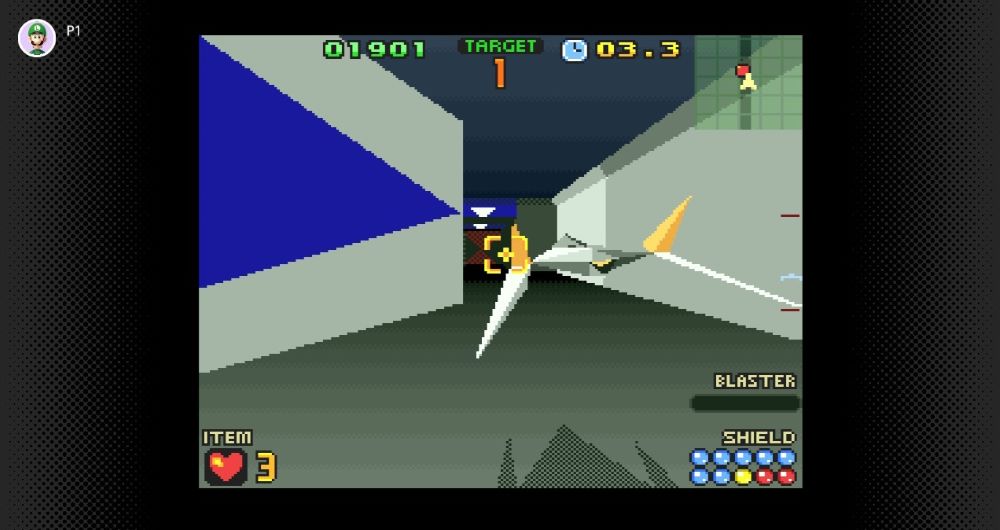
Far better are the battle carrier fights, which play out like the climactic moments of Return of the Jedi, though instead of evading TIE Fighters and diving into the Death Star Reactor Core, you’re dodging enemy starfighters before zooming inside the Star Fox equivalent of a Star Destroyer. Here, gameplay alternates between Lando Calrissian-style manoeuvring and the slower, more methodical gameplay of the transforming Arwing walkers.
That’s right, Star Fox 2 was – or would have been – the first entry in the series to include ground combat, each Arwing capable of instant transformation from flight mode to bipedal battle tank. While ground combat made an appearance in Star Fox 64 (including its excellent multiplayer mode), this ability to on-the-fly transform wouldn’t actually form part of an official Star Fox release until 2016’s middling Star Fox Zero.
The ability to transform is very cool, and extends to the equally well-designed planet sequences, the final category of Star Fox 2 combat. You’ll be zooming along in your Arwing, dodging enemy fighters, only to arrive at a gated area where, with a tap of a button, you transform from flight to bipedal mode, skating around until you’ve activated the necessary triggers. In the case of the battle carriers, the conclusion of each level triggers a brief, but undeniably awesome, cutscene where your Arwing narrowly escapes the exploding ship, just like the Millennium Falcon in Return of the Jedi.
It would be easy to chalk up Star Fox 2’s weaknesses to the era in which it was made – or to the fact it’s technically 5% shy of complete – but it’s probably more accurate to say that, even back in 1995, Miyamoto and Eguchi overreached.
For one thing, Star Fox 2 just doesn’t run that well. Despite grand aspirations for screen-filling combat, creaky old programming results in framerate slowdown during even relatively quiet missions. Given that the official Switch release is running on Nintendo’s own emulator, it’s safe to assume a physical cartridge would have run into the same problems.
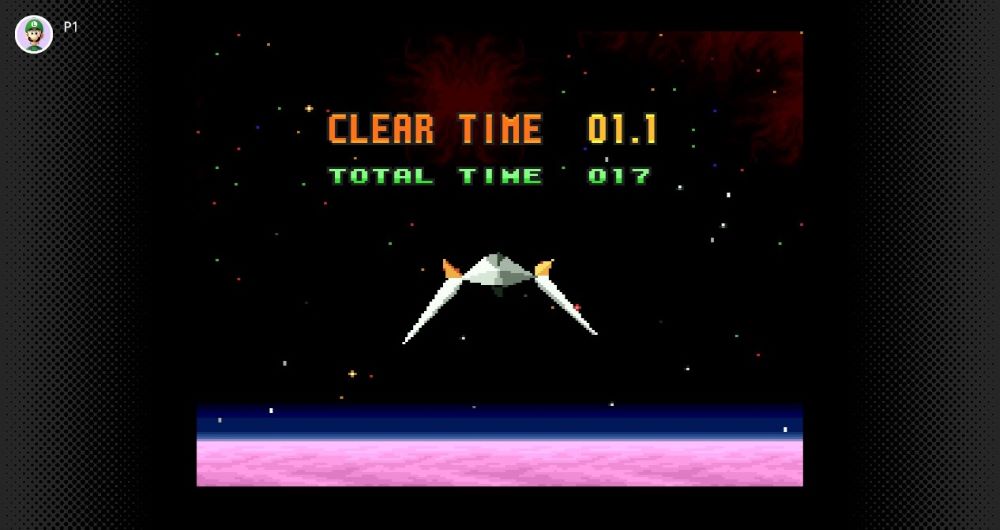
Which brings up a related topic: for all its talk of a great big interplanetary war, this game can be easily completed in less than an hour. Now, this was also true of Star Fox and Star Fox 64, but those games didn’t have the conceit of a fiercely fought space war playing out in real time. With only about eight main levels (to its predecessor’s thirteen) and a handful of semi-random battles to speak of, Star Fox 2 is quickly over and done with, even if you repeatedly hit Game Over, as we did, and are forced to replay from the beginning.
We’ll never know for sure, but it’s possible the Star Fox 64 project was also, at least partly, an excuse to abandon a game which was never going to deliver on its vision for an epic, push-and-pull war, Real-Time Strategy mixed with third-person combat. Frankly, I’d still pay good money to play that game, and it’s surprising that no Star Fox in the intervening decades has tried to implement that concept on more powerful hardware. (Well, Star Fox Command tried, but that’s about all we need to say about Star Fox Command.)
As a huge fan of Star Fox 64, I’m not entirely convinced Miyamoto was wrong about Star Fox 2.
Star Fox 64 is a spectacular game, with incredible space- and land-based combat, endless replayability, and some of the best couch multiplayer this side of GoldenEye. As Miyamoto correctly predicted, Star Fox 64, which released April 1997, proved a massive hit for Nintendo’s new console, ultimately selling 4 million copies, making it the ninth best-selling N64 game of all time. (It sits ahead of Banjo-Kazooie and just behind Diddy Kong Racing.)
Star Fox 2, on the other hand, was probably headed for disaster – or at least a middling reception – had it debuted in 1995. The crippling slowdown, the abbreviated runtime; these things are hard to ignore. They’re easier to forgive, in 2025 and with rose-tinted glasses firmly in place, but Star Fox 2’s inchoate mix of Real-Time Strategy and third-person space combat would probably have failed to satisfy fans of either genre.
As it is, Star Fox 2 serves as a reminder that video games, a multibillion-dollar industry, are not immune to the same kind of cold business calculations which result in, say, the death of a hotly-anticipated female-led superhero movie. In this case, however, it’s understandable (if frustrating), why Star Fox 2 was cancelled so late in the game. You can even sympathize with Miyamoto’s painful decision to pull the plug, though it robbed us gamers the chance to play something that would, if nothing else, have amounted to an interesting experiment.
Star Fox 2 is also a testament to the ingenuity and vision of those incredible programmers of a bygone era, who perhaps aimed a bit too high, but who nevertheless deserve to have their work seen and experienced. Perhaps one day, other publishers, like LucasArts and its 98% complete build of Star Wars Battlefront III, will also see the light and release their cancelled games into the wild. One can only hope.
***
Star Fox 2 is available for the SNES Classic Mini home console, or via the SNES Online Library, with a Switch Online subscription.