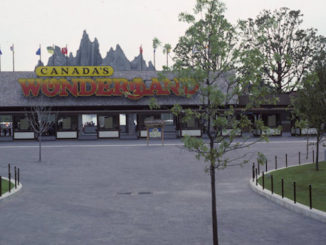
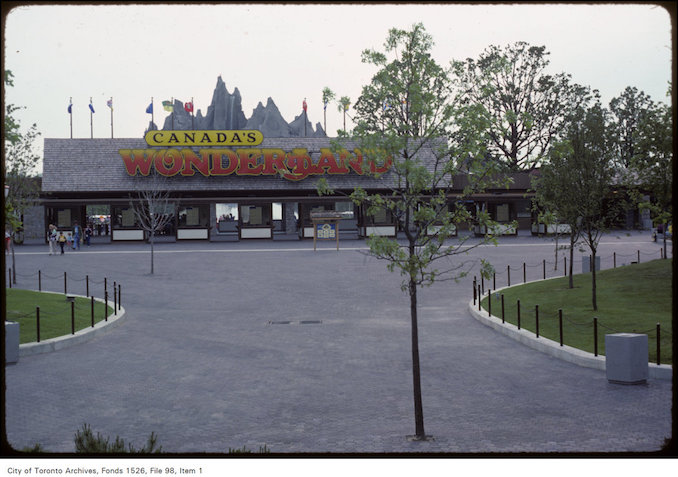
Canada’s Wonderland is a large amusement park located in Vaughan, Ontario, just north of Toronto. It occupies roughly 330 acres and is the largest theme park in Canada. Since opening in 1981, it has drawn millions of visitors each year and serves as a marquee destination for thrill rides, family attractions, and seasonal events.
The concept for Canada’s Wonderland took shape in the late 1970s, when the U.S.-based Taft Broadcasting Company joined with Canada’s Great‑West Life Assurance Company to explore building a major theme park near Toronto. After surveying multiple sites, the area around what is now Maple in the city of Vaughan (north of Toronto) was chosen because of its access to highways (especially Highway 400), space for expansion, and population growth potential. Construction officially began in April 1979.
Approval for the park was not straightforward—local residents and environmental groups raised objections about traffic, noise, changing land‑use, and whether the sculpture of a “mega‑park” was appropriate for what had been largely rural farmland. Yet in March 1978 the Ontario Municipal Board granted approval, requiring among other things a strong level of Canadian‑content in the attraction and themed areas.
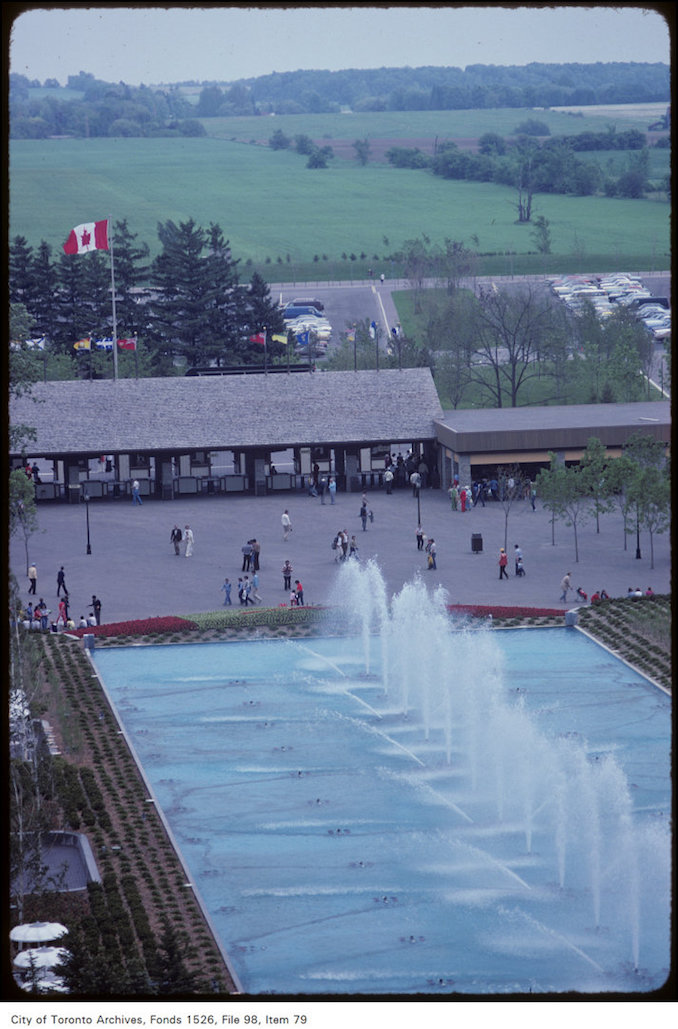
The developers purchased about 330 acres of land and embarked on building what would become Canada’s Wonderland. The park opened on May 23, 1981, in a spectacular ceremony including thousands of helium balloons, parachutists, doves, and figure‑skater and sports‑star guests. At opening, five themed areas were ready (International Street, Medieval Faire, The Grande World Exposition of 1890, Hanna‑Barbera Land, and Frontier Canada), with more planned.
At the time of opening, the park was operated by Taft and its Canadian partner, but ownership and operational structure changed over the years. In 1993 ownership shifted to Paramount Communications (via its Paramount Parks division) when they purchased the remaining stake. In 2006 the park was sold to Cedar Fair Entertainment Company, which restored the original name and removed the “Paramount” branding. More recently, with the merger of Cedar Fair and Six Flags Entertainment Corporation, Canada’s Wonderland became part of an even larger amusement‑park group.
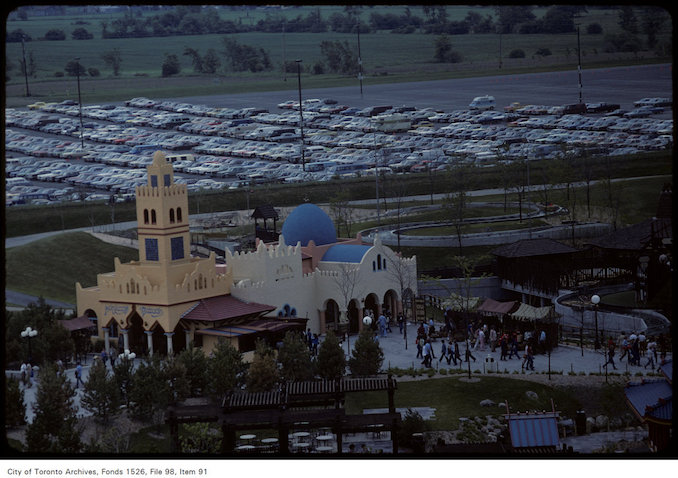
The Changing Landscape & Regional Impact
When the park first opened, the surrounding area was largely farmland and open space. Over the subsequent decades, the growth of the Greater Toronto Area transformed Vaughan and Maple into increasingly suburban and commercial zones. What had been outlying farmland is now surrounded by shopping centres, residential subdivisions, major roads, and transit expansions.
The presence of Canada’s Wonderland helped drive infrastructure improvements: roads, transit access, zoning changes and commercial developments followed the arrival of the park. It became a major economic engine for Vaughan, bringing tourism, jobs (both seasonal and full‑time), and related hospitality investments. The park’s development spurred the surrounding land to shift from rural/residential‑agriculture use into mixed uses: entertainment, retail, housing and hospitality.
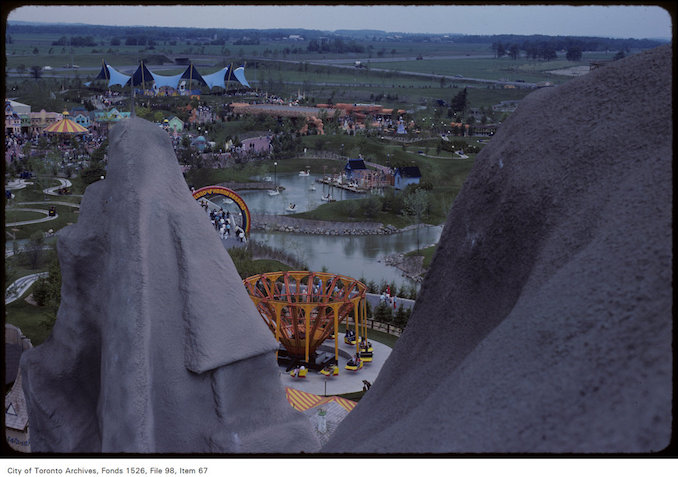
From a planning perspective the park presented challenges and opportunities: traffic management, noise and light concerns for nearby residents, environmental storm‑water management, and integrating a large seasonal destination into a residential growth region. Some local groups voiced opposition early on, concerned about how the park would interweave with the community, but over time it became broadly accepted as a landmark.
Ownership & Branding Through the Years
At opening in 1981, the park was operated by Taft Broadcasting and Great‑West Life; its thematic design included 12 architecture/engineering firms and more than 700 trades people in the construction phase.
In 1993, Paramount Communications acquired the remaining 80 % stake in the park and renamed it “Paramount Canada’s Wonderland,” using more film‑themed attractions and branding.
In June 2006, Cedar Fair announced the purchase of Paramount Parks, including Canada’s Wonderland, and by January 2007 the park dropped the “Paramount” name.
In 2024, with the merger of Cedar Fair and Six Flags, the park became part of the expanded Six Flags family, making it part of one of North America’s largest amusement‑park operators.
Significant Moments in Its History
-
1981 (Opening Year): Canada’s Wonderland opens with five roller coasters among many other rides, becoming Canada’s first major theme park.
-
1993 (Paramount Era): Acquired by Paramount Communications and renamed “Paramount Canada’s Wonderland,” introducing movie-themed attractions.
-
2006: Cedar Fair purchases the park, removing the “Paramount” name and refocusing on family thrills and general entertainment.
-
2010s Onward: Expansion of rides, addition of record-breaking roller coasters, and growth of the water park section.
-
Modern Era: Now home to 18 roller coasters, seasonal events like Halloween Haunt and winter festivals, and remains a top regional attraction.
Some of the Famous Rides Over the Years
-
Behemoth: Tallest and fastest steel coaster in Canada at the time of opening, featuring huge hills and high speeds.
-
Yukon Striker: Record-breaking dive coaster known for height, speed, and thrilling inversions.
-
Time Warp: Flying-style coaster formerly themed to “Tomb Raider,” now retired, showing how the park refreshes attractions over time.
-
Original Coasters: Wilde Beast and Dragon Fyre, giving visitors a classic thrill experience.
-
Modern Thrills: Behemoth, Leviathan, and Yukon Striker represent the park’s high-speed, high-adrenaline offerings.
-
Family Favourites: Flight Deck, Vortex, and Splash Works offer variety for all ages.
-
Seasonal & Themed Attractions: Halloween Haunt, WinterFest, and live shows keep visitors returning year-round.
Timeline Sidebar: Key Years & Milestones
-
1979: Construction begins in Vaughan/Maple.
-
1981: Grand opening of Canada’s Wonderland.
-
1993: Paramount Parks acquisition; movie-themed rides introduced.
-
2006: Cedar Fair purchase; focus shifts back to general family entertainment.
-
2008: Behemoth opens, setting Canadian records.
-
2019: Yukon Striker opens, a modern thrill coaster record-holder.
-
2024: Time Warp retired, continuing the park’s tradition of updating attractions.
Why It Matters
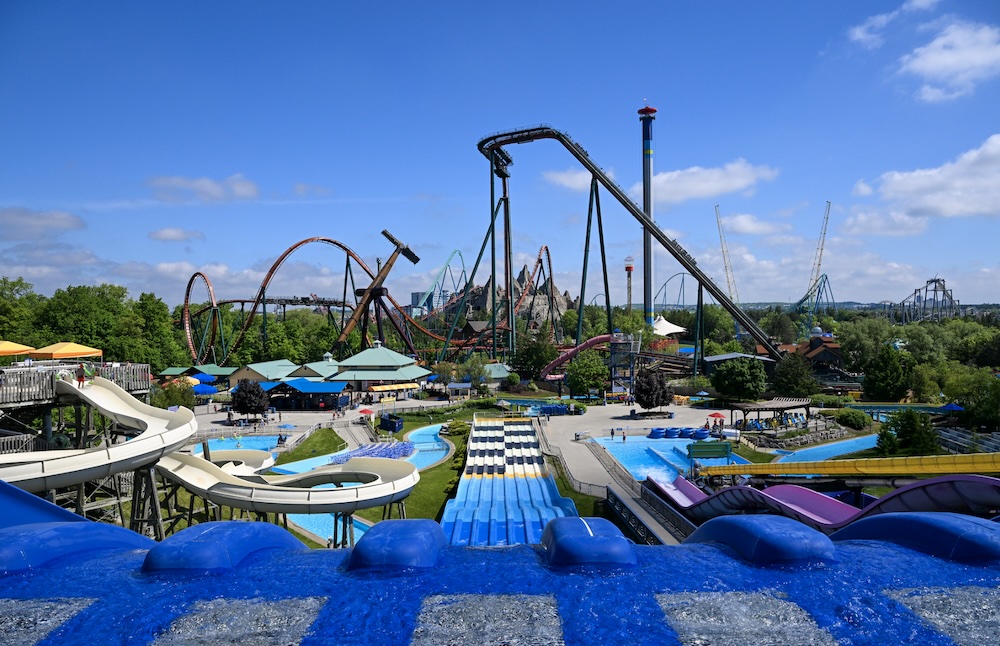
Canada’s Wonderland is more than an amusement park; it is a key piece of Canada’s entertainment landscape and one of Toronto’s most iconic destinations. Its mix of roller coasters, family rides, water attractions, and seasonal events makes it appealing to all ages. Long-standing rides provide a nostalgic experience, while new attractions ensure excitement for returning visitors. The park remains a major draw for tourism, family entertainment, and thrill-seekers, maintaining its status as Canada’s premier amusement destination.
Fun Facts & Trivia
-
Canada’s Wonderland was the first major theme park in Canada, predating similar large-scale parks in the country.
-
The park’s water section, Splash Works, covers roughly 20 acres and includes slides, wave pools, and interactive play areas.
-
Yukon Striker holds the record for the tallest, fastest, and longest dive coaster in Canada.
-
Canada’s Wonderland has hosted millions of visitors over four decades, making it a cultural touchstone for Ontario families.
-
Each year, the park produces seasonal events like Halloween Haunt, attracting tens of thousands of visitors during special celebrations.
-
The park is accessible via Highway 400, making it one of the most visited attractions in the Greater Toronto Area.
Check out more photos from the opening of Canada’s Wonderland.