
The series Polka Dot Door was a landmark Canadian children’s television program produced by TVOntario (TVO) in Toronto. It premiered on March 30, 1971 and ran until July 27, 1993, spanning 22 seasons and more than 380 episodes.
Each weekday, the show featured two human hosts—one male, one female—who spoke directly to the young viewers at home, engaging them in songs, stories, and themed activities. The show aired on TVO in Ontario and was syndicated across Canada; its influence extended well beyond its original run, including repeat broadcasts into the 1990s.
The Cast of Characters and Hosts
While the hosts changed frequently over the years, several recurring features and characters made the show memorable:
-
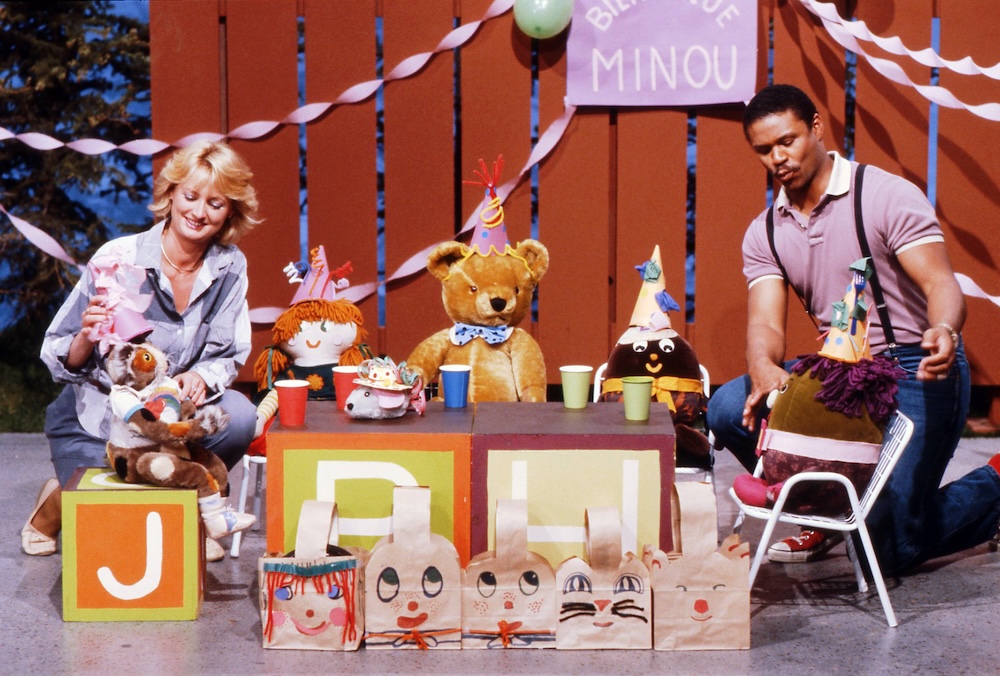
Hosts: Over its long run, Polka Dot Door featured more than 50 different hosts. Each week, a pair (one woman, one man) would anchor five episodes in a row. Notable hosts included Cindy Cook, who hosted from 1981‑93, and Nerene Virgin among many others.
-
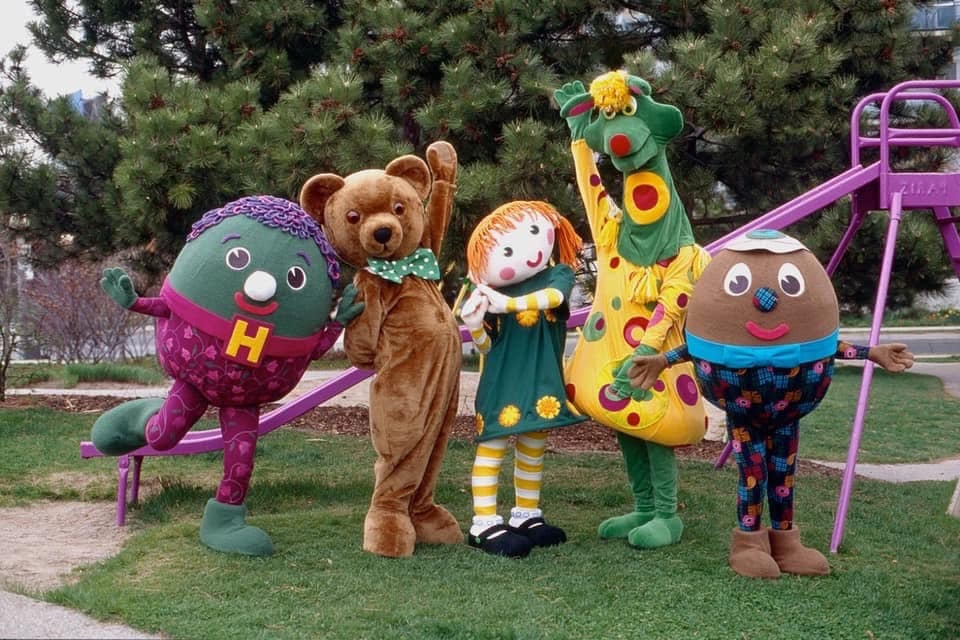
Stuffed Toy Friends: The show included non-speaking stuffed characters—Humpty, Dumpty, Marigold, and Bear—who the hosts would interact with during the program.
-
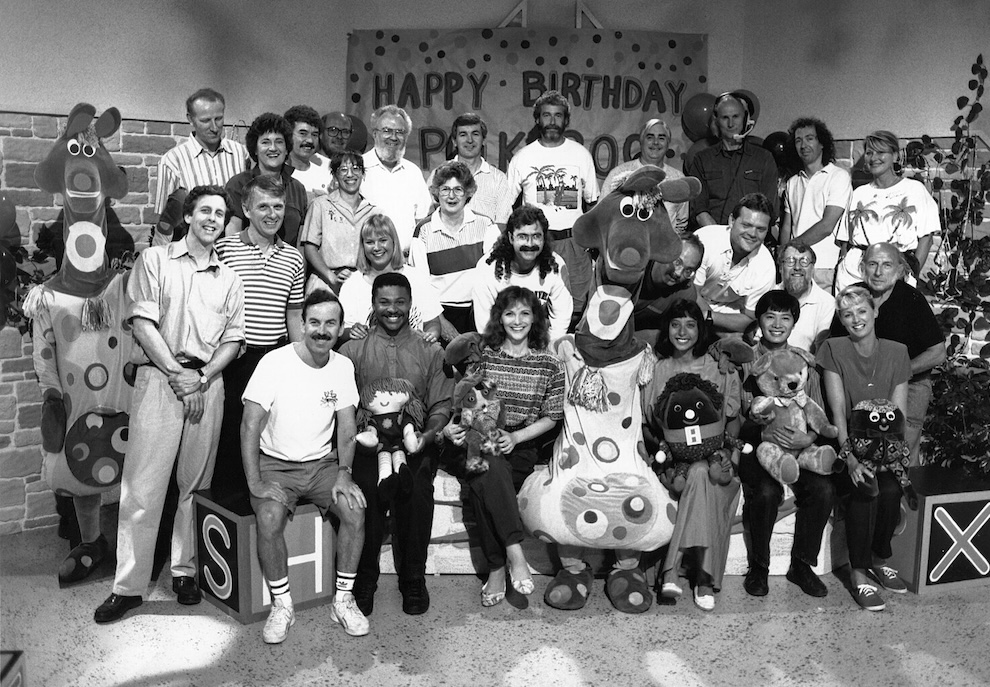
Polkaroo: Perhaps the most iconic character from the show, Polkaroo was a kangaroo-like figure wearing a polka-dot costume. He appeared primarily on Thursdays (“Imagination Day”), often in a pantomime sequence where only one host “saw” him, while the other returned to find out and exclaimed, “The Polkaroo was here?!? And I missed him again?!”
Format, Themes, and Behind the Scenes
One of the reasons Polka Dot Door resonated so deeply is its carefully structured weekly format and themes:
-
Each week had a single overarching theme explored through five episodes. Within that week:
-
Monday: Treasure Day
-
Tuesday: Dress-Up Day
-
Wednesday: Animal Day
-
Thursday: Imagination Day (when Polkaroo typically appeared)
-
Friday: Finding-Out Day
-
-
Regular elements included “Storytime,” a segment where a host used an oversized clock and read a story with the help of a “Storytime Mouse.” Music was live-performed on piano, and the hosts helped children explore, imagine, and learn.
-
The show was conceived with strong educational underpinnings and was inspired in part by the UK BBC series Play School. Early development included producers, directors, and educational consultants dedicated to creating an engaging, curriculum-aligned program.
Legacy and Cultural Impact
Polka Dot Door left a lasting mark on Canadian children’s television, and here’s why it matters:
-
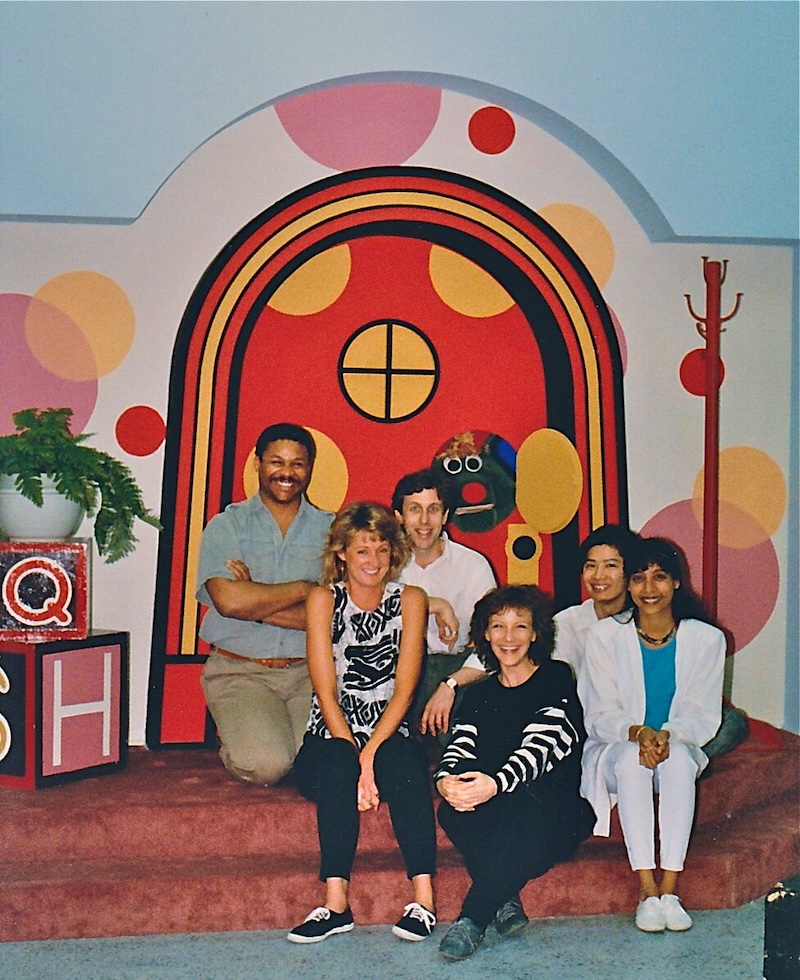
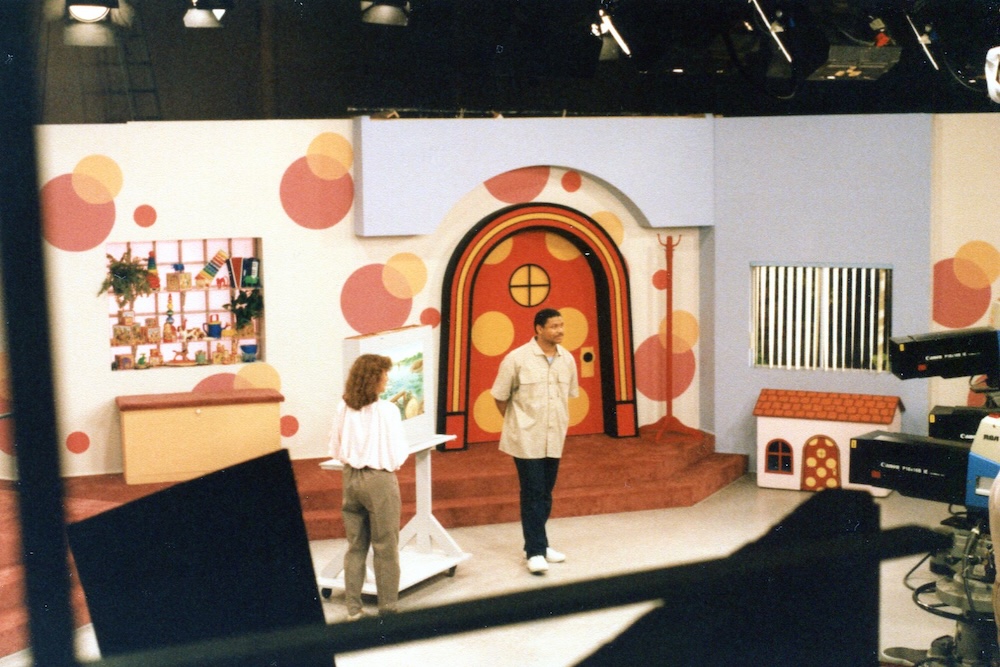
It provided a reliable, comforting weekday routine for young viewers: predictable themes, friendly hosts, familiar characters, and an inviting set anchored by a big polka-dot door that symbolized imagination and discovery.
-
The show supported early childhood education and was recognized for its innovation and positive influence on generations of Canadian children.
-
Many of the hosts and production staff later went on to broader careers in broadcasting, education, and entertainment—highlighting the show’s role in the development of talent in Canadian television.
-
The character Polkaroo spun off into further programs, maintaining the legacy of the original.
A Few Interesting Bits
-
The show originally borrowed structural ideas from Play School before evolving into a distinctively Canadian format.
-
Polkaroo’s costume was handmade in Toronto, and the character communicated through gestures and pantomime rather than speech.
-
The program’s routine allowed children to anticipate the theme of the day, encouraging participation and engagement.
-
Storytime and song were integral: each week featured a “song of the week” tied to the theme, with live piano accompaniment.
Why It Still Matters
In the long arc of Canadian children’s broadcasting, Polka Dot Door represents something special: a home-grown show, produced in Toronto, rooted in educational goals, yet joyful, imaginative, and culturally resonant. It helped define what Canadian children’s TV could be — friendly, inclusive, structured but playful.
Decades after its final episode aired, the show remains a touchstone in Canadian pop culture: a nostalgic reminder of childhood wonder, the importance of imagination, and the magic of a simple polka-dot door that could open onto limitless possibilities.
Toronto’s Children’s TV Legacy
Polka Dot Door wasn’t alone in defining an era of imaginative, thoughtful children’s television made in Toronto. It followed in the footsteps of other TVOntario and CBC classics like Today’s Special, The Friendly Giant, and Mr. Dressup — programs that emphasized creativity, empathy, and curiosity over commercialization. Together, these shows helped shape Canadian broadcasting and gave the country a proud legacy of homegrown children’s storytelling.
Sidebar: Hosts & Production Team Highlights
-
Cindy Cook: One of the longest-serving hosts (1981‑1993), known for her warmth and engaging storytelling.
-
Nerene Virgin: Host in the early 1980s who later became a journalist, teacher, and community advocate.
-
Polkaroo Performers: Several actors portrayed the beloved kangaroo-like figure over the years, maintaining the iconic character’s magic and pantomime.
-
Production Team: Led by experienced producers, directors, and educational consultants dedicated to creating engaging, curriculum-based programming.
Sidebar: Where to Watch / Archive Availability
-
TVO Archives: Many episodes are preserved in TVO’s library, and selected clips are occasionally made available online.
-
Online Fan Communities: Classic clips and Polkaroo appearances can be found across nostalgic YouTube channels and fan pages.
-
Merchandise & Spin-Offs: Polkaroo and other characters appeared in later spin-offs such as Polka Dot Shorts and Polka Dot Door Presents, keeping the legacy alive.
