
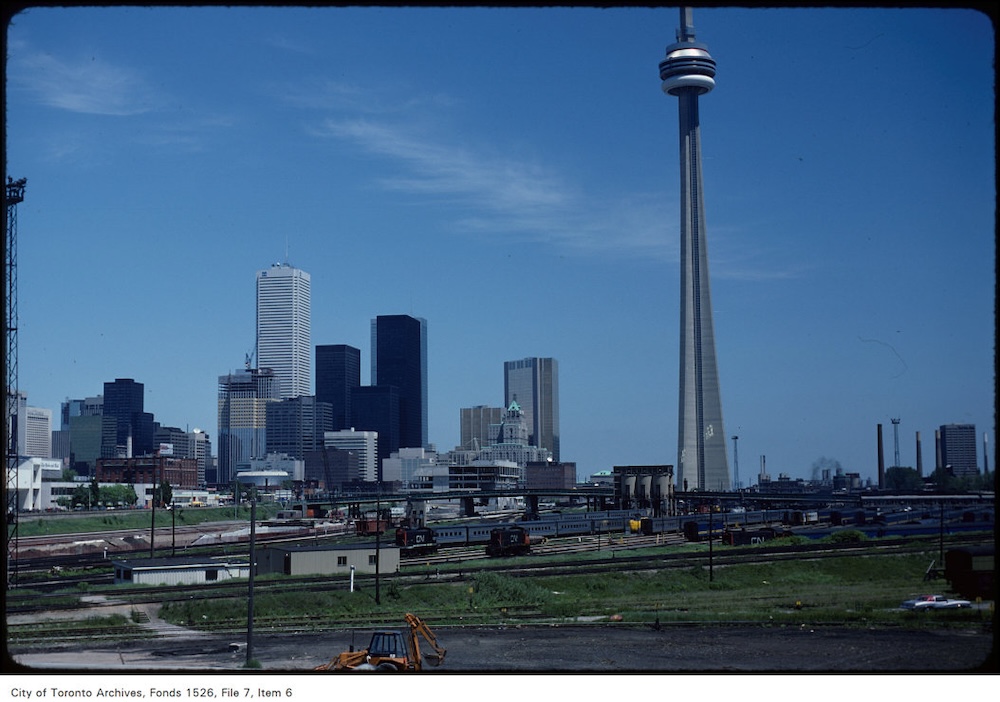
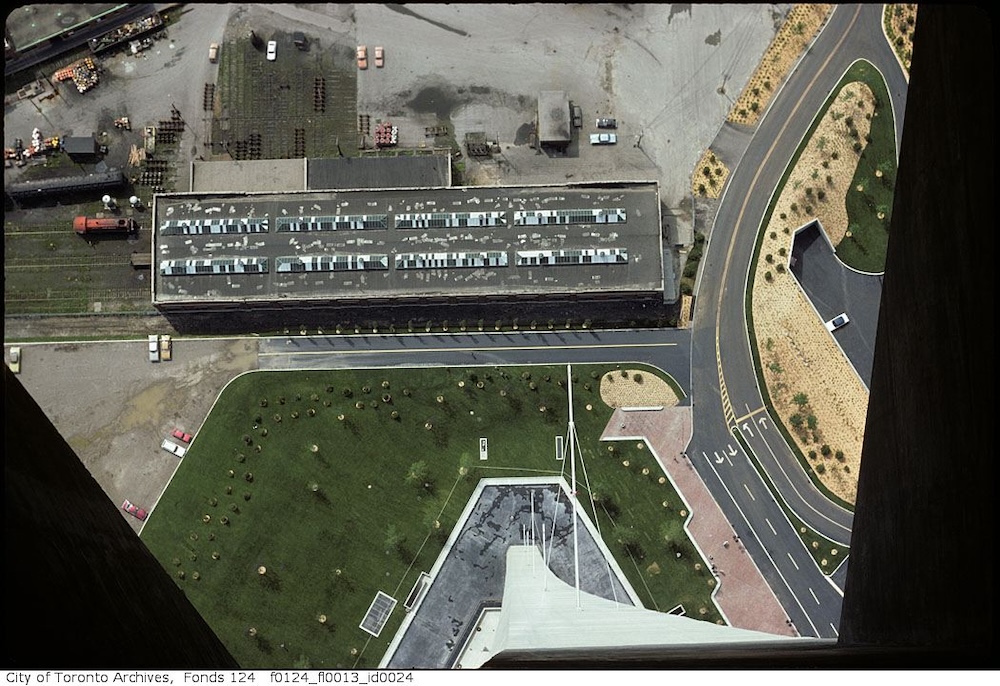
On my latest visit to the Toronto archives I decided to check out some photos of the construction of the CN Tower. It brought back some fond memories as a child growing up in Toronto and visiting attractions at the Toronto attraction. I remember Qzar, the simulator rides and visiting the viewing decks to see the city skyline from above. The photos also sparked an interest in learning more about the history of the building.
The CN Tower began as a solution to a very modern problem in a rapidly growing city. During the 1960s, Toronto experienced a surge in high rise construction, and these new buildings began interfering with radio and television signals. Broadcasters struggled with inconsistent transmission quality, and it became clear that a much taller structure was needed to restore reliable communication across the region.
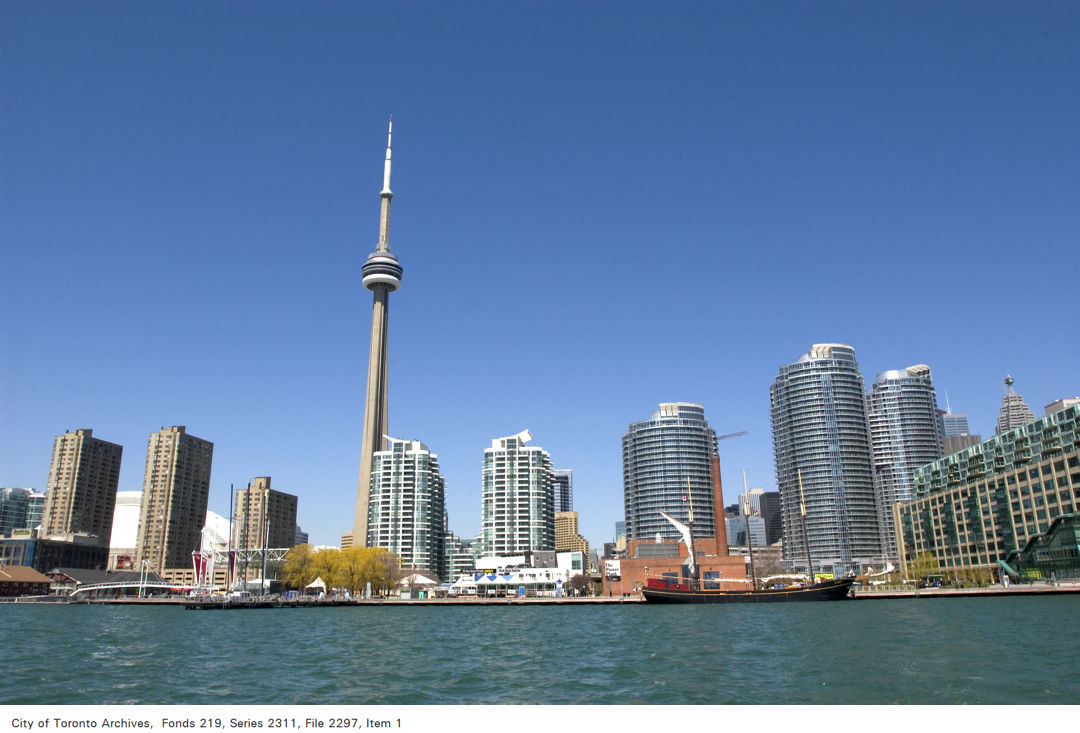
The project was initiated by Canadian National Railway, which envisioned a structure that would serve both functional and symbolic purposes. It would not only carry communications signals but also stand as a national landmark, representing Canadian innovation and engineering capability.
Construction began in 1973 and was completed in 1975, with the tower opening to the public in 1976. At 553 metres in height, it immediately became the tallest freestanding structure in the world, a title it held for more than 30 years. From the outset, it captured global attention and quickly became one of Canada’s most recognizable landmarks.
CN Tower Construction and Engineering
Building the CN Tower required a level of precision and innovation that had rarely been attempted before. More than 1,500 workers contributed to the project over approximately 40 months, working under demanding conditions to bring the structure to life.
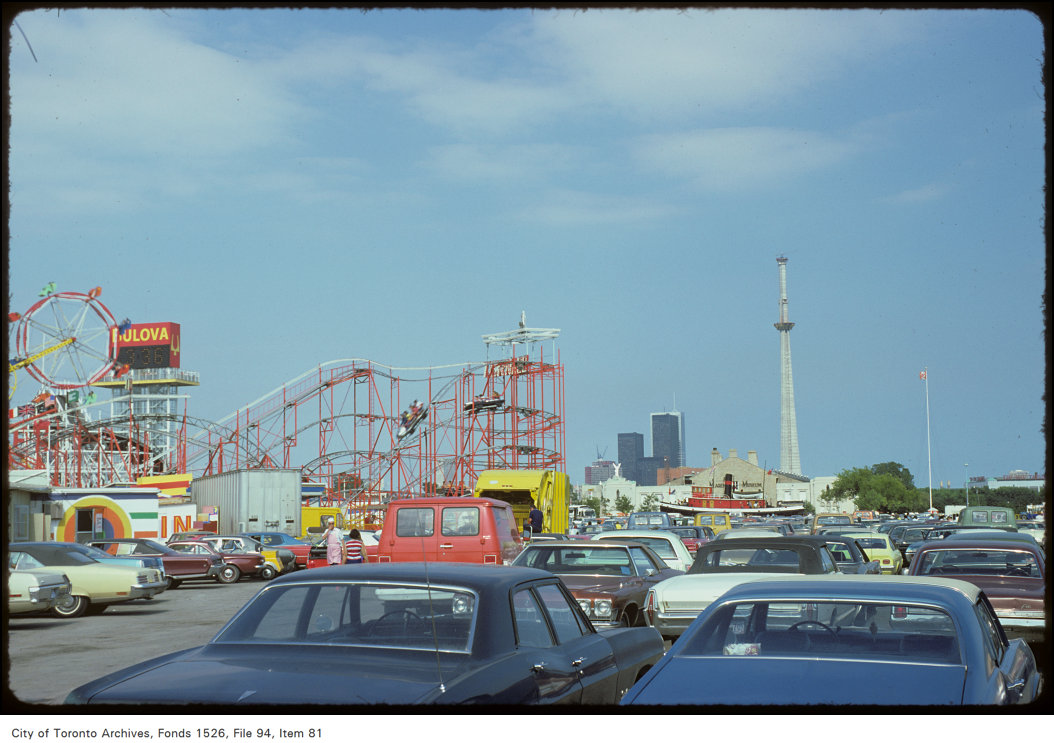
The process began with a deep foundation, excavated into bedrock to ensure long term stability. From there, engineers used a technique known as slipform construction. This method involved continuously pouring concrete into a moving form that gradually rose upward, allowing the tower’s distinctive tapered shape to emerge seamlessly. The process ran around the clock and required constant monitoring to maintain alignment and structural integrity.
The tower’s core is a hollow hexagonal shaft with three curved support pillars. This design provides both strength and flexibility, allowing the structure to withstand strong winds and temperature fluctuations. Despite its massive size, the tower is engineered to sway slightly in high winds, reducing stress on the structure rather than resisting it rigidly.
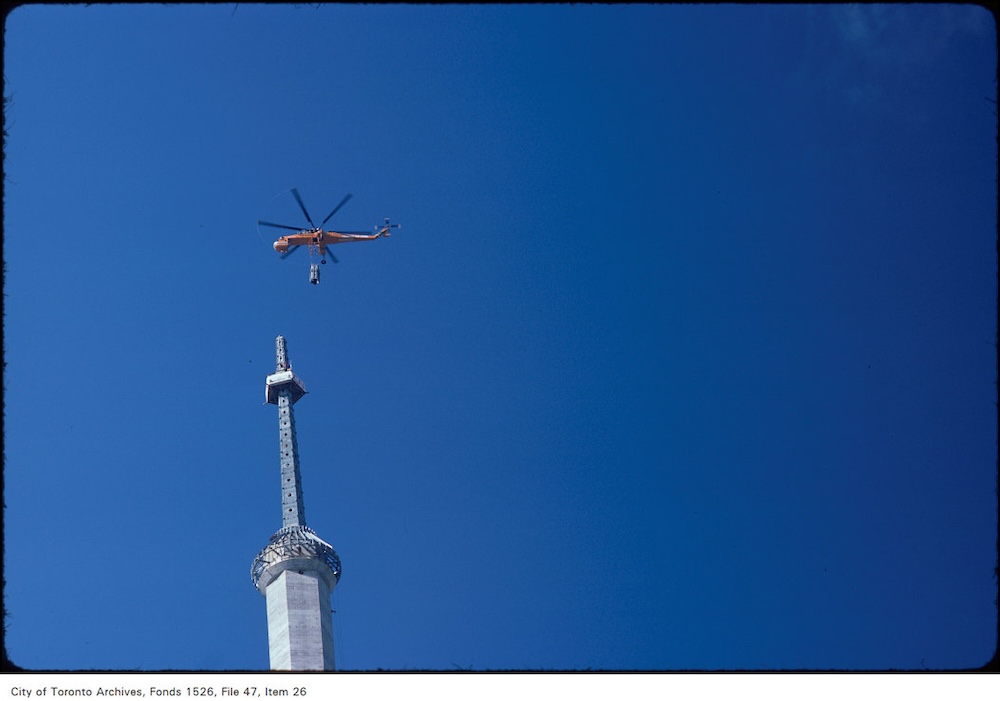
One of the most remarkable stages of construction came when the antenna was installed. A specially outfitted helicopter was used to lift and place the antenna sections at the top of the tower. This operation required extreme precision and marked the final step in reaching the tower’s full height.
CN Tower Construction Challenges and Issues
Constructing the CN Tower came with a range of technical and logistical challenges. At the time, no structure of its height had been built using similar methods, so engineers had to develop new solutions as the project progressed.
The continuous nature of slipform construction meant that there was little room for error. Any issue with the concrete mix, curing time, or alignment could have had serious consequences. Workers operated in shifts to ensure that the process continued uninterrupted, often in difficult weather conditions.
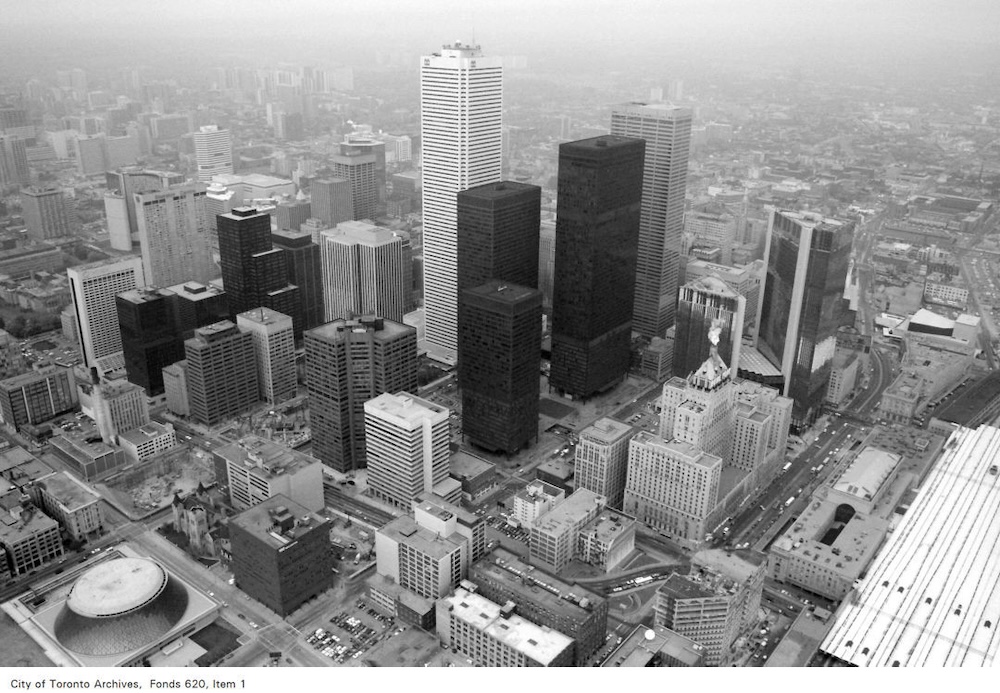
Wind and weather were also constant concerns. At such extreme heights, even moderate winds could affect construction activities. Engineers needed to ensure that the tower would not only withstand these forces during construction but remain stable for decades afterward.
Transporting materials to higher levels became increasingly complex as the tower rose. Equipment and components had to be carefully lifted and secured, culminating in the delicate installation of the antenna.
Over the years, maintenance and renovation have presented additional challenges. Updating observation decks and installing modern features at heights of more than 300 metres requires specialized crews and careful planning to avoid disrupting daily operations.
CN Tower Attractions and Ride Experiences Over the Years
Although the CN Tower was initially built for communications, it quickly developed into a major tourist attraction with a range of entertainment offerings. In its early years, the primary draw was the observation levels, along with the revolving restaurant that provided panoramic views of the city as it slowly rotated.
As tourism trends evolved, the tower experimented with more interactive attractions. During the late twentieth century and into the early 2000s, visitors could experience motion simulator rides that combined moving seats with large screen visuals. These attractions were designed to simulate roller coaster style movement or aerial journeys, creating an immersive experience that blended physical motion with projected imagery.
There were also interactive entertainment features introduced at various points, including arcade style installations and laser tag style attractions aimed at families and younger visitors. These were often temporary or periodically replaced as technology and visitor expectations changed.
Seasonal exhibits and special events added another layer of variety. The tower hosted themed installations, promotional experiences, and occasional stunt performances that drew public attention and reinforced its role as more than just a viewing platform.
While many of these rides and attractions have since been retired or updated, they reflect an important phase in the tower’s evolution as it sought to remain engaging in an increasingly competitive tourism landscape.
CN Tower Modern Day Attractions and Experiences
Today, the CN Tower offers a mix of classic views and contemporary attractions that appeal to a wide range of visitors. The observation levels remain central to the experience, providing sweeping views of Toronto and, on clear days, as far as Lake Ontario and beyond.
One of the most popular features is the glass floor, which allows visitors to look straight down from more than 300 metres above the ground. This experience has been enhanced over time with improved materials and expanded viewing areas.
For those seeking something more adventurous, the EdgeWalk offers a hands free walk along the exterior of the tower’s main pod. Participants are secured with safety harnesses as they circle the structure, making it one of the most distinctive urban thrill experiences in the world.
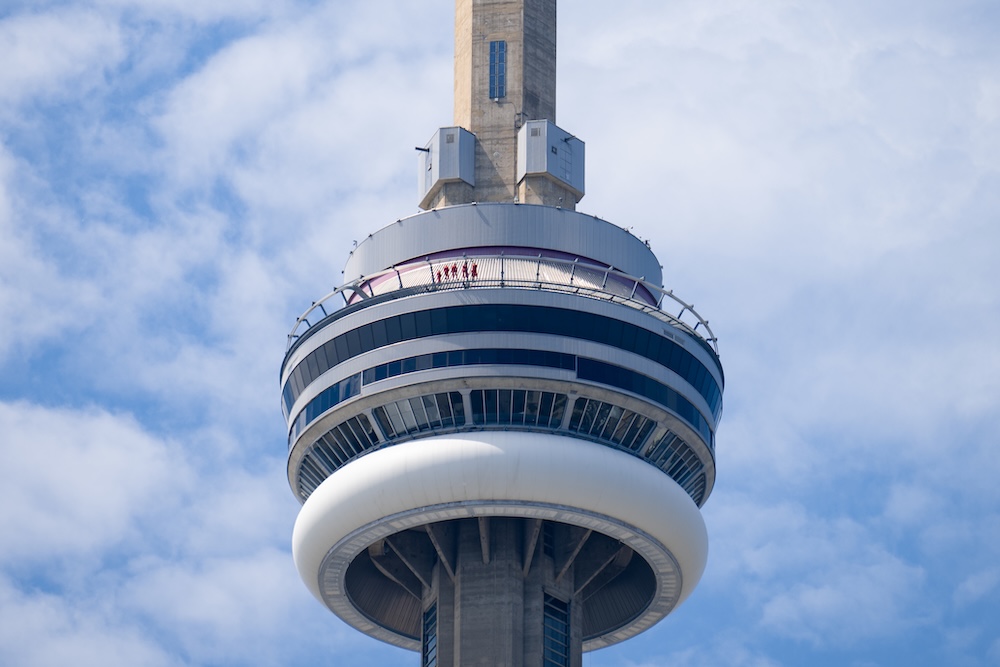
The tower has also embraced digital and interactive elements. Updated observation areas include immersive displays, visual storytelling features, and modern design elements that enhance the visitor experience without overshadowing the tower’s original purpose.
Dining continues to be a highlight. The 360 Restaurant provides a slowly rotating view of the city, combining Canadian cuisine with a constantly rotating skyline.
Situated in the heart of downtown Toronto, the CN Tower remains a central feature of the city’s entertainment district, alongside venues like Rogers Centre. Its ability to evolve over time while maintaining its iconic identity has ensured its place as one of Canada’s most enduring and celebrated landmarks.
Check out more of our history posts and archives in our Toronto Guardian History Section.