
The maple leaf is the definitive symbol of Canada.
The country’s signature red and white flag with the iconic 11-point leaf was officially adopted in 1965, while the Gold Maple Leaf coin debuted in 1979. The Silver Maple Leaf coin soon followed in 1988.
Created by the Royal Canadian Mint (RCM), these coins are treasured by locals, coin collectors, and precious metal investors alike.
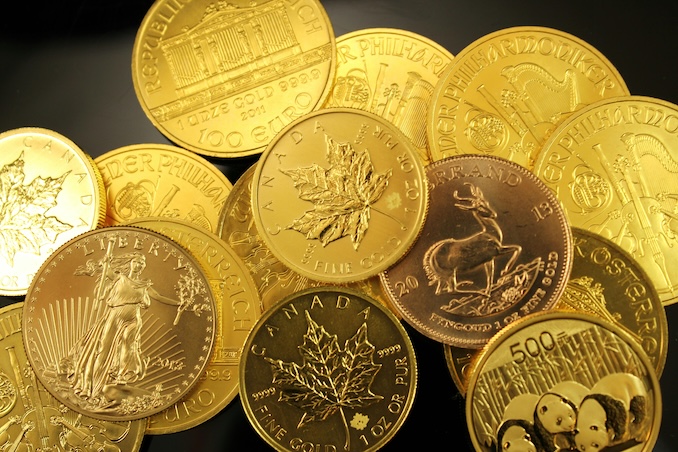
Here’s a closer look at the coins’ origins, design, purity, security, and strategies for collectors and investors.
The Beginning
Canada’s Gold Maple Leaf (GML) coin owes its true origin to shifts in investor sentiment in the late 1970s.
At the time, the South African Krugerrand was dominating the global gold bullion market, but international demand for an alternative increased as global opposition to apartheid grew.
The RCM’s answer was the Gold Maple Leaf.
It quickly appealed to investors and collectors, offering a stable asset backed by the Canadian government.
Nearly a decade later, the RCM minted the Silver Maple Leaf (SML) to compete with the American Silver Eagle.
The Purity
In fact, the SML was the first coin to come in .9999 (99.99%) pure silver. Compared to the Silver Eagle’s 99.9%, the SML has a purer silver content, which investors take seriously when researching silver bullion coin deals and market prices through sources like Pimbex.
Coming in at .9999 fine gold, the Gold Maple Leaf (GML) also offers a purer gold content than its counterparts. This translates to 24-karat purity, while the South African Krugerrand and American Gold Eagle are minted in 22-karat gold and feature a blend of copper or silver.
Since the GML coin is minted in 24-karat gold, there are no base metals in the coin. This purity is significant to precious metal investors.
However, since the gold is purer, GML coins are softer and more prone to scratching and handling marks. Protective storage helps preserve the highest value of the coin.
The Design
The Gold Maple Leaf is perhaps most recognized by its reverse (back face) design, the iconic maple leaf.
Designed by Walter Ott, the maple leaf is noted for its intricate botanical detailing. This aspect of the design has remained unchanged for several decades now.
The obverse (front face) side of the coin has undergone design changes.
All coins produced before 2024 feature the portrait of Queen Elizabeth II on the obverse side, with the first being designed by Arnold Machin in 1979. The original design spanned 1979 to 1989. The next obverse design was created by Dora de Pédery-Hunt, which lasted until 2003. The third iteration of the Queen was designed by Susanna Blunt, which appeared on the obverse until 2023.
2024 marked the beginning of a new obverse portrait, King Charles III, designed by Steven Rosati.
The Silver Maple Leaf coin features the same portraits by the same designers, including the newest obverse portrait of King Charles III.
The Security
Gold and Silver Maple Leaf coins also lead the way in bullion security, with the RCM introducing transformative security features like radial lines. These micro-machined lines create a unique light-diffracting pattern that’s virtually impossible to duplicate with traditional methods.
Micro-engraving uses a laser to engrave a maple leaf privy mark on the reverse side of every coin. This tiny maple leaf contains the last two digits of the coin’s issue date, which is only visible under magnification.
The RCM uses Digital Non-Destructive Activation, also known as Bullion DNA Technology, to encrypt and store high-resolution images of every minted Maple Leaf coin. It’s a crucial, advanced anti-counterfeiting measure that allows authorized dealers to verify authenticity instantly.
Advanced MINTSHIELD technology was also developed by the RCM to prevent white discolourations known as white spots, preserving the integrity of the Silver Maple Leaf coin.
The Strategy
Investing in bullion coins like the Gold and Silver Maple Leaf requires a data-driven strategy, including knowledge of stacking versus collecting.
For example, stacking refers to buying gold for its metal weight alone. It’s not uncommon to see “stacking” investors buy standard 1 oz coins since they carry a lower premium over the current market price. In this case, the Maple Leaf is viewed as a form of liquid wealth.
Coin collectors are also investors, but they take a numismatic approach.
Collectors value rare coins. The RCM serves this critical market by minting special edition coins with unique privy marks or special proof finishes. Collectors also prefer a wider range, leading the RCM to mint 1/2 to 1/20 oz coins.
Since these coins are produced in scarce quantities, they command higher prices.
Discover the Maple Leaf Coin
You don’t have to be a bullion investor or coin collector to appreciate the value of the Maple Leaf coin. It carries a rich historical significance and purity that makes even one coin a worthy investment.
Remember to keep the history, design, purity, security, and investing strategies of Maple Leaf coins in mind as you navigate this alternative asset class.
