
After years of working inside the cheerful, airtight world of Hallmark-style Christmas movies, Brennan Martin hit a breaking point. Again and again, he watched opportunities to deepen characters or inject genuine emotion politely dismissed in favour of playing it safe. “They go out of their way to make sure they don’t do anything different,” he says. For an actor and filmmaker, the frustration built until it turned into something more productive: a film designed to poke fun at the formula while exposing what it leaves behind.
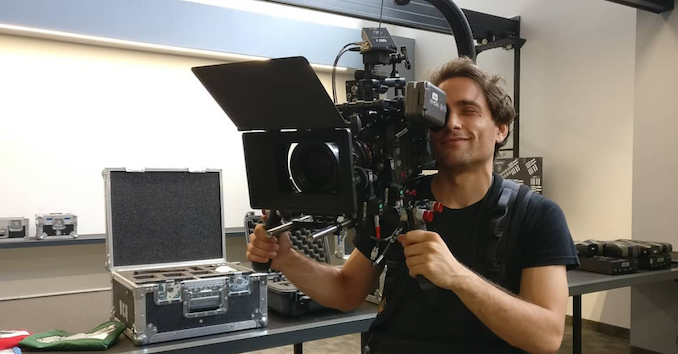
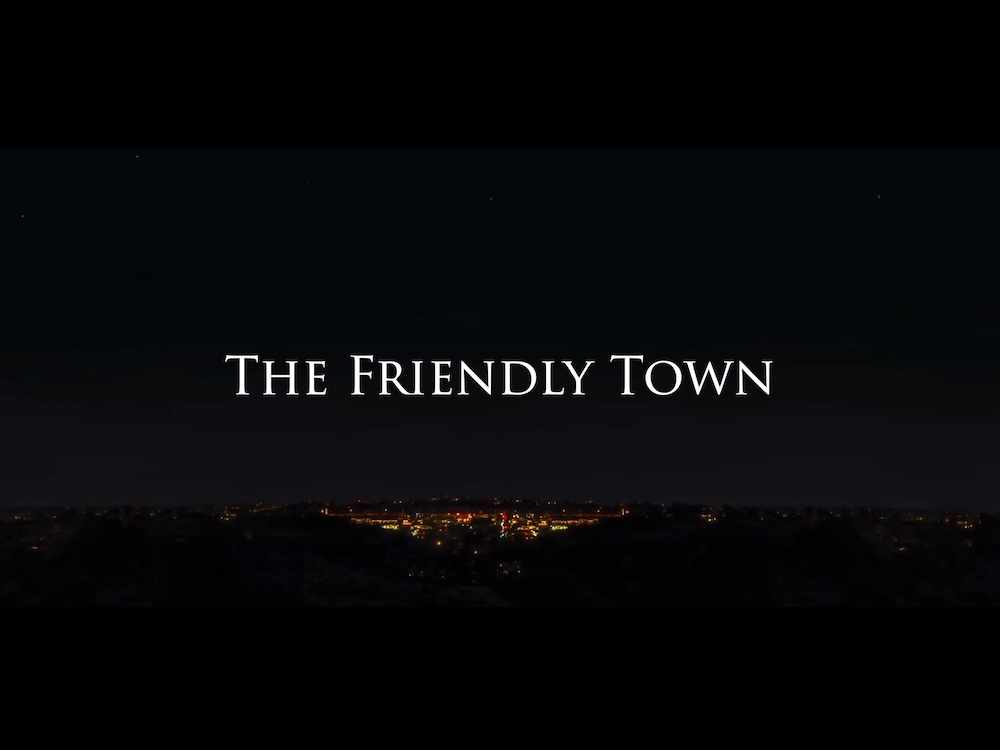
That film is The Friendly Town, a romantic comedy thriller that Martin describes as Cabin in the Woods for Hallmark Christmas movies. It follows two best friends who return home for the holidays, only to realize their town is trapped in a never-ending loop of Christmas clichés. Every few minutes, another impossibly perfect woman appears, another meet-cute unfolds, and another happy ending seems inevitable. The twist is that the characters are aware of it, and they’re desperate to escape before they become the next picture-perfect couple.
Martin isn’t interested in parody for parody’s sake. Beneath the satire is a critique of how these movies flatten relationships into something frictionless and unrealistic. “In hundreds of these films, there’s never any real drama,” he says. “We know right away they’re going to end up together forever.” The Friendly Town pushes back on that idea, questioning whether the fantasy of effort-free love is comforting, or quietly damaging.
There was never any doubt where the film would be set. Almonte, Ontario, where Martin spent much of his childhood and where his family still lives, has become one of Canada’s most recognizable Christmas-movie towns. Dozens of Hallmark productions have used it as a stand-in for quaint American cities, to the point where millions of viewers have already seen its streets dressed up in festive lights. In The Friendly Town, Almonte finally gets to play itself.
That real-world history is central to the film’s tone. Characters return home to Almonte as Almonte, not a fictional U.S. town, creating a strange overlap between the audience’s familiarity with the location and the story’s heightened reality. Martin jokes that it almost turns those past movies into part of the same universe. For locals, many of whom have grown used to being asked to take down Valentine’s or St. Patrick’s Day decorations to make way for another Christmas shoot, the film is also a wink of solidarity.
But The Friendly Town is as much a protest as it is a genre experiment. Martin is blunt about how American productions operate in Canada. He’s seen U.S. companies take advantage of tax credits, bring up American stars at high salaries, and leave Canadian cast and crew fighting for what’s left. As an actor, he’s watched fake auditions held for roles already promised to Americans, simply to satisfy paperwork. “It makes us a vassal,” he says. “And at this point, that’s unacceptable.”
In response, Martin committed to a 100% Canadian cast and crew, and went a step further. Inspired by alternative production models, The Friendly Town is structured so that everyone involved receives ownership in the film. If it succeeds, those artists benefit long-term, not just from a one-time paycheque. “Artists are struggling, but we’re the ones who actually do the work,” he says. “We should own the work.”
That approach changes the dynamic on set. Instead of a project everyone knows won’t be Citizen Kane and won’t pay particularly well, Martin wants a collaborative environment where ideas are welcome and people are invested in making the film better. It’s a small rebellion against an industry that often asks Canadian creatives to keep their heads down and be grateful for scraps.
To get the project off the ground, Martin turned to Kickstarter, drawn by its all-or-nothing model and its ability to build a real audience around the film. The campaign isn’t just about raising money; it’s about finding supporters who want to see something different from holiday cinema—and who will help spread the word. “That kind of social capital,” he says, “you can’t buy.”
Success, for Martin, isn’t just box office numbers. It’s a Canadian film that people actually want to watch, one that proves local talent doesn’t need imported star power to matter. It’s also a model he hopes others will adopt. After 16 years in the industry, he’s realistic about how few doors truly open but he’s optimistic about momentum. If The Friendly Town works, it might make the next project a little easier, for him and for others watching closely.
For audiences exhausted by formulaic holiday movies, Martin hopes the film delivers more than a knowing laugh. He wants them to laugh, maybe cry, and walk away feeling that the story said something real about life and relationships, something the endless cycle of pretty people falling in love with no resistance rarely does. In a town built on Christmas fantasies, The Friendly Town dares to ask what happens when the spell wears off.
