
When a loved one leaves a hospital in Toronto, you’d think the hard part is over. Your mom. Your dad. Your partner. They’re out of immediate danger. The crisis has passed. Now it’s just rest, recovery, and getting back to normal.
But the truth is that things are rarely that straightforward. You go in thinking that once the doctor signs the discharge papers, home care support is already lined up. But more often than not, families are faced with trying to connect the dots between discharge planning, home health providers, and the support their loved ones will actually need at home.
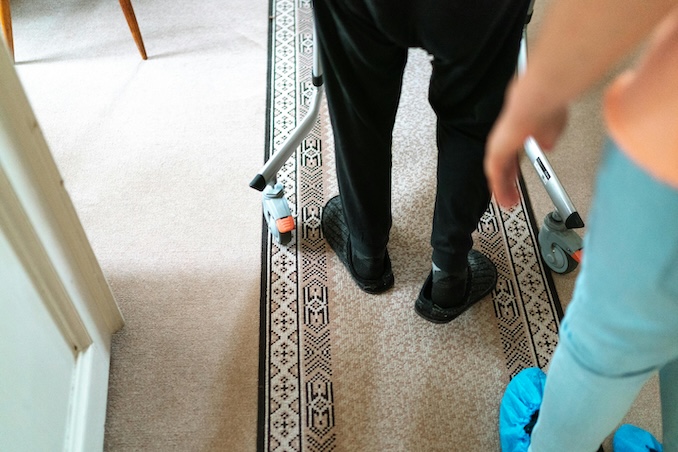
Even when someone is referred for publicly funded care, it doesn’t always begin right away. Between 2024 and 2025, for example, some Ontario patients had to wait for up to thirty days for home care services to start.
This delay may not look like much on paper, but when you’re the one caring for a sick person at home, even a few days can feel overwhelming.
This is the part few people talk about: the gaps in transition from the hospital to the home, and from the look of things, these gaps are the biggest stressors for families with loved ones leaving the hospital. That’s what we’ll be talking about in this article.
What a Typical Discharge Looks Like
Let’s start with how the gap actually happens.
It usually begins with a doctor saying your loved one is stable enough to go home. That’s the trigger. On paper, they’re ready to leave.
And then everything moves fast.
Suddenly, discharge is happening. You’re told you need to confirm that someone will be there to help at home. Maybe you’re asked, “Who’s going to assist with bathing? Do you have someone who’ll be helping?”
You say yes because what else are you going to say? But here’s the gap: the hospital’s job is to confirm medical readiness. Your job, it turns out, is to figure out the long game.
Of course, the hospital can refer your loved one to Ontario Health atHome for publicly funded home care services in Ontario. But they can’t recommend specific private agencies.
They can’t tell you which company has the best coverage on weekends, or which one won’t charge a four-hour minimum for a two-hour visit.
All that is on you. And most families don’t realize that until it’s too late. MF Homecare, a platform that makes booking private care faster and more affordable, highlights the real-world care gaps they see families run into. These include:
- Inconsistent caregivers, which is an even more pressing concern in temporary acute or recovery situations
- Delays between discharge and when care actually begins (and having to scramble to arrange care on short notice)
- Mismatch between approved hours vs actual need
- Varying minimum hours requirement or off-hours availability and rates
Vanessa Leslie experienced this firsthand. Her 91-year-old mom had a stroke last year and was discharged from a Toronto hospital in December. The hospital told her everything would be in place when her mom got home. She kept asking, “Are the PSWs confirmed? Is the therapy arranged?” They said yes.
“My life now revolves around making sure she gets the care she needs,” Leslie told CityNews. When she brought her mom home, the workers either didn’t show or arrived hours late.
I didn’t see a nurse until seven days after discharge”.
That’s seven days of figuring it out alone. And of course, Leslie isn’t alone in this experience.
Many families across the country quietly go through something similar after a hospital discharge. The paperwork says the patient is ready. The reality at home feels very different.
The Reality of Public Home Care: Helpful, But Not a Full Solution
Let’s talk about how public home care, like the Ontario Health atHome, really works.
But first, how do people qualify for this service?
Ontario Health atHome decides who qualifies for public home care through a standardized assessment. In simple terms, they look at your loved one’s medical needs and overall situation.
You may qualify if you belong to any of these categories:
- Seniors with age-related challenges
- People recovering from surgery or illness
- Those living with chronic or complex health conditions
- Individuals needing palliative or end-of-life care
It’s important to point out that approval isn’t automatic. Care is based on medical necessity and the resources available at the time.
Once a referral goes in, a case manager assesses your loved one’s needs. They determine how many hours are approved and what kind of help qualifies. That’s the theory. In practice, here’s what families run into:
- Services rarely kick in right away. There’s almost always a bit of delay.
- There are staffing shortages. The worker assigned today might not be the same one tomorrow. Or next week.
- Visits are short and task-focused. Get mom up, get her dressed, done. No time for the extras.
- Sometimes you get coverage for evenings, weekends, and holidays. But most times, you don’t.
The truth is that the public care system is designed to supplement what families provide. Not replace it.
What’s more? There are simply not enough home care workers. According to a 2025 report carried by the Toronto Metropolitan University news, by 2032, Ontario will need as many as 50,000 more PSWs in home care, long-term care, and hospitals, just to meet demand.
That’s a sign of how stretched the system already is, and how much more pressure families are likely to feel in the years ahead.
When Home Care Isn’t Ready
Many families experience what’s often called a “premature” discharge. That’s when someone goes home before home care support is actually up and running.
If you’re discharged on a weekend, it can be even harder. Home care offices don’t always process new files at full speed on Saturdays or Sundays. You could be home for 48 to 72 hours before a professional ever walks through your door. And those first few days? That’s when the risk of hospital readmission is highest.
And even when readmission doesn’t occur, there’s still a big risk. Take Ontario’s Patient Ombudsman 2025 report, for example. In one heartbreaking situation, a patient with advanced cancer didn’t get the things they needed to ease their end-of-life pain until 10 minutes before death.
Even when things don’t get that extreme, the entire home dynamic will still change overnight.
Suddenly, you aren’t just a daughter, son, or spouse anymore. You’re an overnight nurse sorting medications, checking surgical wounds, or trying to figure out how a catheter works from a pamphlet.
It’s a heavy load. And if you’re not careful, it can quickly slide into what’s known as caregiver burnout.
The Financial and Emotional Side Nobody Wants to Talk About
Publicly funded home care in Toronto and the GTA is doing a good job. No one can deny that. But the truth is that for many families, it’s not enough.
That’s where private home care agencies in Toronto come in. They can fill the gaps, but:
- Urgent or guaranteed availability often costs more
- Many agencies have minimum hour requirements per visit
- Rates vary considerably by location
For a family on a fixed income, this creates a massive financial strain of caregiving.
The emotional side is just as heavy. There’s a constant “what if” playing in your head. What if I give the wrong pill? What if I can’t lift him? That’s a lot of pressure.
What’s more? All this is happening against a backdrop of real system strain. Ontario’s senior population is expected to grow 23% by 2029, according to a 2024 report carried by Global News Canada.
The people who need this care are arriving faster than the system can cope.
How to Reduce the Care Gap Families Face After a Hospital Discharge
Start early. That’s the closest thing to a magic bullet you’ll get.
If you’re planning to bring your loved one home, don’t wait for the discharge date. Start now. Find out who the discharge officer is at the hospital. Find out who the coordinator is at Ontario Health atHome. Make those contacts.
You may not have a firm discharge date yet, but it’s coming. And it’s a lot easier to prepare gradually than to scramble the day before.
You also need clarity. Not vague answers, so ask direct questions:
- When will home care services actually start?
- How many hours are approved, and what exactly do those hours cover?
- What happens if no PSW is available on a scheduled day?
- Who do we call after hours or on weekends?
- What’s the plan if the care isn’t enough?
- Is private care our only backup option?
- How do we make sure our family doctor receives the discharge summary?
Beyond getting answers to your questions, ask for written instructions for everything.
Also, confirm that the referral to Ontario Health atHome has actually been submitted. Not “we’ll send it.” Submitted.
If services are supposed to begin on Tuesday, call Tuesday morning and confirm. Don’t assume someone is walking through the door just because it’s on paper.
Research shows that proper transitioning from hospital to home can reduce hospital readmissions by up to 20%.
Of course, all these don’t mean that the transition will be 100% perfect, but it can close a good part of the gap before it turns into a crisis.
The Bottom Line for Toronto Families
Coming home from the hospital should be the first step toward healing, and with proper transition or discharge planning in place, it can be just that.
The unexpected care gap families face after a hospital discharge in Toronto isn’t about blame. It’s about real pressure points in a system that’s stretched thin.
But the good news is that when you know what to expect and what questions to ask, you can navigate that transition with more confidence and less stress.
And in the end, that’s actually what matters.
